
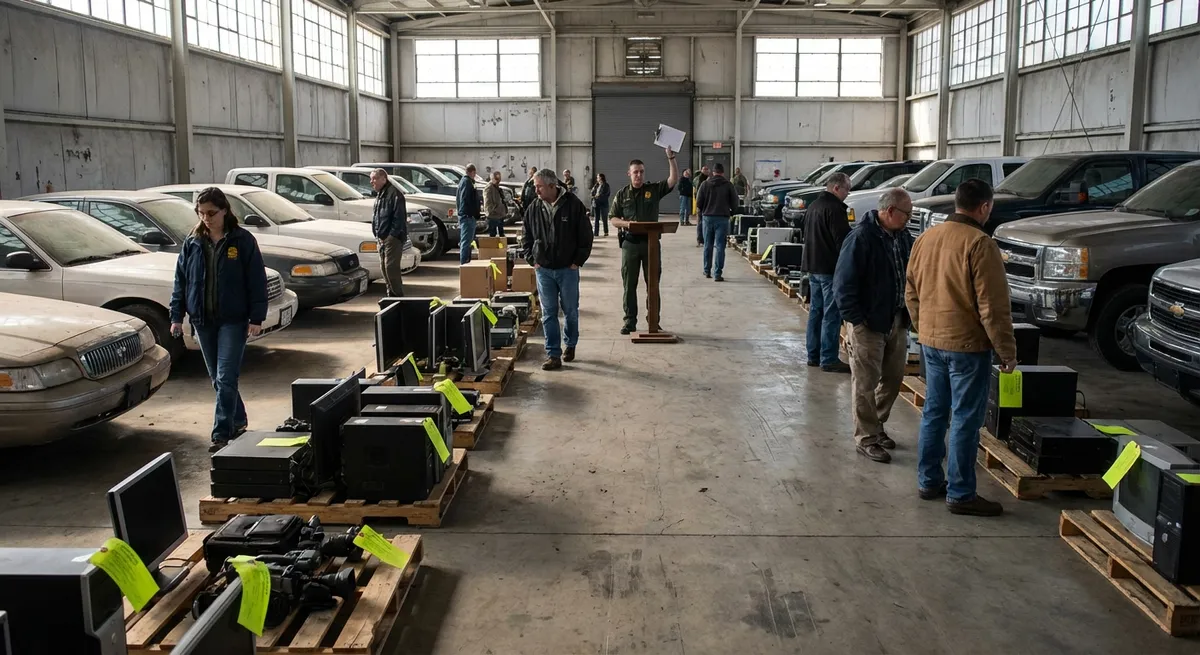
Government auctions and surplus sales can feel like a secret marketplace: cars with low mileage, heavy equipment, office furniture, even electronics—often at prices well below retail. But the rules are different from buying on a typical e‑commerce site, and the protections you’re used to don’t always apply.
This guide explains how government sales work, where to find them, and how to buy wisely so you don’t turn a “bargain” into a costly mistake. You’ll also find five practical tips to keep your purchases smart, safe, and aligned with your actual needs.
How Government Sales Work (And Why They Can Be Cheaper)
Government entities—federal, state, and local—regularly dispose of property they no longer need or have seized. Instead of paying to store or scrap these items, they sell them to the public. That creates opportunity for buyers, but also some ground rules you need to understand.
Most government sales fall into a few categories:
- Surplus sales: Equipment, furniture, vehicles, and other items the government no longer needs.
- Seized property: Items confiscated in criminal, customs, or tax cases (from luxury goods to industrial tools).
- Tax-foreclosed real estate: Properties seized for unpaid taxes, sold at auction.
- Abandoned or unclaimed property: From airport confiscations to storage locker contents.
These items can be cheaper for several reasons:
- The seller isn’t profit-driven. Agencies are often required just to recover value, not maximize it.
- Sales are designed to clear inventory. Timelines matter more than perfect pricing.
- “As‑is” transfers risk to you. Lower prices reflect the fact that you assume almost all responsibility once you buy.
Understanding that trade‑off—lower price, higher risk—is the foundation of making smart choices in this space.
Where To Find Legitimate Government Listings
A major risk for buyers is ending up on scam sites that look official but aren’t. Before you even think about bidding, you need to know where the real listings live.
Legitimate government-related sources typically include:
- Official federal portals
- General Services Administration surplus: often via GSA Auctions
- U.S. Marshals Service and Treasury: seized and forfeited assets, often listed on partner auction platforms
- State surplus programs
Most U.S. states run surplus property programs that sell to the public. These are usually linked from .gov domains (for example, searching “[Your State] surplus property” alongside “site:.gov” can help filter to official pages).
- Local government and law enforcement auctions
Counties, cities, sheriff’s departments, and transit agencies may auction vehicles, equipment, and unclaimed property. These are typically announced on their official websites or via reputable auction partners they name explicitly.
Red flags to watch for:
- Sites that pretend to be official but don’t have a
.govdomain and are not clearly linked from a government site. - Sellers insisting you must pay immediately via wire or crypto, with no documented bidding process.
- Lack of clear contact details or any traceable connection to a real government entity.
Always start from a known government website (federal, state, or local), then follow their links outward to any private auction partners. Don’t do it the other way around.
What You Can Buy (And The Risks You’re Taking)
Government sales can cover a surprisingly wide range of categories that interest everyday buyers and small businesses:
- Vehicles: Fleet sedans, pickup trucks, SUVs, police vehicles, specialized trucks, buses.
- Heavy equipment: Construction machinery, generators, industrial tools.
- Office and IT gear: Desks, chairs, laptops, servers, printers.
- Consumer items: Bicycles, tools, jewelry, musical instruments, cameras.
- Real estate: Residential, commercial, land (often via tax liens or forfeiture sales).
But each category carries specific risks:
- Mechanical and condition risk: Vehicles and equipment are usually sold “as‑is, where‑is.” There may be maintenance records, but no guarantee they’re complete—or accurate.
- Title and ownership risk (especially for real estate): Tax-foreclosed and seized properties can come with liens, back taxes, or complicated legal histories. Clearing these can be expensive or even impossible without professional help.
- Missing accessories or licenses: Electronics might lack chargers or software licenses; tools may be missing parts; some items may need permits to use or resell.
- Regulatory and compliance issues: For specialized equipment (medical, safety, environmental), you may need to meet regulations to operate or sell it.
Your job as a buyer is to treat these sales less like “discount shopping” and more like a research project with a bidding component. The more you know before you bid, the fewer expensive surprises you’ll face afterward.
Five Practical Tips for Smart Government Purchases
1. Treat “As‑Is” Like a Serious Warning Label
“As‑is” isn’t just boilerplate language; it’s a legal boundary. It usually means:
- No returns, no refunds, no repairs. Once the item is yours, every problem is your responsibility.
- Inspection is your only protection. Many auctions allow viewing days or detailed Q&A before bidding. If you skip that, you’re essentially gambling.
Smart moves:
- Read the full inspection report and description, not just the headline and photos.
- For vehicles or expensive equipment, bring a knowledgeable mechanic or technician if in-person inspection is allowed.
- If inspections aren’t possible, bid as if the worst plausible issue exists—and only if the price still makes sense with repairs factored in.
This mindset helps you avoid overpaying just because a listing “looks good” at first glance.
2. Research Market Value Before You Bid
A low opening bid doesn’t mean you’re getting a deal. You need to know what the item is actually worth in the open market and what similar used items are selling for in comparable condition.
Practical steps:
- For vehicles: Check used values (accounting for age, mileage, and condition) using consumer tools and recent local sales.
- For equipment and tools: Look at completed sales on major marketplaces and dealer sites—not just asking prices.
- For real estate: Compare recent sales (not listings) in the same neighborhood and adjust for condition, repairs, and any potential legal complications.
Then decide your maximum price in advance, including:
- The item itself
- Buyer’s premium (auction fees)
- Transportation/hauling costs
- Likely repairs or updates
- Any taxes, registration, or licensing fees
Stop bidding when you hit that total number, even if the competition seems to be “just a little bit” above you. Emotional bidding is how “bargains” vanish.
3. Confirm All Extra Costs and Rules Up Front
Government-related auctions often come with terms that differ from retail sites:
- Buyer’s premium: A percentage added on top of your winning bid (commonly 5–15%).
- Payment timelines: You may need to pay within 24–48 hours, sometimes via specific methods (cashier’s check, bank transfer).
- Pickup deadlines and storage fees: If you don’t remove the item in time, you can be charged storage—or lose the item without a refund.
- Location-specific taxes: Sales tax, title fees, or local charges may apply.
Before bidding, read:
- The general auction terms and conditions
- The specific lot description and special terms (sometimes items have extra rules)
If anything is unclear, contact the auction administrator and get clarification in writing (email or official message system). Last-minute surprises on fees or logistics can erase any savings you thought you gained.
4. Protect Yourself From Scams and Misleading Listings
Most official government sales are regulated and audited, but problems can still arise—especially when third-party sellers or platforms are involved.
Practical safeguards:
- Always verify that the auction is tied to a legitimate government agency or program.
- Avoid direct off-platform deals suggested by other bidders or supposed “employees.”
- Be suspicious of:
- Requests for payment via untraceable methods
- Pressure to pay before you see official invoices or documents
- Sellers unwilling to provide any documentation about the item’s origin
After purchase, keep:
- Copies of the listing and all photos
- All emails and messages
- Payment receipts and titles/transfer documents
This documentation is important for registering vehicles, proving ownership, or resolving disputes, especially when reselling later.
5. Buy With a Plan: Use, Resale, or Investment?
A cheap price can tempt you into buying something you don’t really need—or can’t realistically use or resell.
Before you bid, answer:
- How will I use this?
- For personal use: Does it fit my actual needs and skills (e.g., can I maintain a former fleet vehicle or operate heavy machinery safely)?
- Is resale realistic?
- Do you understand the usual buyer for this item and where they shop?
- Are there legal or licensing requirements to resell (especially for specialized equipment or property)?
- Is this really an investment—or just a project?
- Some buyers enjoy restoring vehicles or flipping equipment, but that requires time, money, and expertise. Be honest about your capacity and timeline.
A good rule:
If you can’t clearly explain in two sentences how this purchase improves your life or finances, reconsider bidding. The best deals are tied to clear, practical outcomes—not just low prices.
Conclusion
Government auctions and surplus sales can be powerful tools for value-conscious buyers, but they operate on “professional buyer” rules: minimal protection, high personal responsibility, and a need for careful research.
By:
- Respecting the meaning of “as‑is”
- Researching market value instead of trusting starting bids
- Understanding all fees and terms
- Guarding against scams and sloppy documentation
- And aligning every bid with a clear plan for use or resale
you can turn this hidden corner of the marketplace into a reliable source of savings rather than expensive headaches.
Approach government sales as a disciplined buyer—not a treasure hunter—and you’ll be far more likely to walk away with wins that actually hold up over time.
Sources
- U.S. General Services Administration – GSA Auctions - Official federal portal for surplus government property, vehicles, and equipment auctions
- USA.gov – Government Auctions and Sales - U.S. government overview of how and where to buy surplus and seized items
- U.S. Marshals Service – Asset Forfeiture Program - Information on seized and forfeited assets sold through government-managed auctions
- Federal Trade Commission – Shopping Online and Avoiding Scams - Guidance on spotting fraudulent sellers and protecting yourself in online transactions
- Consumer Financial Protection Bureau – Know Before You Owe: Mortgages & Home Buying - Background on evaluating real estate purchases, helpful when considering tax-foreclosed or seized properties
Key Takeaway
The most important thing to remember from this article is that this information can change how you think about Law & Government.