
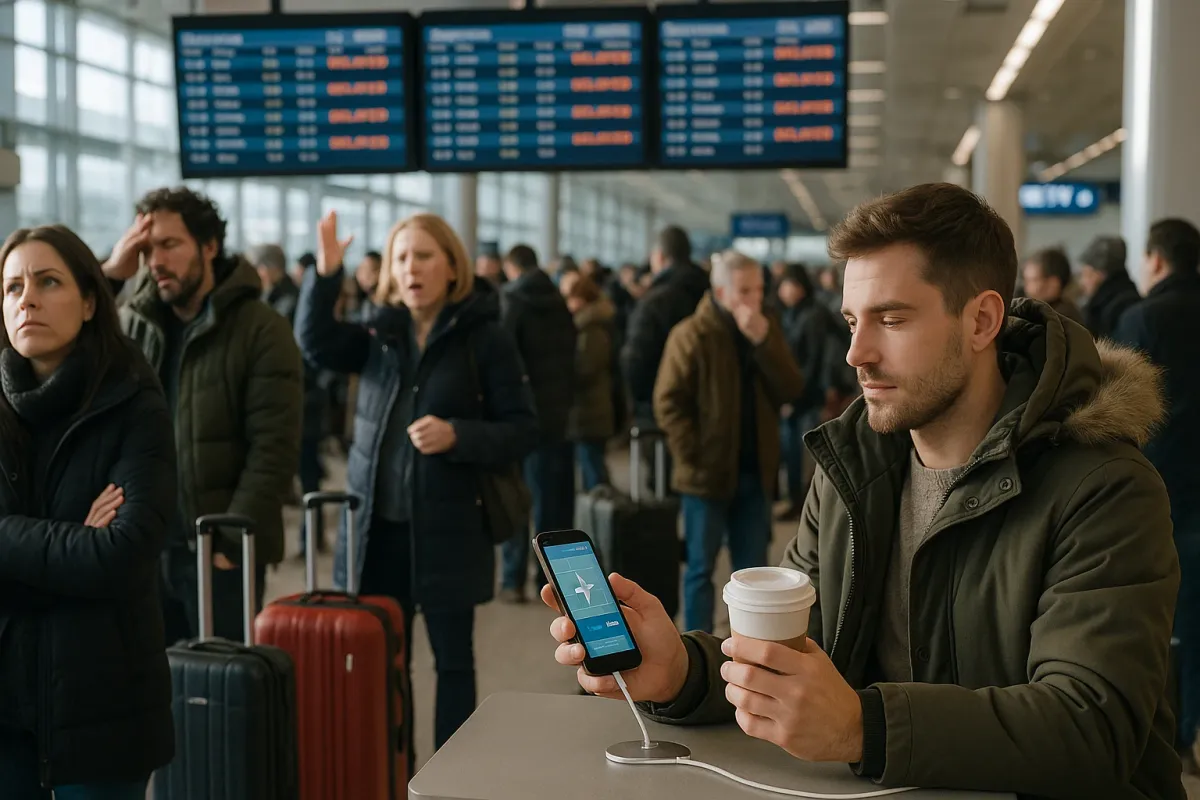
The 2025 holiday rush is already roaring to life, and travel chaos is back in the headlines. One viral article, “25 Travel Gadgets For Anyone Who Is Already Mentally Preparing For The Chaos Of Holiday Travel,” is trending for a reason: travelers know that crowded airports, long security lines, delayed flights, and overstuffed luggage are not a “maybe” this year—they’re a guarantee.
Across major hubs, airlines and airports are warning of record passenger numbers, tighter security windows, and limited rebooking options as planes fly fuller than ever. Translation: if you don’t plan your trip like a strategist and shop your travel gear and services wisely, you’ll pay for it in stress, money, or both.
This guide breaks down how to turn those “chaos” headlines into a practical game plan—and how to make smarter purchasing decisions before you even step into the terminal.
1. Rethink Your Carry-On: Buy For Efficiency, Not Aesthetics
Browse any holiday gift guide and you’ll see endless “must-have” luggage sets trending on social media. But when flights are packed and overhead bins are war zones, your suitcase’s dimensions, weight, and layout matter more than the color or brand prestige.
Look for a carry-on that:
- *Meets strict airline size rules, not just “cabin size” marketing language. Check measurements against your most restrictive airline (especially budget carriers).
- Weighs under 7 lbs (3.2 kg) empty so you have more allowance left for actual belongings.
- Has premium wheels and a solid telescoping handle—those are the first failure points during rushed connections.
- Includes internal compression straps or a flat compression panel, which makes a bigger impact than extra pockets when you’re tight on space.
- Offers an external front pocket for laptop/tablet if you’re frequently asked to remove devices at security.
Smart purchasing tip:
Before you buy, pull up your usual airline’s baggage page and compare actual allowed dimensions to any bag you’re considering. Screenshots and influencer posts don’t count—go straight to the airline’s website. If the suitcase is even 1–2 cm over, assume a gate check (or fee) during peak travel days.
2. Don’t Just Buy “Travel Gadgets” – Build A Delays Survival Kit
The viral “25 Travel Gadgets” article taps into a real pain point: everyone wants a magic object that makes airports tolerable. But many trending gadgets are single-purpose and overpriced. Instead, build a compact “delay survival kit” with items that actually save you time, money, or comfort when you’re stuck for hours.
Prioritize items that:
- Replace airport markups: a collapsible water bottle, compact reusable utensils, and snack pouches can easily offset $20–$40 of airport food and drink on a bad day.
- Keep you functional if outlets are full: a reliable power bank with at least 10,000 mAh capacity and two ports beats a dozen gimmicky charging gadgets.
- Protect your sleep and sanity: look for a packable neck pillow, noise-cancelling (or at least noise-isolating) earbuds, and a soft eye mask that doesn’t dig into your face.
- Handle hygiene in crowded spaces: travel-size sanitizer, wipes, and a small pack of tissues are more useful than many fancy “travel wellness” kits.
Smart purchasing tip:
Before clicking “Add to Cart” on a gadget you saw on TikTok or in a trending article, ask: Does this replace something expensive or inconvenient at the airport? If the answer is no, save your money or choose a multi-use alternative.
3. Treat Travel Insurance Like A Product You Actually Compare
With full flights and tight schedules, rebooking is getting harder and more expensive. Airlines are often operating with minimal slack, meaning one storm or technical glitch can cause a cascade of cancellations. Yet many travelers still either skip insurance altogether or buy the default option blindly at checkout.
To buy smarter:
- Compare at least two sources: the airline’s own trip protection vs. a third-party provider (like Allianz, AXA, or your credit card’s included coverage).
- Focus on three key protections: trip interruption (if your flight problems cost you hotel nights, tours, etc.), baggage loss/delay, and medical coverage if you’re traveling abroad.
- Check coverage limits, not just whether a feature is “included.” $200 of baggage delay coverage may not cover lost winter gear or business attire.
- Look for “cancel for any reason” options only if your plans are shaky—these are pricier, but can be worth it if your schedule might change for non-medical reasons.
- If your credit card offers strong travel protection, you might just need add-ons (like extra medical coverage), not a full insurance package.
Smart purchasing tip:
Never buy insurance based solely on the checkbox at the end of your airline booking. Take five extra minutes, open a new tab, and compare what your credit card already covers vs. a standalone policy. You might save money—or avoid thinking you’re covered when you’re not.
4. Use Tech Tools Strategically, Not Just Because They’re Trending
From flight-tracking apps to digital luggage tags and Bluetooth trackers, tech is being marketed as the answer to crowded airports. Some of it is genuinely helpful; some is just noise. With airlines still dealing with occasional baggage mishandling and operational strain, the right tech can give you back a bit of control.
Prioritize tools that:
- Show you real-time options when things go wrong: Apps like FlightAware, FlightRadar24, and airline apps can show delays, aircraft swaps, and gate changes before* announcements.
- Help you self-serve rebooking: Major airlines increasingly allow rebooking in-app during disruptions; make sure your profile is set up, payment methods saved, and notifications on.
- Track your bags: Devices like Apple AirTag, Tile, or Chipolo have become must-haves for checked baggage on busy travel dates, helping you see whether your bag actually boarded.
- Store travel docs offline: Keep digital boarding passes, hotel confirmations, and IDs (where legal) saved offline so a spotty airport connection doesn’t derail check-in.
Smart purchasing tip:
Evaluate any “smart travel” product using this question: Will this help me solve a problem faster than standing in line or waiting for an announcement? If not, it’s probably a nice-to-have, not a need-to-have for this holiday season.
5. Book Flights And Seats With A Disruption Mindset (Not Just For Price)
When news stories warn of “holiday chaos,” it often comes down to one thing: lack of backup options. If your flight is canceled and the next available one is in two days, the savings from that ultra-cheap fare disappear quickly in hotels, meals, and lost time.
When purchasing flights and seat options:
- Favor earlier flights in the day when possible. Delays compound as the day goes on, especially in winter weather.
- Choose routes with multiple daily frequencies; if one flight goes down, you have more rebooking options.
- Consider connecting through hubs with better on-time performance (you can quickly check DOT stats or recent reviews) instead of the absolute cheapest routing.
- If traveling with kids or tight schedules, paying for seat selection can be worth it to guarantee you sit together and avoid last-minute stress at the gate.
- Avoid ultra-tight connections during peak times—even if the booking site claims a 40-minute connection is “legal,” it might not be realistic with winter conditions and crowded terminals.
Smart purchasing tip:
When comparing two similar-priced itineraries, don’t just look at departure time and duration. Look at:
- Number of daily flights on that route
- Historical on-time performance (most search engines show this now)
- The likelihood of easy rebooking if something breaks.
Sometimes paying $40–$60 more for a less fragile itinerary is the best “travel upgrade” you can buy.
Conclusion
The surge of headlines about holiday travel chaos—and viral lists of “gadgets you need to survive it”—reflect a real shift: flying in late 2025 is less forgiving, more crowded, and more vulnerable to ripple effects than it was a few years ago. But you’re not powerless.
By choosing gear that fits strict airline rules, building a practical delay kit instead of chasing gimmicks, treating travel insurance like a product you compare (not a checkbox you click), leveraging tech that truly solves problems, and booking flights with disruption in mind, you can turn today’s anxiety-inducing travel news into a checklist for smarter decisions.
The chaos may be inevitable. How prepared you are—and how much you overpay for the wrong stuff—is not.
Key Takeaway
The most important thing to remember from this article is that following these steps can lead to great results.