
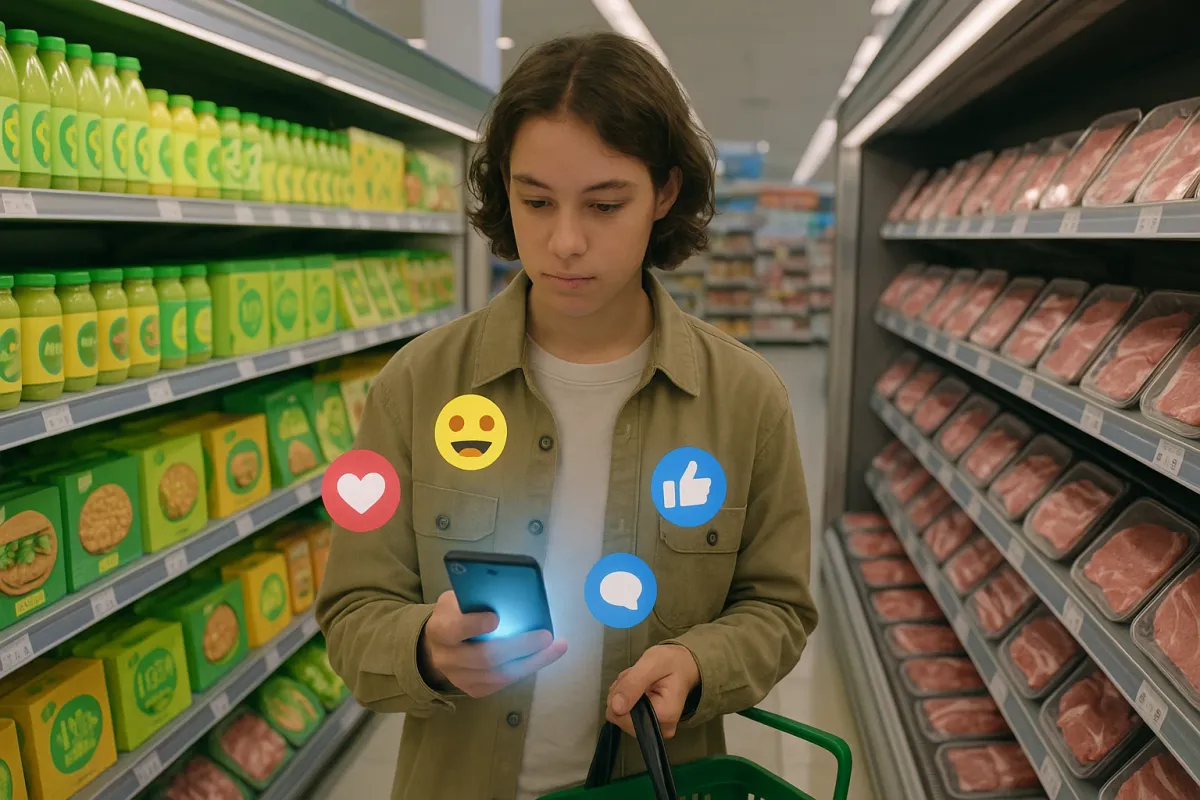
Consumers like to believe they make food choices based on taste, ethics, or health. But behind the scenes, there’s a quieter, industrial-scale battle playing out between powerful business interests—especially in meat and alternative-protein industries—trying to influence what ends up on your plate and in your social media feed.
A viral AMA (Ask Me Anything) recently drew attention by claiming that a poster had been hired by the meat industry to “discredit veganism online.” True or not, the story taps into something very real: businesses across agriculture, food manufacturing, and retail have every incentive to shape the conversation about diets, ethics, and environmental impact. For buyers, that means your “personal choice” might be more manufactured than you think.
Below, we unpack how these influence tactics work in the Business & Industrial world—and how to protect your wallet and your values with smart, practical purchasing habits.
How Industry “Narratives” Are Built (And Why You See Them Everywhere)
In modern agribusiness and food manufacturing, what you eat is only half the product. The other half is the story: “natural,” “humane,” “climate-friendly,” “traditional,” “science-based,” “plant-powered.” Competing industries invest heavily in PR, lobbying, influencer campaigns, and sponsored research to make their version of that story stick.
Large meat producers fund campaigns highlighting “family farms” and “responsible ranching,” while some plant-based brands push messaging that frames all animal products as environmentally catastrophic. Both sides often cherry‑pick data—sometimes accurate, sometimes exaggerated—to win you over. The industrial reality is more complex: factory farms and monoculture soy fields can both be hard on ecosystems, migrant labor, and rural economies.
As a buyer, the key is noticing when a “debate” isn’t just grassroots opinion—it’s part of a large-scale persuasion strategy. If a claim seems perfectly tailored to make one sector look flawless and the other evil, you’re probably looking at marketing, not neutral information.
The New Front Line: Social Media, Influencers, And “Authentic” Voices
Influence used to look like TV ads and billboards. Now it’s “relatable” TikToks, Instagram carousels, and long Reddit threads that feel like conversations, not campaigns. That’s where the alleged “paid to discredit veganism” story hits a nerve: one person posing as a regular commenter can quietly shift how thousands of people talk about meat, dairy, eggs, or plant-based alternatives.
Brands and trade groups now commonly:
- Sponsor influencers who “just happen” to share recipes that heavily feature a particular product (or exclude a rival).
- Seed talking points through PR agencies, which show up as quotes in news articles and viral “explainer” posts.
- Fund research and then amplify the most favorable lines, even if the full study is more nuanced.
- Run “astroturf” efforts—manufactured grassroots movements that look like organic consumer groups.
For industrial buyers (restaurants, caterers, food manufacturers) and everyday shoppers alike, that online noise can crowd out quieter, more balanced information from independent researchers, small producers, and local supply chains.
What This Means For Your Cart: Price, Risk, And Long-Term Value
When narratives are skewed, so are your perceptions of risk and value. A heavily promoted “climate‑friendly” meat brand might be priced 30–50% higher, even if its real-world impact is only marginally better than cheaper competitors. A hyped ultra-processed vegan product might command premium prices while offering little nutritional advantage over a simpler, less-marketed option like lentils, tofu, or eggs.
At scale, these perception gaps ripple through business and industry:
- Restaurants may overpay for “buzzword” ingredients to meet perceived customer demand.
- Retailers allocate more shelf space—and marketing dollars—to products with the loudest online narratives, not necessarily the best quality or value.
- Smaller, less media-savvy suppliers and producers struggle to compete, even if their practices are solid and prices fair.
For you, that translates into higher grocery bills, more confusion, and sometimes disappointing purchases that don’t live up to the hype.
Buyers Pilot Guide: 5 Practical Tips For Smart Purchasing In A Spin-Heavy Food Market
1. Follow The Money Behind The Message
When you see a bold claim about meat, dairy, or plant-based products—either positive or negative—ask yourself: who benefits if I believe this? Then do a quick check:
- Look for the “About” section on the website or social account making the claim. Are they funded by a trade group, advocacy organization, or brand?
- If a study is cited, search the study title plus “funding” or “conflict of interest.” Industry-funded research isn’t automatically wrong, but it needs context.
- Notice repetition of identical talking points across different accounts; that often signals a coordinated campaign.
Smart purchase move: Treat any extreme, all-or-nothing claim (“this food is always toxic,” “this industry is always sustainable”) as marketing until proven otherwise. Build your buying decisions on sources that disclose their funding and methods clearly.
2. Prioritize Labels You Can Verify Over Buzzwords You Can’t
Terms like “natural,” “wholesome,” “clean,” or “eco‑friendly” are often unregulated—it’s easy for marketing teams to slap them on packaging. Some labels, however, have specific standards and third‑party audits.
When choosing between competing products:
- Focus on certifications with clear, public criteria (e.g., organic, certain animal welfare or fair‑labor schemes in your region).
- Verify at least one certification per “premium” product you’re paying more for; if you’re paying extra just for vague language, reconsider.
- Remember that not every credible producer can afford certification—especially small, local ones—so combine labels with research and direct questions when possible.
Smart purchase move: Before paying a premium, ask: What concrete practice am I paying extra for, and who verifies it? If the answer is just a marketing slogan, look for better value elsewhere.
3. Compare Like‑For‑Like On Cost, Nutrition, And Use
Industrial marketing pushes you to see products as lifestyle symbols (“I’m a plant-based person,” “I’m a high‑protein person”) rather than tools that solve a job: feeding you affordably, safely, and sustainably.
When you’re evaluating options—say, ground beef vs. plant-based mince vs. tofu—compare them on:
- Cost per usable portion (not just cost per package).
- Protein and fiber per serving, along with sodium and added sugars.
- How often you’ll realistically use it before it spoils.
- Storage and prep needs (energy use, time, extra ingredients).
Smart purchase move: Make a simple mental scorecard: price, nutrition, practicality. Let that guide you more than whether the brand aligns with your online “identity.” Often, a mix of animal and plant sources, tailored to your budget and values, beats following any single industry’s script.
4. Separate “Ethical Signaling” From Real Operational Impact
Businesses—restaurants, cafes, food brands—often adopt certain labels or menu changes to signal values (like “meatless Mondays” or “locally sourced”) while keeping the underlying supply chain largely unchanged.
As a buyer (whether you’re stocking a restaurant or your home):
- Look for consistency, not isolated gestures. Does the company publish an actual sourcing policy? Supplier list? Annual sustainability or impact report?
- See if claims extend beyond marketing into operations: worker safety, logistics efficiency, waste reduction, packaging choices, and energy use.
- Ask vendors direct, practical questions: “What percentage of your products meet X standard?” “How do you audit your supply chain?” Genuine operators will have honest, sometimes imperfect answers.
Smart purchase move: Don’t pay a premium for surface-level ethics while ignoring bigger-impact factors like waste, transport, and overall product quality. If you’re going to reward “better” business behavior with your money, confirm that it’s more than a label.
5. Use “Slow” Information To Counter “Fast” Influence
Social media is built for speed and emotional reaction; business and industrial realities are slow, technical, and nuanced. To counter the pull of viral narratives:
- Build a small list of trusted “slow info” sources: a few researchers, independent journalists, or data‑driven newsletters you check monthly, not hourly.
- When a new food scare or miracle product goes viral, wait 24–72 hours. Use that time to scan these slower sources for context before changing your buying habits.
- If you manage purchasing for a business (restaurant, office cafeteria, food startup), formalize this: no major product switch based solely on social buzz without a simple internal review—cost, supply risk, actual demand, and credible evidence.
Smart purchase move: Make a personal rule: No big cart or contract changes based solely on something I saw once online. Use fast content as a signal to research, not a command to buy or boycott.
Conclusion
The tug-of-war between meat, vegan, and alternative protein industries is about more than ideology—it’s about market share in a massive global business. When narratives are quietly shaped by those with the most to gain, buyers can end up overpaying, under‑informed, and locked into habits that don’t actually match their values.
You don’t need to become a full-time researcher to opt out of that cycle. By tracing who funds the message, prioritizing verifiable labels, comparing products on real-world performance, looking for genuine operational impact, and leaning on “slow” information, you can turn down the volume on industrial spin.
Your plate—and your budget—should be driven by your priorities, not just by whichever industry did the best job of winning the internet this week.
Key Takeaway
The most important thing to remember from this article is that this information can change how you think about Business & Industrial.