
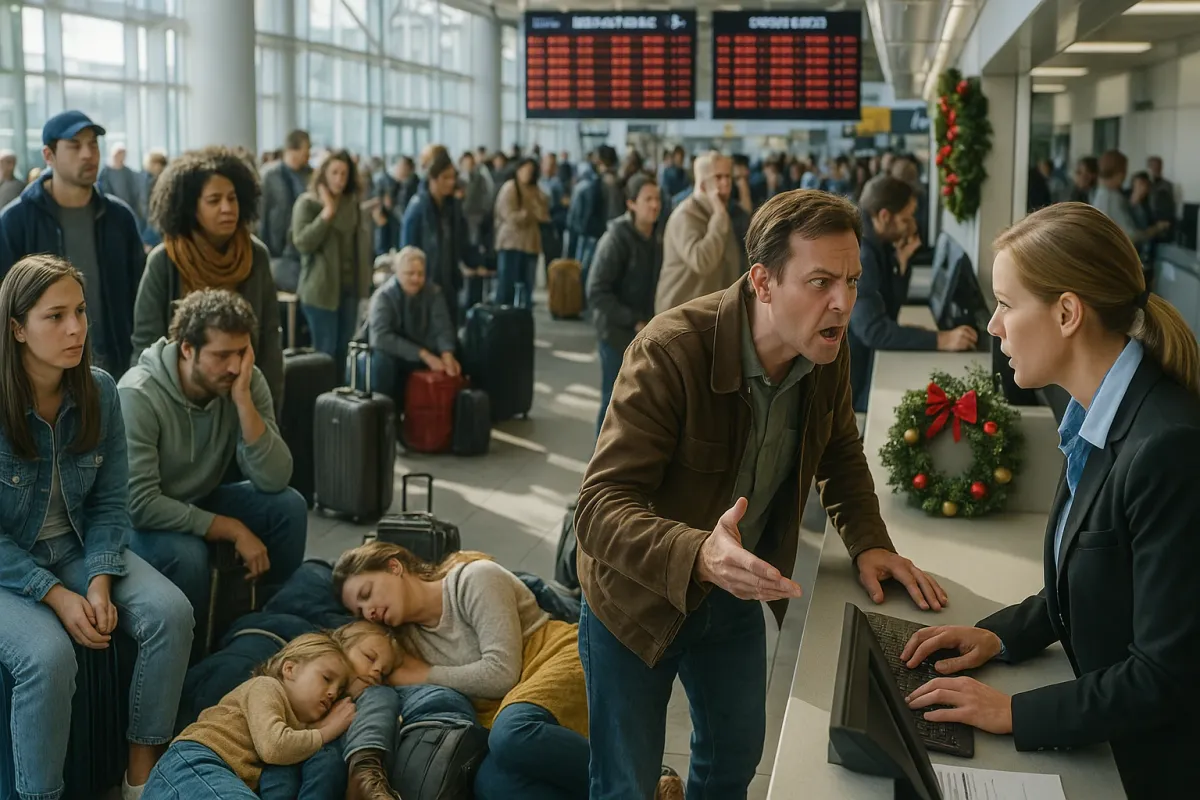
If you’ve scrolled the news or social media today, you’ve probably seen the footage: packed terminals, snaking TSA lines, and stranded travelers posting angry updates from airport floors. With airlines warning of record passenger volumes and winter storms already disrupting key hubs, holiday travel in 2025 is shaping up to be one of the most stressful in years. At the same time, travel brands are blanketing feeds with “limited-time” offers, flash fares, and “premium peace-of-mind” add‑ons—leaving buyers to sort out what’s actually worth paying for.
In this guide, we break down what’s happening in airports right now, how airlines like Delta, United, American, and Southwest are responding, and what these trends mean if you’re about to hit “book.” Most importantly, you’ll find five practical, consumer-first buying tips to help you navigate crowded skies, confusing add-ons, and aggressively marketed “travel upgrades” without overspending.
Why Airports Feel More Chaotic This Year
News outlets are highlighting a convergence of factors driving today’s chaos: record demand, lean staffing, and unpredictable winter weather. The TSA has already reported multiple all‑time highs for passengers screened in a single day this season, surpassing previous records set in 2024. Major carriers, including United Airlines and American Airlines, have been operating near or at capacity on prime routes, adding more flights but still struggling to keep ahead of surging demand. Meanwhile, even minor storms have had outsized impacts, as tightly packed flight schedules leave little room for recovery when a hub gets hit. For travelers, this means more delays, more missed connections, and more nights unexpectedly spent at airport hotels—costs that don’t always appear in the ticket price.
On social media, TikTok and X (Twitter) are flooded with videos of people stuck in multi-hour customer service lines, arguing over rebookings, or discovering that their “basic economy” ticket offers far fewer protections than they realized. Regulators have taken notice: in the U.S., the Department of Transportation has been pressuring airlines to improve transparency around refunds and rebooking policies, publishing customer-service dashboards that compare carriers. That push, combined with consumer backlash after high-profile meltdowns (like Southwest’s multi-day operational failure during late 2022), is slowly nudging airlines toward clearer policies—but the fine print still matters, and it directly affects what you should buy.
How Airlines Are Monetizing Your Stress
As disruption risks climb, airlines and travel platforms are selling more “peace of mind” than ever. You’ve likely seen it: screens full of upsells for priority boarding, “trip protection,” seat selection, same-day change flexibility, and branded fare families like Delta’s “Comfort+,” United’s “Economy Plus,” or American’s “Main Plus.” At the same time, ultra-low-cost carriers and basic economy options from legacy airlines keep base fares low while charging aggressively for extras like bags, changes, and even choosing a seat. This bifurcated model is at the heart of today’s confusing travel shopping experience.
Current news about airport chaos has made these add-ons feel less optional. After watching viral clips of families separated on flights or travelers losing hundreds on non-refundable fares when storms hit, many buyers feel compelled to “upgrade” out of fear. Insurers and third-party booking sites are amplifying that anxiety with prominently placed “Protect your trip!” warnings, often framed as a small price to avoid a massive loss. The challenge is that not all protections are equal: some give you meaningful flexibility, while others are narrowly written policies that pay out only in rare scenarios. In the middle of a busy news cycle full of horror stories, it’s easy to overbuy out of stress rather than strategy.
What Today’s Headlines Reveal About Airline Reliability
Beyond individual disruptions, the current wave of holiday travel headaches is shedding light on which airlines handle stress better—and how that should influence your purchase decisions. Over the past few years, performance data and post‑meltdown analyses have shown that some carriers are more resilient in the face of storms and holiday surges. For instance, after its 2022 crisis, Southwest Airlines has been under sustained scrutiny regarding its crew-scheduling tools and operational planning, prompting investments but also leaving some travelers wary. Meanwhile, Delta has often ranked high in on‑time performance metrics and customer satisfaction, though no airline is immune to winter storms or staffing shortages.
Regulators in the U.S. and Europe have also made progress in forcing carriers to publish clearer “customer commitment” documents. These outline what you’re owed in various scenarios—from mechanical cancellations to weather disruptions. Today’s coverage of delayed flights and stranded passengers often highlights where those commitments fall short, or where customers didn’t realize they had rights they could invoke. This context is crucial when you’re choosing between a rock‑bottom fare and a slightly pricier option: the ticket price is just one part of the value equation. Reliability, rebooking support, and compensation policies are all embedded in that airline’s track record and the regulatory environment they operate in.
5 Smart Buying Moves For Your Next Trip (Especially Right Now)
With the travel news cycle full of worst‑case scenarios, it’s easy to react emotionally. These five practical strategies can help you buy smarter, protect your budget, and avoid unnecessary “panic purchases” while still preparing for real risks.
1. Treat the Cheapest Fare as a Starting Point, Not an Automatic Win
When major carriers and online travel agencies advertise eye‑catching sale prices during a week full of delay headlines, those base fares can be deceptively bare. Basic economy or ultra-low-cost options may exclude carry-on bags, seat selection, changes, and sometimes even standard customer-service support channels. Before you celebrate a cheap deal, click through to the fare rules and add up what you’d realistically need: one checked or carry-on bag, a standard seat, and at least some change flexibility if weather hits. In many cases, you’ll find that paying a bit more upfront for a “standard economy” or “main cabin” fare on a full‑service airline ends up cheaper and less stressful than piecing together add-ons on a bare‑bones ticket.
Use this week’s stories of stranded basic-economy travelers as a reminder that restrictions matter: some bargain fares can’t be changed at all, or can only be changed with steep penalties that erase your savings. When comparing options on sites like Google Flights, Hopper, or Kayak, don’t just sort by price—tap into filters that show baggage policies and change options. Think in terms of “total trip cost with realistic behavior,” not “headline fare in ideal conditions.”
2. Buy Flexibility Strategically, Not Emotionally
With winter storms leading news segments and airlines issuing proactive waivers, flexibility is genuinely valuable—but not every “flexible” add‑on is a good deal. Start by checking whether your route and dates are likely to be affected: are you flying through weather-prone hubs like Chicago, Denver, or New York during peak storm season? Are you on the last flight of the day to a smaller airport with limited alternatives? If the answer is yes, then paying up for a fare that allows free same-day or no‑fee changes can be a smart move. Many carriers have begun bundling this flexibility into mid-tier fare classes, which may be cheaper than buying à‑la‑carte “trip protection” later.
On the other hand, broad third‑party travel insurance policies that promise to cover “anything” often come with long exclusions lists. Most standard plans don’t cover voluntary changes if you simply decide not to travel, and even “cancel for any reason” (CFAR) upgrades typically only reimburse a portion of your costs and must be bought within a short window after booking. Before you click purchase in a moment of anxiety, skim the policy’s covered reasons, required documentation, and reimbursement caps. If you’re mostly worried about weather and airline operational problems, a changeable fare with a reputable carrier can sometimes offer more practical flexibility than a complex insurance package.
3. Check Airline Track Records and Passenger Rights Before You Book
Today’s reporting on travel chaos often cites on‑time rates, cancellation statistics, and customer-service rankings—information you can use before you buy. Sites like the U.S. DOT’s Airline Customer Service Dashboard, independent ranking reports, and even recent news coverage can help you spot patterns. If an airline has a history of buckling during holiday surges or has been fined for misleading refund practices, treat that as a hidden “cost” that might outweigh a slight price advantage. Conversely, an airline consistently praised for proactive rebooking and transparent compensation can be worth a small premium when travel is volatile.
Equally important: understand your legal rights on the routes you’re flying. In the European Union, for example, EC261 rules provide robust compensation in many delay and cancellation scenarios for flights departing from (or operated by carriers based in) the EU. In the U.S., rights are more limited but improving, with proposals to mandate compensation for controllable delays still in discussion. Before booking an international trip during a turbulent period, consider how these frameworks affect your risk. A slightly more expensive ticket on an airline covered by strong passenger-rights rules can function as a kind of built-in insurance.
4. Avoid Add-On Overload at Checkout
In the heat of the moment—especially after reading a slew of horror stories—it’s easy to say yes to every upsell screen. Priority boarding, airport lounge access, “VIP” security, extra legroom, seat selection, meal pre‑orders, and multiple layers of travel insurance can quickly turn a reasonable fare into an eye‑watering bill. The key is to separate what actually improves resilience and comfort for your specific trip from what’s just fear‑based marketing. For example, if you’re traveling light with only a personal item and don’t care where you sit, paying for seat selection and priority boarding may deliver little real benefit, even during busy periods.
On the flip side, some add-ons can be good value if purchased in the right context. A same‑day change option or modest upgrade that includes a free checked bag and early boarding may be worthwhile if you’re connecting through crowded hubs with tight layovers. To stay disciplined, set a pre‑booking budget that includes both the ticket and an allowance for practical extras, and stick to it. When in doubt, pause and ask: “Will this materially reduce my risk or significantly improve my experience, or am I just reacting to scary headlines?” That question alone can save you from a surprising credit card statement later.
5. Build Backup Plans Into Your Purchase (Without Breaking the Bank)
Today’s news coverage is full of people who made it to the airport with no Plan B: no alternate flight option, no knowledge of nearby airports, and no buffer in hotel or event bookings. You can quietly build resilience into your trip at the buying stage without overspending. Start with schedule design: whenever possible, choose morning flights, which are statistically more likely to depart on time and give you more same‑day rebooking options if something goes wrong. Avoid razor‑thin connections, especially when flying through weather‑sensitive hubs or switching between different airlines on separate tickets.
Next, consider how you book. While third‑party sites can offer good deals, rebooking during disruptions is often easier when you purchase directly from the airline—since you won’t be caught between two companies pointing fingers at each other. If you must book across multiple providers (for example, mixing a low‑cost intra‑Europe hop with a long‑haul international leg), leave generous time buffers between flights and consider staying overnight rather than rushing a tight connection. Finally, look for flexible hotel and car rental rates that allow last‑minute changes without heavy penalties; major chains and platforms like Booking.com or Expedia often flag “free cancellation” options. That way, if your travel day shifts because of an airline meltdown, your ground costs don’t double the damage.
Conclusion
The scenes playing out in airports today—overflowing terminals, mass delays, frustrated passengers filming every interaction—aren’t just dramatic headlines; they’re signals about how the modern travel system behaves under stress. Airlines are selling flexibility, protection, and comfort with increasing intensity, while regulators and consumer advocates push for clearer rules and more transparency. As a traveler, your best defense is not buying every promise of peace of mind, but understanding where the real risks are and which products genuinely reduce them.
By looking beyond the base fare, buying flexibility strategically, factoring in airline performance and passenger rights, resisting checkout upsell overload, and quietly designing backup plans into your itinerary, you can navigate this year’s chaotic travel landscape with more control and fewer surprises. You may not be able to stop winter storms or system outages, but you can make smarter, more informed choices that protect both your time and your wallet—no airport floor camping required.
Key Takeaway
The most important thing to remember from this article is that this information can change how you think about News.