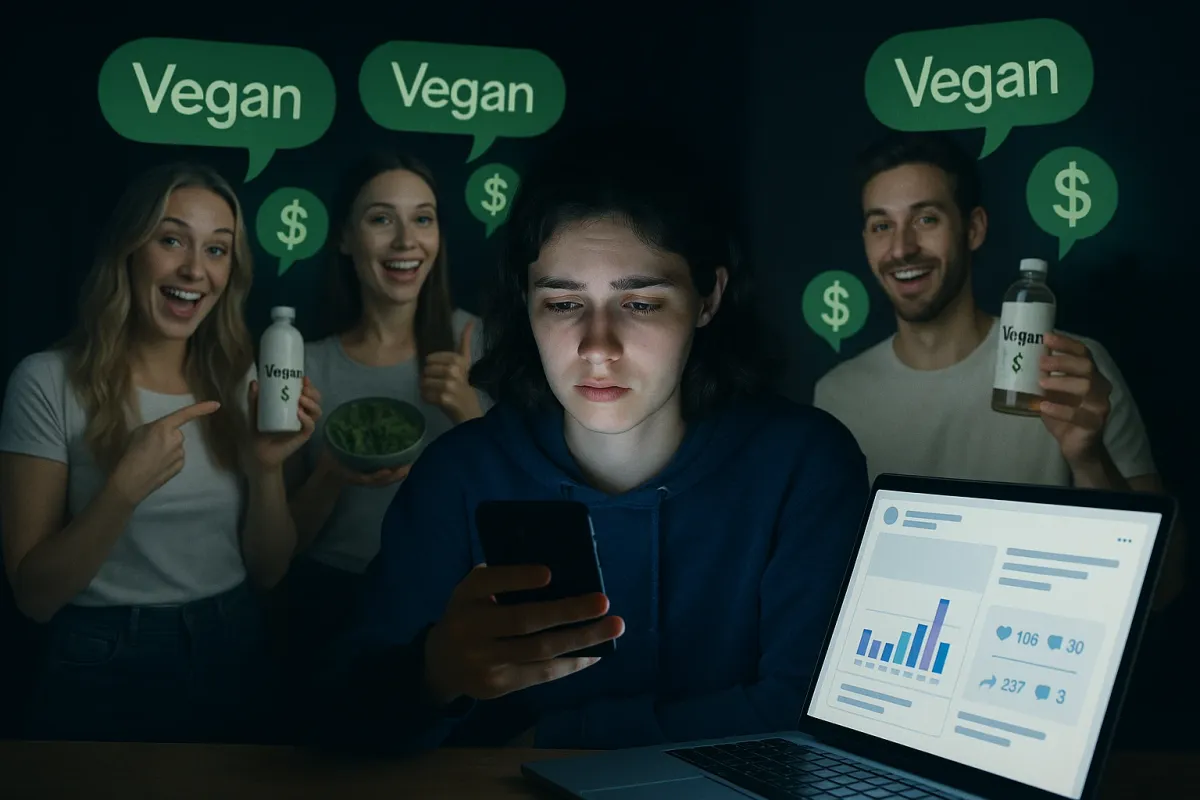
When a Redditor claiming to be a former “meat industry employee” recently went viral for saying they were paid to discredit veganism online, it confirmed what many internet users already suspected: not every “regular person” opinion you see in online communities is organic. Some of it is coordinated influence, designed to push you toward (or away from) certain lifestyles, products, and brands.
The alleged campaign, discussed in that trending AMA, described tactics like seeding arguments in comment sections, amplifying “relatable” anti‑vegan jokes, and creating fake accounts to make one side of a debate feel louder and more popular than it really is. Regardless of where you stand on veganism, this story matters for one big reason: it shows how easy it is for paid messaging to blend into the everyday chatter of online communities you trust—and how that can shape what you buy.
For shoppers who rely on Reddit threads, Facebook groups, YouTube comments, TikTok lives, or Discord servers before hitting “Add to Cart,” this is a wake‑up call. Here’s how this kind of stealth marketing works—and how to keep your spending smart and intentional when the internet is quietly trying to nudge your choices.
How “Astroturfing” Hijacks Online Communities
Astroturfing is when companies or interest groups fake grassroots support by using bots, burner accounts, and paid posters to flood online spaces with specific talking points. In the veganism case, the alleged goal was simple: make vegan diets and products appear extreme, unhealthy, or socially “cringe,” while making meat-heavy choices feel normal and safe.
This isn’t unique to food debates. We’ve seen similar tactics around:
- Crypto and meme stocks pushed in subreddits and Telegram groups
- “Organic” skincare wars waged in TikTok comments
- Weight‑loss drugs debated in Facebook health communities
- “Totally unbiased” product recommendations in niche forums that conveniently favor specific brands
The problem is that these posts look just like regular user opinions. They might share a personal story (“Tried this vegan burger, never again lol”) or ask a leading question that pulls in more negative replies. Over time, this shapes the overall “vibe” in a community—and that vibe can quietly influence what products you refuse to even consider, or which brands you pick up without thinking.
Online communities are still powerful tools for smart shopping—but only if you learn to read between the lines. Below are five practical, consumer-focused ways to keep your purchasing decisions grounded in reality, not manufactured consensus.
Tip 1: Treat Viral Opinions Like Ads Until Proven Otherwise
When that viral anti‑vegan comment, skincare rant, or gadget endorsement starts popping up everywhere, your brain treats it as “what people like me think.” But as the veganism disinfo story highlighted, those loudest voices might be paid to be loud.
Before a strong opinion in your feed affects what you buy (or boycott), pause and ask:
Who benefits if I believe this?
If the post trashes an entire category (like “all plant‑based meat is toxic” or “all budget headphones are garbage”), what competing products get an advantage?
Is this account suspiciously focused on one topic?
Scroll their history. If almost every comment is about the same brand, diet, or political angle, that’s a red flag.
Are they vague on details?
Real users usually share specifics: model numbers, flavors, stores, prices, side effects. Vague “I heard vegan cheese causes X” with no source is low‑value input.
Does the language sound copy‑pasted?
Repeated phrases across different accounts (“As a concerned consumer, I just think…”) can indicate coordinated messaging.
Use a simple mental rule: “One loud post = entertainment. Multiple sources with details = useful data.” Don’t let the first scroll decide your next purchase.
Tip 2: Cross‑Check Community Advice With Neutral Sources
Online communities are great for real‑life usability: Will this blender actually survive frozen smoothies? Does that budget phone lag in daily use? But when the conversation is clearly ideological (vegan vs meat, “natural” vs “chemical,” budget vs luxury), it’s easier for hidden campaigns to steer the narrative.
To protect your wallet:
- Pair community chatter with independent testing sites.
For products, check resources like Wirecutter, Rtings, or local consumer organizations. For anything health-related (including vegan or carnivore diets), look for registered dietitians, peer‑reviewed studies, or official health bodies.
- Look beyond the first page of comments or reviews.
Early comments can be brigaded. Sort by “Most Recent” or “Most Critical” to see if the story changes when you’re not just reading the top‑voted take.
- Compare communities, not just comments.
See how a topic is discussed on Reddit, TikTok, and a specialist forum. If one space is overwhelmingly negative or positive compared to everywhere else, that’s a clue.
- Watch for “consensus flips.”
If a subreddit or Facebook group suddenly shifts from mixed views to near‑unanimous praise or hate for a product category, it might reflect a coordinated push, not a genuine mass epiphany.
Think of it like getting multiple quotes before a big purchase—but for opinions.
Tip 3: Follow The Money Before You Follow The Advice
The alleged veganism smear campaign exploded because it pulled back the curtain on who might be paying for which opinions. That same logic can help you decode recommendations across online communities.
When you’re evaluating advice that could change what you buy:
- Check for disclosures.
On YouTube, Instagram, TikTok, and blogs, look for “#ad,” “paid partnership,” or affiliate disclosures (“links may earn commission”). Lack of a label doesn’t guarantee honesty, but clear labels at least tell you someone has a financial stake.
- Be wary of “I’m not sponsored, but…” content.
Some creators receive free products, early access, or other perks that soften criticism. That’s still an incentive, even if no cash changed hands.
- Do a quick background search on loud voices.
If a Twitter/X account, Substack writer, or subreddit mod is heavily invested in a specific industry, they may have indirect ties. Google their name/handle plus brand names they mention often.
- Notice who gets defended aggressively.
If anyone who criticizes a particular product or diet gets dogpiled by new or low‑karma accounts, that can indicate brigading rather than genuine community pushback.
For your budget, a simple practice works well: treat every recommendation as biased until you understand the incentives. That doesn’t mean dismissing it, just discounting its weight until you’ve looked elsewhere.
Tip 4: Use Communities For “Fit Checks,” Not Final Decisions
Even if some comments are influenced or coordinated, online communities still shine at answering a question most ads ignore: “Will this actually fit my life?”
Instead of letting strangers decide what you should buy, use them to refine how a choice fits you:
- When considering a controversial product (like plant‑based meats, weight‑loss apps, or trendy meal kits), ask for:
- Long‑term experiences (“Who’s used this for 6+ months?”)
- Specific scenarios (“Anyone with a small kitchen using this air fryer?”)
- Honest trade‑offs (“What did you like enough to keep paying for?”)
- Pay special attention to balanced reviews.
Comments that list both pros and cons—“This vegan cheese melts well but has a strong aftertaste; okay on pizza, weird on sandwiches”—are more believable than pure hype or pure hate.
- Sort by “Most Helpful” instead of “Most Liked” or “Top.”
On some platforms, users can mark replies as helpful; these often come from people who’ve actually used the product rather than just chiming in on the ideology.
- Save standout, detailed reviews.
If you keep a note with a few honest‑sounding takes (good and bad), you’ll be less swayed the next time a dramatic thread tries to convince you it’s “life‑changing” or “a scam.”
In other words: let communities help you answer “Does this work for people like me?” But keep the final decision grounded in your budget, your needs, and data from sources with less drama.
Tip 5: Set Personal “Spend Rules” Before You Scroll
One of the biggest risks of influence campaigns—like the alleged anti‑vegan effort—is not just that they change your mind; it’s that they change your spending in the moment, while you’re emotionally charged by arguments, memes, and viral threads.
To keep control of your purchases in these high‑noise environments, set a few simple rules for yourself:
- No buying directly from outrage.
If a thread makes you feel attacked (“People who buy X are idiots”) or smug (“Only smart people choose Y”), pause. You’re being emotionally primed. Add it to a list and revisit in 24–48 hours with a cooler head.
- Create a 24‑hour rule for anything you discovered in a heated debate.
Saw a “must‑try” carnivore cookbook in a vegan vs meat fight? Or a “you’re dumb if you don’t use this” supplement? Wait one day. If you still want it after some research, go ahead.
- Cap your “inspired by the internet” budget.
Decide how much per month you’re okay spending on things you discovered through Reddit, TikTok, Discord, etc. Once that’s gone, the rest of your purchases must come from your pre‑planned list—not from whatever’s trending.
- Keep a running “regret list.”
Note the things you bought mainly because a community hyped or dunked on something else (for example, switching from oat milk back to dairy just to “own” someone in your head). Seeing the pattern will make you less likely to repeat it.
These rules sound simple, but they effectively disconnect your wallet from the emotional roller coaster of online discourse—whether it’s about veganism, fashion, gadgets, or the next big wellness trend.
Conclusion
The viral claims about an ex‑employee paid to undermine veganism online are more than niche drama—they’re a real‑time case study in how easily online communities can be steered by interests you never see. Today it’s diet wars; tomorrow it might be the sneakers you buy, the car you finance, or the supplements you put in your body.
You don’t need to abandon Reddit, Discord, Facebook groups, or TikTok reviews. You just need to treat them as one input among many, not the ultimate authority. Question loud consensus, follow the incentives, and give yourself time and guardrails before letting internet arguments touch your bank account.
Online communities can absolutely help you find better products and avoid bad ones. With a bit of skepticism and structure, they’ll stay what they were meant to be: tools for smarter decisions—not shortcuts for hidden campaigns to spend your money for you.
Key Takeaway
The most important thing to remember from this article is that this information can change how you think about Online Communities.