
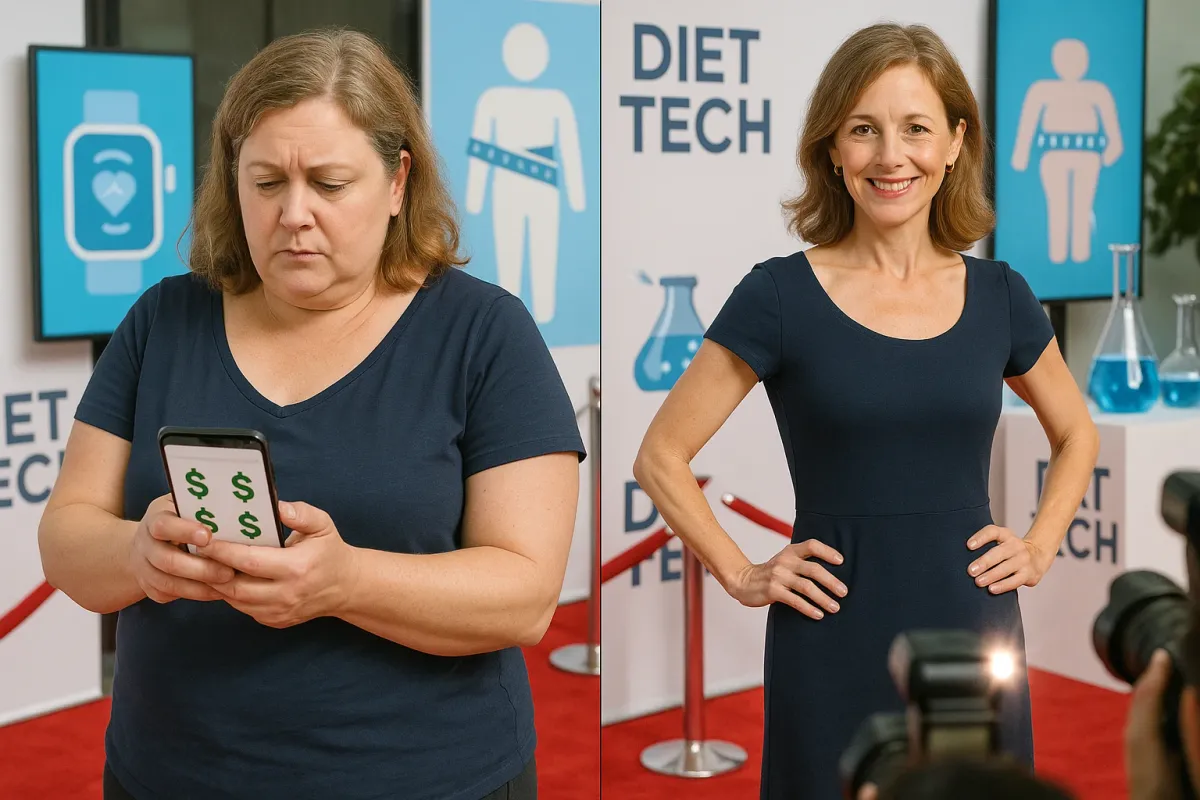
Hollywood weight-loss transformations are nothing new—but the reaction to Melissa McCarthy’s recent 95-pound weight loss after her SNL appearance has hit a nerve. Fans and critics alike have openly wondered whether she used blockbuster weight-loss drugs like Ozempic or Wegovy, while others point to stricter nutrition plans, trainers, and a more science-backed approach to health. Regardless of what she personally did (which she hasn’t fully detailed), the public conversation around her body has collided with one of the biggest science-and-consumer stories right now: rapid advances in obesity medicine and the booming market of products trying to cash in on it.
Behind the viral headlines is a real scientific shift. GLP-1 drugs from companies like Novo Nordisk and Eli Lilly have changed how doctors talk about obesity—as a treatable, chronic metabolic disease—while TikTok, Instagram, and late-night infomercials are flooded with “GLP-1 alternatives,” metabolic gummies, fat-burning wearables, and personalized diet apps. For everyday buyers, it’s never been easier—or more confusing—to spend a lot of money on “science-based” weight-loss solutions. Here’s how to understand what’s actually happening in the science, and how to make smarter purchasing decisions in a market moving faster than most people can fact-check.
The New Science of Weight Loss: What’s Actually Changed
For decades, the weight-loss industry was dominated by calorie-counting, extreme diets, and vague promises to “boost metabolism.” What’s different now is that serious clinical research has produced drugs that act directly on appetite and blood sugar regulation. GLP-1 receptor agonists like semaglutide (Ozempic, Wegovy) and tirzepatide (Mounjaro, Zepbound) mimic or enhance gut hormones that signal fullness and help regulate insulin. In large trials, some patients have lost 15–20% of their body weight—results closer to bariatric surgery than to old-school diet pills.
This shift has forced a new conversation: obesity as a biological, not purely “willpower,” problem. But it’s also created a gold rush. Every wellness brand now wants to sound like it’s built on the same “cutting-edge science,” even when products have never been tested in rigorous clinical trials. When celebrities like McCarthy appear suddenly slimmer, the public mind immediately jumps—to injections, to miracle programs, to products you can order with a single tap. The science is real, but so is the marketing spin around it.
How Celebrity Transformations Drive “Scientific” Fads
When a well-known figure shows up transformed—whether it’s Melissa McCarthy, other rumored GLP-1 users, or fitness influencers—the internet fills in the blanks. Fans speculate about injections, strict diets, or “secret” supplements; brands move quickly to attach themselves to whatever theory is trending. “Ozempic-like” capsules that don’t contain semaglutide, metabolic powders claiming “GLP-1 support,” or “hormone reset” programs often appear within weeks of a viral moment.
The problem is that this celebrity-driven cycle shortcuts the boring but necessary part of science: controlled experiments, long-term follow-up, and published data. What worked (or didn’t) for a single person with access to top-tier medical care, chefs, trainers, and possibly prescription drugs is not a product you can just add to cart. Yet the more these stories trend, the more they normalize the idea that any dramatic change must be drug- or product-driven—and that if you’re not buying something, you’re “falling behind.” That’s a powerful sales engine, but it’s not how responsible science-based buying decisions should work.
Where the “Science” Stops and the Sales Pitch Starts
A big reason this space is so confusing is that scientific terms are easy to borrow. Words like “clinically tested,” “hormone balancing,” “metabolic optimization,” and “doctor-formulated” sound impressive, but they can be vague or selectively true. A supplement may be “tested” in a tiny, poor-quality study or in animals only. A wearable may track heart rate and movement accurately, but then leap into unproven claims about “fat-zapping” or “metabolic age” without peer-reviewed backing.
Regulators like the FDA strictly control prescription drugs such as Ozempic and Wegovy—but they are far looser on supplements, apps, or wellness gadgets, which can often be sold with minimal oversight as long as companies avoid certain disease-treatment claims. That’s why you’ll see careful phrasing like “supports healthy weight management” instead of “treats obesity.” The scientific language may be borrowed from real research, but it doesn’t mean the specific product you’re seeing has been proven to do what it promises.
5 Practical Tips for Smart Buying in the New Weight-Loss Science Era
1. Separate “Real Drug” Science From “Supplement Sound-Alikes”
Prescription GLP-1 drugs (like Ozempic, Wegovy, Mounjaro, Zepbound) have large, peer-reviewed clinical trials behind them. Most over-the-counter “GLP-1 support” or “Ozempic alternative” products do not. When you see a product referencing these drugs or using similar language:
- Check whether it is a prescription medication (requires a doctor, comes from a licensed pharmacy) or just a supplement.
- Search the exact product name plus “clinical trial” or “PubMed.” No results, no data.
- Be wary of vague ingredient lists with “proprietary blends” instead of clear doses—real science needs real numbers.
If a non-prescription product is implying results comparable to prescription drugs but offers no formal trials, treat that as a red flag, not a shortcut.
2. Look for Independent, Peer-Reviewed Evidence—Not Just Before/After Photos
Before-and-after images, influencer testimonials, and celebrity “reveals” are powerful but unreliable. They tell you what one person claims happened, not what will likely happen for you. To evaluate whether a product is grounded in actual science:
- Look for published human studies, ideally randomized controlled trials, in reputable journals.
- Check if the study was done on the full product, not just one ingredient pulled out of context.
- Pay attention to sample size (dozens of people is weak; hundreds or thousands is better) and duration (a few weeks is far less convincing than a year).
If a company can’t point you to any independent research—even one decent study—you’re probably buying marketing, not science.
3. Choose Regulated, Transparent Providers Over Trendy “Pop-Up” Clinics
With the demand for weight-loss prescriptions exploding, many telehealth and boutique clinics have jumped into the market. Some are reputable; others cut corners. To protect your money and your health:
- Verify the provider is licensed in your region and uses recognized medications from major manufacturers (e.g., Novo Nordisk, Eli Lilly), not mystery “research compounds.”
- Be cautious with offers that push compounding pharmacies and custom “semaglutide blends” without clearly explaining sourcing and safety.
- Avoid any clinic that promises guaranteed weight loss or encourages you to bypass a full medical history and lab work.
A slightly higher price from a transparent, conventional medical provider is usually safer and cheaper than dealing with complications from a cut-rate option.
4. Budget for the Real Cost: Ongoing Care, Not Just the First Month
Many consumers focus on the “intro price” of a program or medication and underestimate what staying on it will cost. Obesity drugs and medically supervised programs are often long-term commitments; stopping abruptly can lead to weight regain. Before signing up:
- Ask for a 12–24 month cost estimate, including follow-up visits, lab tests, medication refills, and any mandatory supplements or subscriptions.
- Check how insurance treats obesity medications—some plans cover them for diabetes but not for weight loss alone.
- Compare the monthly cost to other long-term health investments: gym memberships, nutrition counseling, or hybrid plans that blend lower medication doses with lifestyle support.
A realistic cost picture helps you avoid the common trap of paying a lot up front, stopping early, and ending up back where you started.
5. Spend First on Foundations: Sleep, Food Quality, Movement, and Mental Health
Even the best science-based drugs work with your biology, not instead of it. Clinical trials for GLP-1 medications assume at least some baseline lifestyle support: reasonable nutrition, movement, and medical monitoring. From a buyer’s perspective, that means high-priced products are not always your first best spend:
- Consider directing money first toward evidence-backed basics: a session with a registered dietitian, a sleep consultation if you struggle with rest, a walking pad or simple strength equipment, or a behavioral health professional if stress or emotional eating are big drivers.
- If you do pursue medication or a structured program, prioritize ones that bundle lifestyle support (coaching, education, or group visits) rather than selling you a drug alone.
- Be skeptical of anything that promises “no lifestyle changes needed.” That’s not how long-term health works, no matter how advanced the drug.
In the long run, you’re buying not just weight change, but a body that functions better. Foundational investments usually pay the highest health “dividends” per dollar.
Conclusion
Melissa McCarthy’s dramatic weight-loss reveal didn’t just spark curiosity about her personal choices—it lit up a much bigger, science-driven shift in how we talk about weight, health, and what’s possible with modern medicine. Behind the speculation are real breakthroughs in obesity treatment, but also a flood of products trying to ride the same wave without offering the same evidence. As a consumer, you’re not just passively watching this story; you’re the target audience.
You don’t need a celebrity budget or a closet full of “biohacking” gadgets to benefit from the new science. What you do need is a clear filter: separate prescription-level science from supplement marketing, demand real data instead of glossy transformations, choose regulated providers, calculate long-term costs, and keep your core health habits front and center. The more the world talks about viral transformations, the more valuable it becomes to be the buyer who understands the difference between a headline and a truly smart, science-backed purchase.
Key Takeaway
The most important thing to remember from this article is that this information can change how you think about Science.