
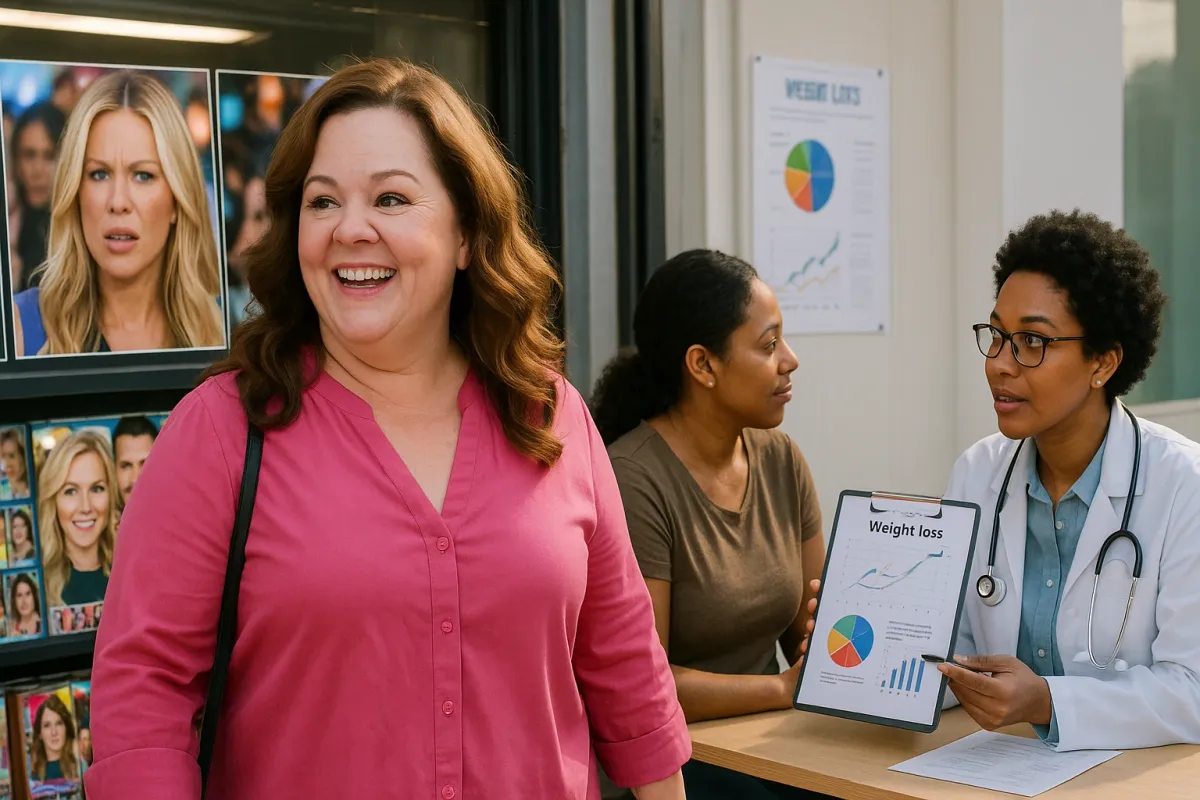
When Melissa McCarthy stepped onto the “Saturday Night Live” stage recently looking dramatically slimmer—reportedly around 95 pounds lighter—the internet lit up. Social feeds filled with side‑by‑side photos, hot takes, and one recurring question: “Did she use weight‑loss injections?” Even Barbra Streisand publicly wondered about it, sparking a wave of debate around Ozempic, Wegovy, Mounjaro, and other GLP‑1 medications.
Whether or not McCarthy used a specific drug hasn’t been confirmed, but the reaction to her appearance says a lot about where we are right now: celebrity bodies are driving health trends, and people are reaching for powerful medications without always understanding the risks, costs, or alternatives.
If you’re tempted to chase similar results—especially with injectable weight‑loss drugs—this is the moment to slow down, get informed, and shop your health options as carefully as you’d shop for a car or a new phone.
Below, we’ll break down what’s actually happening in the weight‑loss world right now and share five practical tips for smart, safe purchasing decisions.
What Melissa McCarthy’s Transformation Tells Us About 2025’s Weight‑Loss Culture
McCarthy’s “SNL” appearance landed at a time when GLP‑1 weight‑loss drugs are everywhere: in pharmacy shortages, on TikTok “what I eat in a day on Ozempic” videos, and in quarterly reports from Novo Nordisk (Ozempic/Wegovy) and Eli Lilly (Mounjaro/Zepbound). These medications were originally designed to treat type 2 diabetes but have been approved in certain forms and doses for obesity treatment.
The pattern is familiar:
• A high‑profile body change (like McCarthy’s) goes viral.
• Speculation about “Ozempic bodies” floods social media.
• People feel pressure to “catch up” and look for the fastest route.
The risk? When the conversation is dominated by celebrity reveals and red‑carpet photos, it’s easy to forget the basics: these are prescription medications with real side effects, long‑term cost commitments, and not‑for‑everyone eligibility criteria. At the same time, shady online sellers, counterfeit pens, and under‑qualified telehealth mills are rushing in to meet demand.
Instead of asking, “How did Melissa do it?” a more useful consumer question is: “If I want to improve my health and weight, what’s the safest, smartest way to spend my money right now?”
Understanding Today’s Weight‑Loss Landscape (Before You Spend a Dollar)
In 2025, you’ll see three big categories of options marketed at you:
Prescription GLP‑1 medications
– Examples: Ozempic, Wegovy (Novo Nordisk); Mounjaro, Zepbound (Eli Lilly) – Real clinical backing for people with obesity or certain health risks – High monthly cost (often $800+ in the U.S. without coverage) – Require ongoing use for continued effect in most cases – Possible side effects: nausea, vomiting, pancreatitis risk, gallbladder issues, etc.
Non‑prescription “Ozempic‑like” supplements and drops
– Often advertised as “GLP‑1 support,” “metabolic boosters,” “natural Ozempic,” or “skinny pen” – Frequently lack strong clinical data or regulation – Can be under‑dosed, over‑dosed, contaminated, or completely ineffective – Heavy use of influencer marketing and before‑after photos
Lifestyle and structured programs
– App‑based coaching (like Noom, WeightWatchers’ new “clinic” offerings), gym memberships, dietitian‑led plans – More sustainable habit‑building, often cheaper over the long run – Slower, but with better odds of lasting results
Celebrity weight‑loss coverage, like the reactions to McCarthy’s recent appearance, tends to blur these categories together. That’s exactly how impulsive, expensive, and risky purchases happen.
Let’s break down five grounded, practical tips to help you navigate this space like a savvy health consumer.
Tip 1: Treat Weight‑Loss Drugs Like a Major Financial Commitment, Not a Quick Experiment
Before you even think about a prescription pen, run the numbers as if you were taking on a subscription you can’t easily cancel.
Key questions to ask:
- What’s my realistic monthly cost?
- Prior authorization requirements
- Step therapy (needing to try other options first)
- Maximum covered duration
- Can I afford this for 12–24 months, not just one?
Check your insurance portal or call your insurer. Coverage for Wegovy, Zepbound, and similar drugs varies widely. Some employers have just added them; others explicitly exclude them due to cost. Ask about:
Most people need to stay on GLP‑1 meds long‑term to maintain weight loss. Stopping abruptly can lead to rapid regain. If you plan to use them, assume a 1–2 year horizon at least.
- What’s the total cost compared to alternatives?
- GLP‑1 meds: $800–$1,300/month cash price if uninsured
- Medically supervised program with lifestyle + lower‑cost meds: often $100–$300/month
- App‑based coaching + gym: often under $100/month total
Rough mental comparison:
If a medication would eat up your emergency savings or push you into credit card debt, it’s worth exploring lower‑cost, medically supervised alternatives first. The most “effective” option clinically is not effective if it quietly wrecks your budget or forces you to stop mid‑journey.
Tip 2: Verify Every Prescriber and Pharmacy—Counterfeits Are a Real 2025 Problem
The buzz around celebrity transformations has fueled a black market. Regulators and manufacturers have repeatedly warned about counterfeit GLP‑1 products being sold online—some containing wrong doses, wrong ingredients, or no active ingredient at all.
Smart verification steps:
- Use only licensed prescribers and pharmacies.
- Confirm the platform is licensed in your state.
- Check the company’s name in your state’s medical board website.
- Avoid prescribers who guarantee you’ll “definitely qualify” before any medical history review.
- Check for FDA‑approved products and packaging.
- Avoid “compounded semaglutide/tirzepatide” from unknown clinics unless your doctor has clearly explained why a compounded product is medically indicated for you.
- Be wary of pens without clear lot numbers, expiration dates, and manufacturer labeling in your language.
- Stay away from marketplace sellers and DMs.
If you’re using telehealth:
If someone on Instagram, TikTok, WhatsApp, or Telegram offers to ship you Ozempic or “McCarthy‑style results” at a discount, treat it like buying drugs in a parking lot. You’re not just risking money—you’re risking your health.
If you wouldn’t buy heart medication from an unverified seller, don’t do it for weight loss just because it’s trendy.
Tip 3: Ignore Celebrity Timelines—Ask Your Doctor About Your Health Risks First
The core issue with the Melissa McCarthy discussion isn’t her body—it’s the assumption that the rest of us should hit similar numbers, at similar speeds, by any means necessary.
A smarter, health‑first approach:
- Start with your baseline.
- BMI, waist circumference
- Blood pressure
- A1C or fasting glucose
- Cholesterol levels
- Sleep apnea, joint pain, fertility plans, or other conditions impacted by weight
- Clarify your medical goals, not just weight goals.
- “I want to lower my A1C and get off the diabetes watchlist.”
- “I want less knee pain so I can walk 30 minutes a day.”
- “I want to reduce my risk of heart disease and improve energy.”
- Ask where medications fit in your overall risk profile.
Ask your healthcare provider to review:
Instead of “I want to lose 50 pounds,” frame things like:
For some people (for example, those with obesity plus diabetes or heart disease risks), GLP‑1 drugs can be a game‑changer with measurable health benefits. For others, risks and side effects may outweigh the benefits.
If a provider jumps straight to “We’ll put you on Wegovy” without assessing your full health story or discussing lifestyle supports, that’s a red flag. Look for clinicians who see medications as tools, not magic bullets.
Tip 4: Compare “Support Systems,” Not Just Products, Before You Buy
When people discuss McCarthy’s transformation, they often forget she has access to nutritionists, trainers, stylists, and likely medical supervision. The visible change is only part of a larger support structure.
As a consumer, you can build your own scaled‑down version—and it matters more than the specific pill or pen.
When comparing options, look for:
- Integrated support vs. product‑only pitches.
- Registered dietitian access
- Behavioral coaching
- Sleep and activity tracking
Programs that pair medication with:
generally lead to better, more sustainable outcomes.
- Follow‑up frequency.
- How often will you have check‑ins (virtual or in person)?
- Who will adjust your dose or address side effects?
- Is there a clear protocol if you feel unwell?
- Exit strategy.
- Does the program talk about what happens after weight loss?
- Will they help you taper or transition if you stop meds?
A cheaper “no‑support” option that leaves you on your own after a few rushed telehealth minutes often costs more in the long run—through side effects, failed attempts, or rebound gain that pushes you back to square one.
Tip 5: Invest in Habits You Can Afford to Keep Forever
Celebrity weight‑loss stories tend to center on the “reveal.” But for your own life, the maintenance phase is where your money and health are really on the line.
Before you invest, ask: “Can I keep some version of this up in five years?”
Practical, durable investments might include:
- Kitchen upgrades that make healthy eating easier.
- A basic air fryer or pressure cooker for quick home meals
- Stackable containers for portioning lunches
- A grocery delivery or pickup plan that keeps you out of the impulse‑buy aisles
- Activity that fits your real life.
- A simple step tracker/watch to nudge daily movement
- A nearby gym you actually like—or a resistance band set for home
- A walking group or low‑cost class you look forward to
- Education instead of endless products.
- Sessions with a registered dietitian
- A credible online course about emotional eating, sleep, or stress management
- Books or podcasts from medical and nutrition experts, not just influencers
You can admire celebrity transformations and still build a plan that’s quieter, slower, and far more sustainable. Quick reveals make headlines; small, steady changes are what protect your heart, blood sugar, and long‑term quality of life.
Conclusion
Melissa McCarthy’s recent weight‑loss buzz, and the speculation around injections, is part of a much bigger story in 2025: powerful new medications, intense social pressure, and an exploding market of products chasing your attention and your wallet.
You don’t need to match a celebrity’s timeline or method to take your health seriously. What you do need is:
- A clear picture of your own health risks
- A realistic budget and time horizon
- Verified medical guidance
- A support system that goes beyond a single product
- Habits you can afford—physically and financially—for life
Before you buy into any weight‑loss solution that promises “SNL‑level” transformations, pause and shop it the way a smart consumer would: verify, compare, question, and calculate. Your future self will thank you far more than any viral before‑and‑after ever could.
Key Takeaway
The most important thing to remember from this article is that this information can change how you think about Health.