Whether you buy one book a month or stack them in every corner of your home, how you buy books matters almost as much as what you read. Between new releases, special editions, e-books, and audiobooks, it’s easy to overspend or end up with shelves full of titles you never finish.
This guide focuses on making book purchases more intentional, cost‑effective, and tailored to how you actually read—without sacrificing the joy of discovering great stories and ideas.
Start With Your Reading Reality, Not Your Wishlist
Before you click “buy now,” it helps to understand your real reading habits instead of your ideal ones.
Think about the last year: How many books did you finish, not just start? Which formats did you reach for most—print, e-book, or audio? Did you re-read favorites, or mostly move on to something new? Answering these questions turns book buying from impulse into strategy.
If you’re a slow reader or already have a large backlog, buying every buzzy new release on day one may not make sense. Instead, you might prioritize a small number of books you truly expect to read soon, and keep a “future interest” list for later. On the other hand, if you devour several books a week, subscription services or bulk sales could be cost-effective. The goal is simple: match what you buy to how you actually read, so your money funds real experiences, not just a growing pile of guilt on the nightstand.
Understand the True Cost of Different Formats
Print, e-book, and audiobook each come with different price structures and value over time.
Print books often cost more upfront but can be resold, gifted, or donated. They’re ideal for books you want to annotate, display, or re-read. E-books are typically cheaper than hardcovers and sometimes paperbacks, and they take no physical space—useful if you live in a small apartment or travel regularly. However, you’re usually buying a license, not owning a physical product, so you can’t resell them and access may depend on the platform. Audiobooks often have the highest single-copy price, but if you listen frequently, subscription credits, library apps, or membership programs can dramatically lower the effective cost per title.
To make smart decisions, compare the cost per hour of use. A $25 hardcover you’ll re-read and reference for years may be a better investment than a $9.99 impulse e-book you abandon after 20 pages. Likewise, an audiobook that turns commuting or chores into reading time may justify a subscription—if you consistently listen enough to use the credits every month.
Compare Retailers, Libraries, and Secondhand Options
Where you get your books can matter as much as what you buy.
Online retailers often offer deep discounts on bestsellers and popular titles, but local independent bookstores can provide personalized recommendations, author events, and community support. Libraries—both physical and digital—are your most powerful tool for “test driving” books you’re unsure about. Many public libraries now provide free access to e-books and audiobooks through apps; using these for exploratory reading can help you reserve your budget for books you know you want to own.
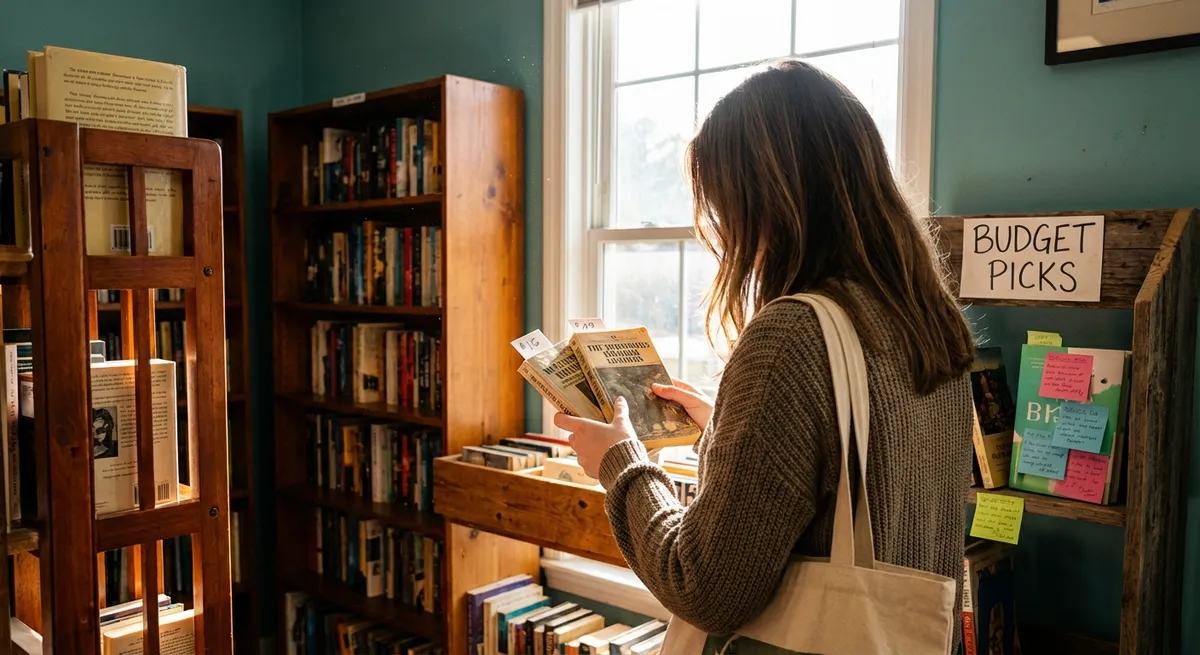
Secondhand options—used bookstores, online marketplaces, and local charity shops—are especially smart for backlist titles, classics, textbooks, or genres you read quickly. You can often find like-new copies for a fraction of the price, and if your tastes change, you’ll have spent much less per book. For niche or specialized topics, checking publisher sites and academic presses can also reveal bundle deals, e-book discounts, or open-access editions you might not see on major retail platforms.
Five Practical Tips for Smart Book Purchasing
- Use a two-step decision: “borrow first, buy later.”
When you’re curious but not sure, put the book on hold at your library or see if there’s an excerpt or preview chapter online. If you finish it and know you’ll want to reference or re-read it, then buy a copy. This reduces regret purchases and turns your physical shelves into a curated collection, not a random archive.
- Match the format to how you’ll use the book.
For dense nonfiction, textbooks, and skill-building titles you expect to annotate, highlight, or reference often, print can be worth the higher price. For novels you’ll read once on vacation, an e-book at a discount may be more sensible. For long commutes, workouts, or housework, prioritize audiobooks, especially if you get them through a library app or subscription that brings down the per-book cost.
- Track your “to‑read” list separately from your “to‑buy” list.
Many readers blur these together and end up purchasing every interesting title they encounter. Instead, keep a master TBR (to-be-read) list using a notes app or reading platform, and only move a book to your “buy” list when you realistically see yourself reading it in the next 1–2 months. This simple separation cuts down on impulse spending while still letting you capture future interests.
- Monitor price drops and seasonal sales.
E-book and audiobook prices fluctuate frequently. Use retailer wishlists, price-tracking tools, and publisher newsletters to watch titles you’re interested in. Many retailers run seasonal promotions (around holidays, back-to-school, or end-of-year sales) and “daily deals.” If a book isn’t time-sensitive for you, waiting for a sale can significantly reduce your average cost per book over the year.
- Invest more in what shapes your life, not just fills your time.
Some books will entertain you for a weekend; others will influence your career, finances, relationships, or worldview for years. It’s reasonable to spend more on high-impact books: updated editions of professional references, well-regarded guides in areas you want to grow, or titles you know you’ll re-read. Consider these “long-term assets” and don’t hesitate to pay for higher-quality formats or supporting materials if they genuinely improve your ability to learn and apply what you read.
Balance Emotion and Value When Buying Special Editions
Special editions, signed copies, and collector’s sets often command a premium—and they can be worth it, but not always for strictly financial reasons.
If a favorite author releases a beautifully bound edition of a book that deeply influenced you, the emotional value may justify the extra cost. These purchases are more like art or memorabilia; the payoff is in daily enjoyment and sentiment, not just dollars. On the other hand, if you’re tempted by a striking cover or “limited” label for a book you haven’t read and aren’t sure you’ll love, consider borrowing or buying a standard edition first. If it becomes a favorite, you can upgrade later without regret.
For collectors, it’s also wise to remember that speculative “investment” in rare books is unpredictable. Condition, demand, and authenticity matter, and many modern “collector” editions never significantly appreciate. Buy special editions primarily for your own enjoyment, and treat any potential resale value as a bonus rather than the goal.
Use Tools and Communities to Buy More Intentionally
Reading communities and digital tools can help you spend smarter while still discovering new titles.
Online platforms where readers log and review books can reveal patterns in your own habits: which genres you abandon, which authors you consistently enjoy, and what formats you finish fastest. Use this data to refine what you buy. If you notice you rarely complete long fantasy series, you might switch to library loans for book one and only purchase the full series if you’re truly hooked.
Book clubs—local or online—can also guide smarter purchases. Shared reading means you get more discussion, reflection, and value from each book. Some clubs coordinate with libraries or negotiate discounts through local stores. Author newsletters, publisher mailing lists, and reputable book review outlets can alert you to new releases that align with your interests, helping you avoid hype-driven purchases that don’t fit your tastes.
Conclusion
Buying books isn’t just a transaction; it’s a way of shaping how you spend your time, what you think about, and which voices you let into your life. When you align your purchases with your real reading habits, choose formats intentionally, and use libraries and sales thoughtfully, you turn book buying into a deliberate investment instead of a reflex.
You don’t need to own every book you want to read—but the ones you do buy can be chosen with care, read fully, and re-visited often. That’s how your bookshelf becomes less of a storage problem and more of a personal, well-used toolkit for learning, escape, and growth.
Sources
- Pew Research Center – Who doesn’t read books in America? – Data on reading habits and book consumption patterns in the U.S.
- American Library Association – The State of America’s Libraries – Overview of how libraries support access to books, including digital lending.
- Consumer Financial Protection Bureau – Managing spending – General guidance on budgeting and making thoughtful purchases, applicable to book buying.
- Harvard Library – Using E-Books – Insight into how e-books work, access models, and pros/cons of digital formats.
- Audible – Membership Plans – Example of audiobook subscription structures and how credits and pricing function.
Key Takeaway
The most important thing to remember from this article is that this information can change how you think about Books & Literature.