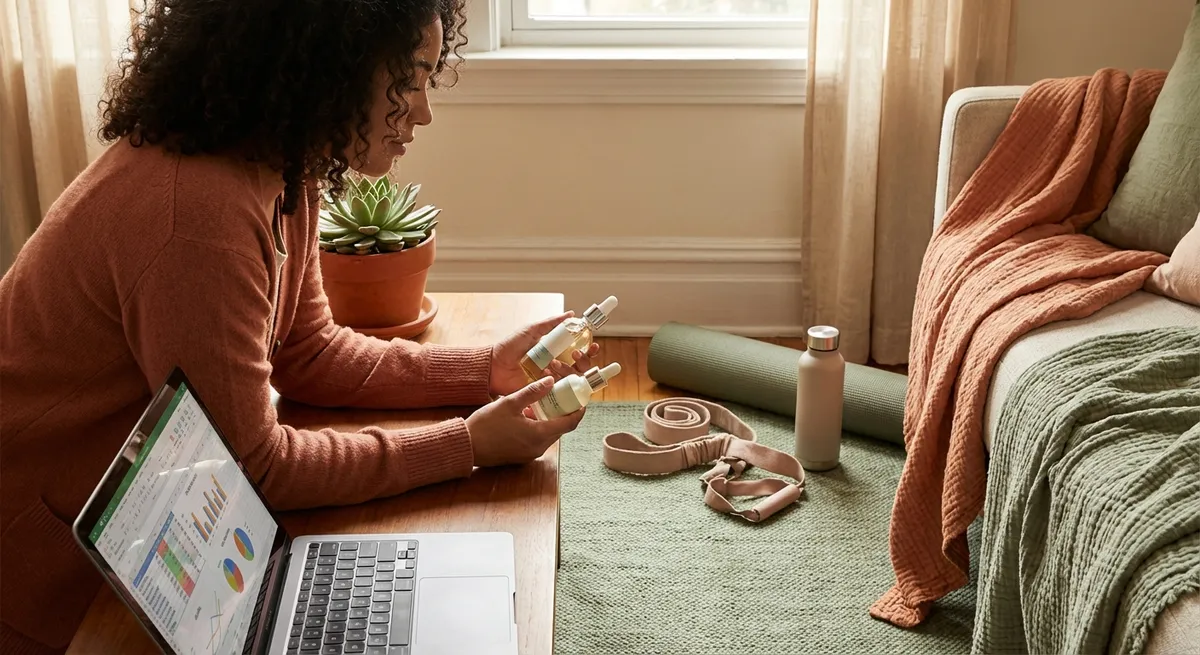
Beauty and fitness spending can add up fast—serums, subscriptions, gadgets, and gear all promise “transformations” that rarely match their price tags. The goal isn’t to buy the cheapest thing or the trendiest thing; it’s to buy the right thing for your body, your routine, and your budget. This guide walks through how to shop more intentionally for beauty and fitness products, so you get real results instead of regret.
Start With Your Actual Lifestyle, Not Your Ideal One
Most wasted beauty and fitness purchases happen because we buy for who we wish we were, not who we are right now. That $200 serum or smart workout mirror might sound inspiring, but if it doesn’t fit your real schedule, habits, and space, it will collect dust.
Before clicking “buy,” look at an honest week in your life. How many days do you realistically work out? How much time do you actually spend on skincare or haircare daily? What storage or workout space do you have? Prioritizing products that shave friction off your existing habits (like a leave-on exfoliant you’ll actually use or resistance bands that fit in your desk drawer) will serve you better than aspirational items you feel guilty about later.
Match purchases to your current routines and constraints first. You can always upgrade or expand once you’ve proven to yourself that a habit is sticking consistently over a few weeks or months.
Decode Claims: What Really Matters in Beauty and Fitness Marketing
Beauty and fitness marketing is full of vague promises—“detoxifying,” “firming,” “fat-burning,” “clean,” “clinical.” Many of these phrases are not strictly regulated and can mean very little in practice. Learn to focus on the information that actually predicts performance and safety.
For beauty, look at ingredient lists over taglines. Features like broad-spectrum SPF, retinoids (retinol, tretinoin), niacinamide, and well-formulated vitamin C have supporting evidence; buzzwords like “toxins,” “pore-shrinking,” or “miracle” do not. Check whether products are fragrance-free if you have sensitive skin, and look for patch-test guidance. For fitness, scrutinize claims about rapid weight loss or “spot reduction,” which have weak scientific support. Certifications (like from the National Sanitation Foundation for supplements or safety certifications for equipment) are more meaningful than celebrity endorsements.
When a product leans heavily on fear-based language—“chemicals,” “age-reversing,” “detox”—pause and investigate. Evidence-backed claims usually specify what was measured (like wrinkle depth or VO₂ max) and in what context (such as a clinical trial, even if small), rather than promising vague transformations.
Tip 1: Build a Core Beauty Routine Before Adding Extras
A smart beauty purchase strategy starts with a simple, consistent core routine. Most people don’t need a 10-step regimen; three to five well-chosen products, used daily, often outperform a cluttered shelf.
Anchor your spending on basics: a gentle cleanser, a moisturizer appropriate for your skin type, and a broad-spectrum sunscreen of at least SPF 30. These do most of the heavy lifting for skin health and aging prevention. Only after you’ve used these consistently for at least 6–8 weeks should you consider adding targeted treatments like retinoids, exfoliants, or brightening serums.
When evaluating premium products, ask: “What does this do that my basic routine can’t?” If the answer is mostly packaging, scent, or hype, consider staying with an affordable, effective option instead. Focus your budget where actives and formulations are most likely to matter (for example, treatments and sunscreen rather than elaborate cleansers that get rinsed off quickly).
Tip 2: Test Before You Commit to Full Sizes or Long Contracts
Sampling is one of the simplest ways to avoid expensive disappointments. Skin, hair, and bodies all respond differently to products and programs, so trying before committing can save you serious money.
For beauty, look for travel sizes, sample sets, or “discovery kits” from reputable brands—especially for higher-priced items like serums, eye creams, or treatments. Patch test new skincare on a small area for several days before applying to your whole face to reduce the risk of irritation. For haircare and makeup, mini sizes often last long enough to see how they perform in your normal routine and environment.
For fitness, treat trials as a requirement, not a bonus. Test gyms during peak hours to check crowding, cleanliness, and atmosphere. Try sample classes if possible—some styles or instructors will click with you more than others. For apps and platforms, take full advantage of free trials or discounted first months, and set a reminder on your phone a few days before renewal so you can cancel if it’s not working for you.
Tip 3: Compare Cost Per Use, Not Just Price Tag
A $150 serum you use once a day for six months may actually be better value than a $40 cream you hate and abandon after a week. Evaluating “cost per use” keeps you focused on realistic value instead of sticker shock alone.
Estimate how often you’ll realistically use an item and for how long. For beauty, think about how much product is dispensed per use and how that translates over weeks. For fitness, consider: will you use that at-home bike three times a week for years, or are you more likely to favor a versatile set of adjustable dumbbells and a mat?
Do the math: divide the total cost by expected uses. A $100 pair of reliable, supportive training shoes you use 150 times has a lower cost per use than three cheaper pairs that wear out quickly or hurt your feet. Prioritize spending where high-quality items will be used heavily (like shoes, mats, and frequently used skincare) and save on things that don’t require premium materials, like simple cotton socks or basic cleansers.
Tip 4: Invest in Fundamentals Before Gadgets and Trends
New fitness gadgets and trending ingredients are tempting, but fundamentals almost always deliver more consistent results. You’ll get more from a supportive sports bra that fits, a stable pair of training shoes, and a good yoga mat than from most app-linked accessories or novelty equipment.
In beauty, invest first in sun protection, barrier-friendly moisturizers, and formulations suited to your skin type. If you have room in your budget, then consider targeted actives or tools like prescription retinoids, simple LED masks with safety testing, or derm-approved devices. Be skeptical of tools that promise professional-level results at home without sufficient evidence or oversight.
On the fitness side, prioritize form, safety, and sustainability over “wow factor.” A few quality resistance bands, adjustable dumbbells, and a mat can support varied, effective routines long before you need a smart mirror or vibration platform. If a product requires a dramatic change in how you move or live to be useful, it may be a riskier buy than something that slots easily into habits you’re already maintaining.
Tip 5: Use Independent Reviews Strategically, Not Blindly
Reviews can be invaluable, but they’re not all equal. Some are incentivized, some reflect very specific use cases, and some focus more on shipping and packaging than long-term results. Use them as data points, not guarantees.
Look for patterns instead of individual extremes. If many users with similar hair type, skin type, or fitness level to you report the same benefit or flaw, that’s more informative than one glowing or scathing review. Filter reviews by photos or “most helpful” to see more detailed experiences. Check multiple platforms—brand sites, independent retailers, and, where relevant, beauty or fitness communities.
For higher-priced devices or programs, go beyond retailer reviews. Search for dermatologist, trainer, or physiotherapist opinions from credible sources. Look out for disclosures: are reviewers affiliated with the brand or sponsored? Balanced professional reviews often mention both strengths and limitations, not just praise.
Shop With Your Future Self in Mind
Smart beauty and fitness buying is less about finding “holy grails” and more about supporting the habits you can sustain. When you evaluate a product or program, ask how it will feel to use it three months from now—not just on the day it arrives. Does it fit your routine? Is it comfortable and enjoyable enough to stick with? Is the cost reasonable over time?
By grounding your purchasing decisions in your real life, reading past the marketing, and using strategies like sampling and cost-per-use, you can build a beauty and fitness setup that works hard for you instead of your wallet. Your future self doesn’t need more stuff; they need fewer, better-chosen tools that make caring for your body easier, safer, and more consistent.
Sources
- American Academy of Dermatology – Skin care basics – Overview of evidence-based skincare fundamentals, including cleansing, moisturizing, and sun protection
- Harvard T.H. Chan School of Public Health – Physical Activity Guidelines – Summarizes research-backed recommendations for exercise, helpful when evaluating fitness programs and gear
- U.S. Food & Drug Administration (FDA) – “Cosmetics” – Explains how cosmetics are regulated in the U.S., what marketing terms mean, and safety considerations for consumers
- Mayo Clinic – Exercise Equipment: Options That Maximize Your Home Workout – Guidance on selecting practical, effective home workout equipment
- National Institutes of Health – “Cosmetics and Your Health” (MedlinePlus) – Provides impartial information about cosmetic products, ingredients, and safety issues for consumers
Key Takeaway
The most important thing to remember from this article is that this information can change how you think about Beauty & Fitness.