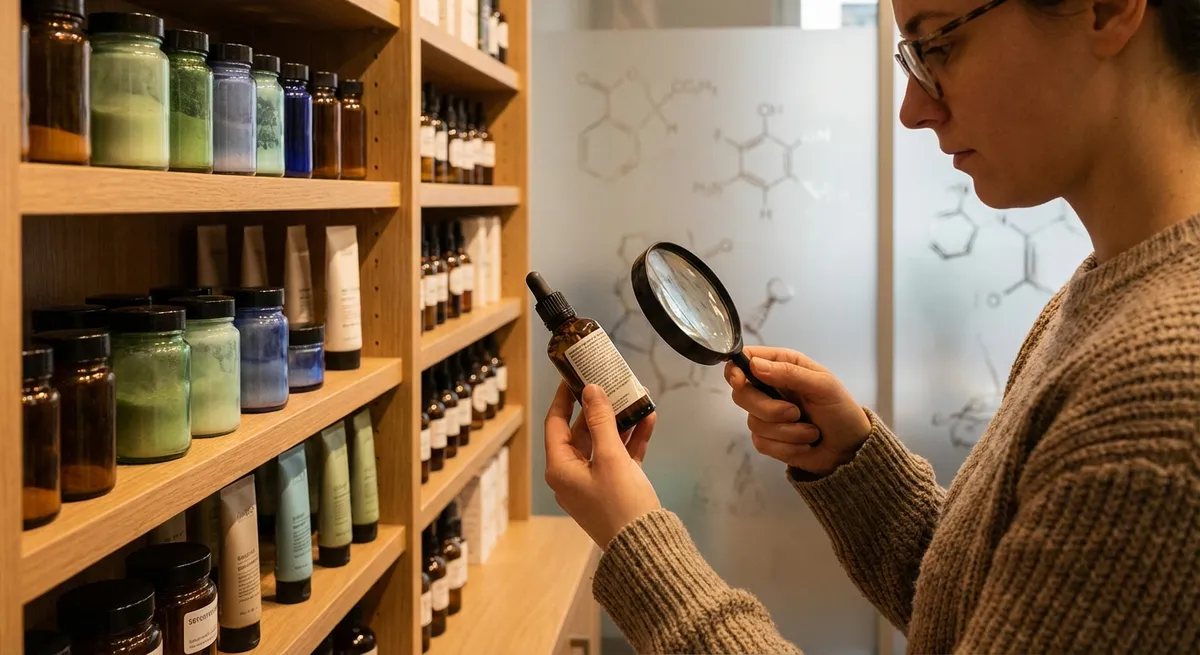
Science is everywhere in modern marketing. From “clinically proven” skincare to “lab-formulated” supplements and “AI‑powered” gadgets, brands know that scientific language sells. But as a consumer, it’s hard to tell what’s genuinely evidence-based and what’s just clever packaging.
This guide will help you read between the lines, recognize real science, and make smarter purchases on products that claim a scientific edge—without needing a PhD.
Why Scientific Claims Matter for Everyday Buyers
Scientific language is powerful because it suggests objectivity, testing, and reliability. When a brand says its product is “backed by science,” you’re meant to feel safer spending more or choosing it over a competitor.
But not all “science” is created equal:
- Some products are built on strong clinical trials and decades of research.
- Others borrow scientific buzzwords from loosely related studies.
- A few rely on outright misleading claims or cherry-picked data.
For consumers, this matters in three ways:
- Health and safety: Supplements, wearables, air purifiers, and skincare can directly affect your body. Weak or fake evidence can lead you to rely on something that doesn’t work—or ignore better options.
- Value for money: “Science” premiums are real. You can pay significantly more for supposed lab-tested formulas or “smart” devices that don’t actually perform better than simpler, cheaper alternatives.
- Long-term satisfaction: Products that are truly evidence-backed are more likely to perform as promised, last longer, and integrate better into your lifestyle. Those built on hype often end up unused in a drawer.
The goal isn’t to avoid science-based products—it’s to separate genuine innovation from inflated promises so your money actually supports what works.
Decoding “Clinically Proven” and Other Scientific Buzzwords
Before you can shop smarter, you need to understand the language brands use to sound scientific. Several terms show up frequently on packaging, ads, and product pages:
- “Clinically proven”: Implies a product was tested in humans, often in a clinical trial. But:
- The study might be small, short, or poorly designed.
- The outcome might be trivial (e.g., “improved skin moisture by 3%”).
- Sometimes the “clinical proof” is based on testing ingredients in isolation, not the finished product.
- “Dermatologist tested” or “doctor recommended”: Often means some experts were involved, but:
- The test could be just a basic irritation test, not proof of effectiveness.
- “Recommended” might mean surveyed endorsements, not rigorous trials.
- “Scientifically formulated”: This can be almost meaningless. It just means someone used scientific know-how to create the product (which is true of most modern manufactured goods).
- “Patented technology”: A patent shows a unique idea or process, not necessarily that it works better in real life.
- “Evidence-based”: Stronger wording, but still vague unless linked to specific studies, journals, or recognized guidelines.
When you see these phrases, treat them as starting points for questions, not proof by themselves. The key is: What is the evidence, and can you see it?
How to Quickly Check If a Product Is Truly Evidence-Based
You don’t need to read full scientific papers to be a smarter buyer. A few quick checks can dramatically improve your odds of choosing products with real backing:
Look for specifics, not vague language
Better: “Tested in a double-blind, placebo-controlled trial with 120 adults” Weaker: “Clinically tested,” “research shows,” or “in a study” with no details.
Check if they name the study or journal
Credible brands often: - Link to PubMed (a major database of medical research). - Cite journal names (e.g., Journal of the American Medical Association, The Lancet). - Summarize key findings transparently, not just cherry-picked quotes.
Search the main claim plus ‘study’ or ‘clinical trial’
Example: Product name or key ingredient + “randomized controlled trial” in your search engine. See if: - Any independent reviews discuss real research. - Established health institutions or universities mention the same ingredient or technology.
Check for third-party testing or certifications
Look for: - Reputable certifications (e.g., NSF, UL, Energy Star, EPA labels, certain ISO standards). - Independent lab testing (for supplements, filters, safety devices).
Compare with trusted health or science organizations
For health-related products in particular, see if: - The CDC, FDA, Mayo Clinic, or major hospitals describe similar benefits. - The claims match current medical guidance—or sound exaggerated in comparison.
If a product leans heavily on scientific buzzwords but offers no real details, that’s a strong hint the “science” is more marketing than substance.
Five Practical Tips for Smarter Science-Based Purchasing
Here are five concrete, consumer-focused strategies you can use right away when you’re deciding whether to buy something that claims a scientific edge—whether it’s skincare, supplements, cleaning products, or health gadgets.
1. Trace the Claim Back to a Specific Ingredient or Feature
Marketers often use broad, impressive claims, but science is usually tied to something specific—like a particular molecule, filter type, algorithm, or mechanism.
Action steps:
- Identify the core active ingredient or technology name (e.g., “niacinamide,” “HEPA filter,” “retinol,” a specific sensor technology).
- Search that specific term plus “evidence” or “clinical trial” to see what independent sources say.
- Confirm that the dose, concentration, or specification in the product matches what research used. A studied ingredient in a different form or at a much lower dose might not deliver the same benefit.
- A product might name-drop a well-studied ingredient but use too little to be effective.
- Some claims are based on lab tests under ideal conditions, not real-world use.
Why this matters:
2. Prefer Independent Testing Over In‑House “Research”
Company-run studies can be valuable, but they’re also more likely to be biased. Independent evaluations give you a clearer picture.
Action steps:
- Look for third-party seals or testing from labs and organizations that are not owned by the brand.
- For products like air purifiers, filters, or appliances, check if organizations like Consumer Reports or independent reviewers have tested performance.
- For health-related claims, see whether government agencies or academic institutions have evaluated the product category.
- Independent testing often reveals gaps between marketing claims and real performance (e.g., noise levels, energy use, effectiveness).
- Certifications usually have clear criteria that products must meet, which anchor the marketing to standards instead of vague promises.
Why this matters:
3. Separate Surrogate Measures from Real-World Outcomes
Many products boast improvements in something measurable in a lab (like “reduces markers of inflammation” or “kills 99.9% of germs in a test dish”), but that doesn’t always translate to meaningful everyday results.
Action steps:
- Ask: “Does this outcome actually matter for my life?”
- A cleaning spray might kill bacteria in a petri dish—but is that significantly better than cheaper alternatives for household use?
- A sleep tracker might detect more sleep stages—but does it actually help you sleep longer or better?
- Prioritize claims that connect lab results to tangible benefits: fewer breakouts, less downtime, lower bills, better comfort, or improved performance.
- It’s easy to be impressed by technical stats that don’t change your experience.
- Focusing on outcomes helps you decide if a more expensive “scientific” version is really worth the premium.
Why this matters:
4. Cross-Check Against Authoritative Guidelines and Consensus
When products claim major health or performance benefits, it helps to see if they align with what credible institutions recommend.
Action steps:
- For anything health-related (supplements, wearables, sleep aids, “immune boosters”):
- Check sites like the National Institutes of Health (NIH), Mayo Clinic, or NHS to see what they say about the underlying issue.
- For environmental and safety claims (air purifiers, water filters, cleaning agents):
- Look at EPA or CDC guidelines about what actually works and what standards matter.
- Be skeptical if a product contradicts well-established guidance or claims to “replace” proven options without strong evidence.
- True breakthroughs are rare. Most solid, science-backed products fit within existing expert recommendations.
- If only the brand itself is talking about a “revolutionary” benefit, and no major institution backs it up, caution is wise.
Why this matters:
5. Use Reviews Strategically: Look for Patterns, Not Just Stars
Customer reviews and social media posts are not scientific studies, but they’re valuable for spotting patterns of real-world use.
Action steps:
- Filter for reviews that:
- Are detailed (what problem they had, how they used the product, how long).
- Include before/after context or comparisons to other products.
- Scan for repeated mentions:
- Consistent praise for the same benefit (e.g., “reduced my allergy symptoms” across many users).
- Consistent complaints (e.g., “battery fails after a month,” “no noticeable difference”).
- Be wary of:
- One-line glowing reviews with no detail.
- Overly polished influencer posts that repeat marketing language verbatim.
- Real science-backed products don’t just perform in labs—they should deliver noticeable results for most users under normal conditions.
- Reviews help bridge the gap between controlled testing and daily life, guiding you toward products that actually work outside a lab.
Why this matters:
When Paying More for “Science” Makes Sense—and When It Doesn’t
Science-backed products often cost more, but that premium isn’t always justified.
You’re more likely to get real value paying extra when:
- The product’s main job is health, safety, or performance (e.g., water filters, medical-grade devices approved by regulators, protective gear, certain skincare with strong evidence).
- Third-party testing or certifications show clear performance advantages over cheaper options.
- The item will be used frequently or long-term, so small improvements compound (e.g., a more accurate blood pressure monitor, a reliable air purifier in a polluted area).
- The benefits are subtle, aesthetic, or non-critical (e.g., shampoo with vague “scientific complex” vs. a simpler, well-reviewed alternative).
- The evidence is limited, vague, or based solely on in-house data.
- Established, basic products already perform well and meet your needs.
You might not need to pay the science premium when:
A good rule of thumb:
The higher the stakes (health, safety, or major spending), the more the science should be specific, transparent, and independently supported.
Conclusion
Scientific language can guide you to genuinely better products—or nudge you into overspending on well-branded hype. By learning to question vague claims, look for specific evidence, and lean on independent, credible sources, you can turn “science-backed” from a buzzword into a useful filter.
You don’t need to be an expert researcher to shop smarter. If you:
- Trace claims to specific ingredients or technologies,
- Prefer independent testing over marketing alone,
- Focus on real-world outcomes rather than impressive lab metrics,
- Check against trusted guidelines,
- And use reviews to confirm everyday performance,
you’ll be far better equipped to invest in products that deliver what they promise—and skip the ones that only sound scientific.
Sources
- U.S. National Library of Medicine – PubMed - Database of biomedical literature where you can look up studies on ingredients, medical devices, and health claims
- U.S. Food & Drug Administration (FDA) – Understanding Over-the-Counter Medicine - Explains labeling, claims, and how to interpret information on consumer health products
- Mayo Clinic – Consumer Health Information - Evidence-based guidance on supplements, wellness products, and health claims commonly seen in the marketplace
- U.S. Environmental Protection Agency (EPA) – Guide to Air Cleaners in the Home - Details standards, testing, and what to look for when buying air purifiers and similar devices
- Consumer Reports - Independent testing and reviews of a wide range of consumer products, including those that market themselves with scientific or technical claims
Key Takeaway
The most important thing to remember from this article is that this information can change how you think about Science.