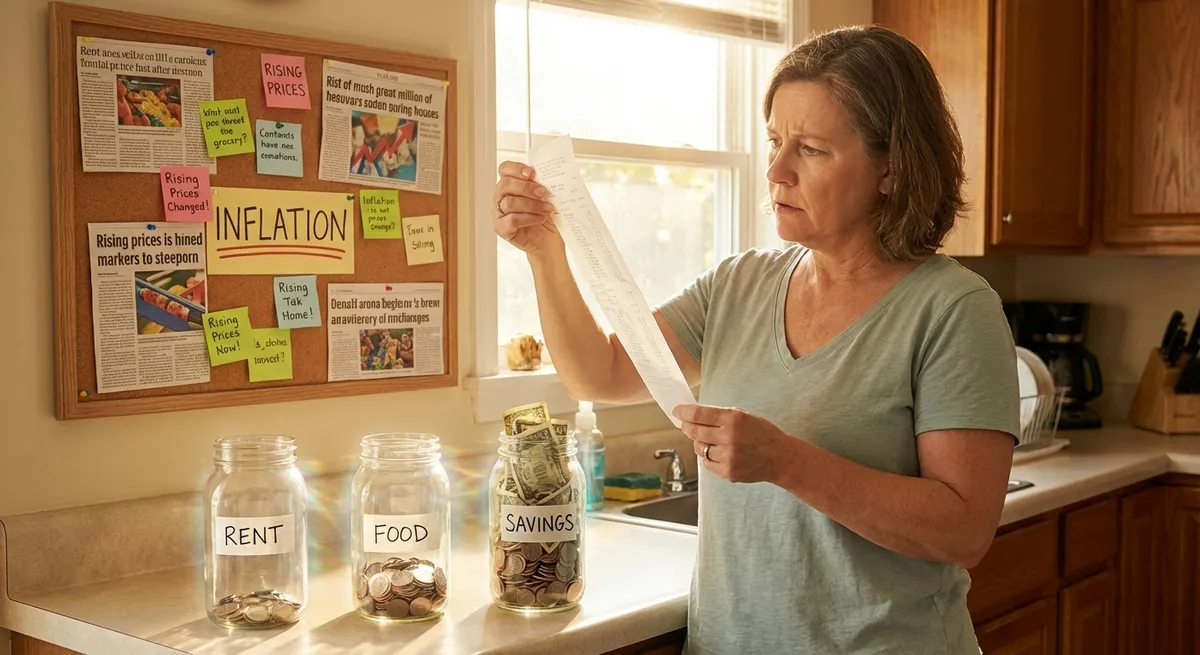
News about inflation, interest rates, and “cooling” or “heating” prices shows up in your feed almost every day. But most of it is written for economists and investors—not for people trying to decide whether to buy a new laptop, lock in a car loan, or wait on a big home appliance.
This guide breaks down how to connect economic news to your everyday purchases, and how to adjust what, when, and how you buy so that headlines don’t quietly drain your budget.
What Price Headlines Are Really Telling You
When you see phrases like “inflation cools,” “core prices rise,” or “consumer confidence slips,” they’re describing trends that eventually hit your cart, even if not right away.
Economic reports often focus on:
- Overall inflation (CPI): The Consumer Price Index measures average price changes across goods and services. It tells you the general direction—but not exactly what’s happening to the items you personally buy most.
- Core inflation: CPI without volatile items like food and energy. It’s useful for long-term trends, but if groceries and gas are your pain points, core inflation can feel disconnected from reality.
- Durable vs. non-durable goods: Durables (like furniture, electronics, cars) are big purchases you make occasionally. Non-durables (like food, cleaning supplies, personal care items) are your repeat buys. These often move in different price directions.
- Services inflation: Rent, medical care, streaming services, travel—these prices behave differently from physical goods and can rise even when product prices stabilize or fall.
Understanding which category your planned purchase falls into helps you react smarter. For example, a report showing falling prices for durable goods but rising rents might push you to move up your laptop purchase while being more cautious about signing a new lease.
How Interest Rate News Changes Big-Ticket Decisions
When central banks raise or cut interest rates (like the Federal Reserve in the U.S.), the headlines can feel abstract—but the impact shows up in real offers: car loans, credit card APRs, personal loans, and sometimes financing plans for electronics and appliances.
Higher rates generally mean:
- More expensive borrowing: Monthly payments on financed purchases go up, and you pay more over time.
- More valuable savings: High-yield savings accounts and CDs often pay better interest, making it more rewarding to wait and save.
Lower rates generally mean:
- Cheaper loans: Better conditions for financing a car, home improvement, or consolidation loan—if your credit is solid.
- Less reward for saving: Cash sitting in low-rate accounts loses buying power faster if inflation is high.
Before reacting to rate news, match it to your situation:
- If you’re planning a financed purchase (car, major appliance, phone on installment), rising rate headlines are a nudge to compare total borrowing costs more carefully, not just monthly payments.
- If you’re carrying credit card debt, higher rates make it more urgent to prioritize paying it down over optional new buys, even if a “sale” looks tempting.
- If you have cash on the sidelines and see rates rising, it may be a good moment to park savings in a higher-yield account and delay non-essential upgrades.
Spotting Sectors Where Waiting—or Acting—Makes Sense
News rarely says, “Now is a better time to buy a washing machine than a used car.” But if you read between the lines, you can often tell which categories are softening and where prices are stubborn.
Here’s how different news cues can guide your timing:
- Retail inventory and discount stories: Articles about stores sitting on excess inventory or running early sales often signal better deals on clothing, home goods, and some electronics. That can be an opportunity window if a purchase is already on your list.
- Supply chain and chip shortage updates: If you see renewed concerns about supply chain disruptions or semiconductor shortages, that can pressure prices and limit availability of cars, laptops, gaming consoles, and certain appliances. That might justify buying sooner—if the item is truly needed.
- Housing and construction news: Rising mortgage rates and slower home sales can translate into promotions on furniture, home décor, and some building materials as retailers compete for fewer buyers.
- Energy price coverage: Higher fuel prices often ripple into shipping costs. This can show up first in groceries and bulky goods that are expensive to transport. If energy prices spike, you might choose to stretch pantry items longer or batch non-urgent orders.
The goal isn’t to trade like an economist—it’s to align “want to buy” and “need to buy” with what the news suggests is getting cheaper, stable, or more expensive in the near term.
Five Practical Tips for Smart Purchasing in a Noisy News Cycle
Here are five grounded ways to turn constant economic headlines into better buying decisions—without obsessing over every report.
1. Build Your Own “Personal Inflation” Snapshot
The national inflation rate might be 3%, but your personal inflation could be higher or lower depending on what you spend on.
What to do:
- List your top 10–15 recurring purchases or categories (groceries, rent, fuel, childcare, pet care, subscriptions, etc.).
- Once a month, note prices for a small “basket” of your most common items (your usual milk, bread, coffee brand, a staple cleaning product).
- Use these notes to see what’s actually going up for you instead of reacting to generic headlines.
This helps you decide where to cut back, where to stock up, and which purchases can wait.
2. Decide in Advance Which Purchases Are “Rate Sensitive”
Some purchases are heavily impacted by interest rate shifts; others aren’t.
Label future buys as:
- High rate-sensitive: Cars, mortgages, refinanced loans, financed furniture, credit-card-funded purchases.
- Moderately rate-sensitive: Store financing for electronics or appliances, personal loans for projects.
- Low rate-sensitive: Everyday items you pay in full, used items bought with cash, subscription adjustments.
For high rate-sensitive purchases, always:
- Compare total cost over the life of the loan, not just monthly payments.
- Run numbers using online loan calculators when you hear about rate changes, so you see the effect in dollars, not abstract percentages.
3. Treat Major Purchases Like Mini News Projects
Before committing to an expensive item, spend 20–30 minutes connecting it to current conditions:
- Search recent news about that exact category (e.g., “2026 laptop prices outlook,” “used car prices this year,” “TV prices holiday season”).
- Look for themes: oversupply, shortages, heavy discounting, or stable pricing.
- Check if any tech or model changes are imminent (new chip generations, efficiency standards, major product refreshes).
This small research step can reveal whether you’re walking into a wave of price cuts—or buying just before a likely shift.
4. Use Sales Events Strategically, Not Emotionally
Headlines about “record-breaking Black Friday deals” or “Prime Day savings bonanza” are designed to create urgency, not clarity.
Make these events work for you by:
- Keeping a running wish list of items you plan to buy within the next 6–12 months, sorted by priority.
- When a big sale is announced, only compare prices for items already on your list.
- Check price histories with tools or browser extensions where available, so you know if a “deal” is actually below recent averages.
If inflation has been elevated, treat deep discounts as a chance to secure future value on items you already planned to buy—not as a reason to expand your list.
5. Protect Yourself From “Shrinkflation” and Quiet Price Creep
News about inflation sometimes hides the quieter changes: smaller packages, lower quantities, or slightly downgraded quality at the same price.
Defend your budget by:
- Checking unit prices (cost per ounce, liter, or count) on shelf labels or online listings instead of just package price.
- Comparing familiar brands with store brands or alternatives when you notice size reductions.
- Watching for “new and improved” packaging that keeps price constant but changes size or formula.
If you consistently choose the best value per unit, you insulate yourself from some of the stealth inflation that never makes big headlines.
Conclusion
Big economic stories—about inflation, interest rates, and market shifts—aren’t just background noise. They quietly shape what you pay for food, gadgets, cars, and even your streaming subscriptions.
When you link those headlines to your own spending—by tracking your personal inflation, knowing which purchases are rate-sensitive, timing major buys thoughtfully, using sales events deliberately, and watching unit prices—you move from reacting to the news to using it.
You don’t need to follow every report or memorize every index. You just need a simple system that turns the economic climate into clear, practical choices about when to buy, what to delay, and how to stretch your money further.
Sources
- U.S. Bureau of Labor Statistics – Consumer Price Index (CPI) Overview – Explains how inflation is measured and provides current CPI data
- Federal Reserve – How Does Monetary Policy Influence Inflation and Employment? – Describes how interest rate decisions affect borrowing costs and the broader economy
- Consumer Financial Protection Bureau – Credit Card Interest and APR – Details how rate changes can impact consumer borrowing and credit card costs
- OECD – Inflation (CPI) Data and Analysis – Provides international inflation data and trends across major economies
- Harvard Business Review – Understanding Price Increases and Shrinkflation – Discusses how companies adjust prices and package sizes, and how consumers can respond
Key Takeaway
The most important thing to remember from this article is that this information can change how you think about News.