
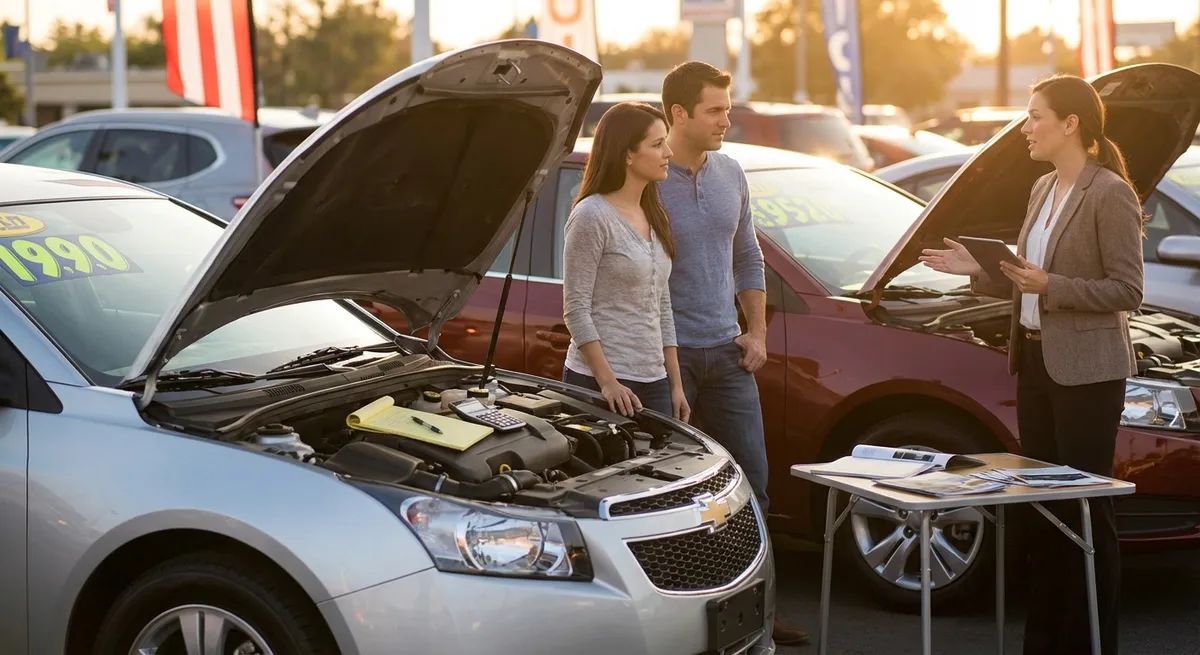
Walking into a dealership (or even browsing online listings) can feel like stepping onto someone else’s playing field. Prices are confusing, add-ons appear out of nowhere, and “limited-time offers” suddenly become urgent. This guide is built to flip that script—so you walk into your next car purchase with a clear plan, realistic expectations, and the confidence to say “no” when something doesn’t add up.
Start With Total Cost, Not Just Monthly Payment
When you’re shopping, salespeople often steer the conversation toward “What monthly payment are you comfortable with?” It sounds reasonable, but it’s a subtle way to hide the real cost of the vehicle. A low monthly payment can still mean you’re overpaying if the loan is long, the interest rate is high, or the price is inflated.
Instead, focus first on the out-the-door price—the full amount including taxes, fees, and dealer charges. Once you know that number, you can evaluate whether the vehicle fits your budget. Use an online auto loan calculator to plug in different terms (36, 48, 60 months, etc.) and see how changing the loan length affects both the monthly payment and total interest paid. Shorter terms often mean higher monthly payments but significantly less interest over the life of the loan.
This approach also helps you compare vehicles more fairly. Two cars might both be “$399/month,” but one could cost thousands more in total. By anchoring your decision to the total price, you avoid the trap of stretching a loan just to “make the payment work.”
Smart Tip #1: Always negotiate based on the out-the-door price, then evaluate financing separately.
Separate Your Transactions: Car Price, Trade-In, and Financing
Dealerships often blend three things into one conversation: the car’s price, your trade-in, and your financing. That’s convenient for them—but it makes it harder for you to see where the money is really going. To protect your wallet, treat each piece as a separate transaction.
First, get the best possible purchase price on the car you want before you even mention a trade-in. Research market values on sites like Kelley Blue Book, Edmunds, or TrueCar so you know a realistic range for your target model. Once you’ve agreed on a price, then bring your trade-in into the conversation, again using market value estimates to sanity-check their offer.
For financing, get preapproved by a bank, credit union, or reputable online lender before you ever set foot in a dealership. That preapproval gives you a benchmark interest rate and total loan amount. You can still let the dealer try to beat that rate, but now you’re comparing offers rather than taking whatever they propose. This separation keeps you from giving back your negotiation wins through a poor financing deal or under-valued trade-in.
Smart Tip #2: Structure the deal in stages—price first, then trade-in, then financing—to keep control of the numbers.
Go Beyond the Sticker: Reliability, Ownership Costs, and Safety
A car can look great, drive well on a test, and still be a bad purchase if it’s expensive to maintain, unreliable, or unsafe. Focusing only on the sticker price (or monthly payment) ignores what really matters over the years you’ll own it.
Before you commit, research three key areas:
- Reliability: Look at long-term reliability ratings and owner surveys from sources like Consumer Reports or J.D. Power. A slightly higher purchase price can be worth it if it saves you from frequent, expensive repairs.
- Ownership Costs: Check estimated fuel costs, insurance premiums, maintenance, and typical repair expenses. Tools from AAA, Edmunds, and insurance comparison sites can help you estimate real-world costs beyond the price tag.
- Safety: Review crash-test ratings from NHTSA and IIHS, and confirm which driver-assistance features (like automatic emergency braking, blind-spot monitoring, adaptive cruise control) are standard versus optional. Some models require expensive trim upgrades for the safety tech you assume is included.
This holistic view can change what “value” means. A bargain-price vehicle with poor fuel economy, high insurance, and below-average reliability can end up costing more than a slightly pricier, more efficient, and safer alternative.
Smart Tip #3: Consider reliability, safety ratings, and long-term ownership costs as part of the “real price” of any vehicle.
Learn to Spot (and Push Back On) Common Add-Ons
Once you’ve agreed on a price, the dealership will likely move you to the finance office, where the real upselling begins. Here you’ll see offers for extended warranties, paint protection, window etching, nitrogen in tires, GAP insurance, and more. Some are useful in specific situations; others are pure profit centers.
Before signing anything, ask yourself:
- Do I actually need this? If the vehicle has a strong reliability record and a solid factory warranty, an expensive extended warranty may not be necessary.
- Can I get it cheaper elsewhere? GAP insurance, for example, is often less expensive through your auto insurer than through a dealer.
- Is this already included? Some “protection” packages overlap with what the manufacturer already offers or what’s covered by your insurance.
Read the contract line by line and don’t be afraid to say, “Please remove this item.” You’re not obligated to accept every add-on just because it’s presented as part of the deal. If the dealership insists an add-on is mandatory, ask for it in writing and be prepared to walk away if it seems deceptive.
Smart Tip #4: Treat every add-on as optional, ask total cost over the life of the loan, and decline anything you don’t clearly understand or truly need.
Use Timing, Market Conditions, and Data to Your Advantage
While you can’t control the market, you can shop in ways that tilt things slightly in your favor. Timing, preparation, and willingness to walk away are powerful tools, especially in a competitive market.
Pay attention to:
- Market Trends: In periods of high demand or limited inventory (like post-pandemic supply shortages), discounts can shrink and interest rates rise. In cooler markets with more inventory, you have more leverage.
- Timing Within the Month or Year: Many dealers and salespeople have monthly or quarterly targets. Shopping near the end of these periods can sometimes result in better pricing as they push to hit their goals.
- Local vs. Broader Searches: Online marketplaces and nationwide listings can show you what your desired vehicle sells for in different regions. Even if you don’t buy out of state, having that data gives you a strong reference point when negotiating locally.
- Multiple Quotes: Request detailed, itemized quotes from several dealerships (including online dealers) for the same model and trim. Make them compete for your business by being transparent: “Another dealer quoted me $X out-the-door; can you match or beat it?”
Most importantly, remember that “no deal” is better than a bad deal. If the numbers don’t make sense, or you feel pressured, politely walk away. There will always be more cars and more offers.
Smart Tip #5: Shop with data—quotes, market prices, and timing—so you negotiate from a position of knowledge, not urgency.
Conclusion
Buying a car doesn’t have to feel like a guessing game. When you focus on the out-the-door price, keep transactions separate, look beyond the sticker to long-term costs, push back on unnecessary add-ons, and use timing and data to your advantage, you shift from being sold to being in control. The goal isn’t just to drive away in something you like today—it’s to own a vehicle that still feels like a smart decision years down the road.
Sources
- Consumer Reports – Car Buying & Pricing - Independent guidance on pricing, negotiating, reliability, and ownership costs
- U.S. Federal Trade Commission – Buying a New Car - Official consumer protection advice on pricing, financing, and add-ons
- National Highway Traffic Safety Administration (NHTSA) – 5-Star Safety Ratings - Crash-test ratings and safety information for new vehicles
- Insurance Institute for Highway Safety (IIHS) – Vehicle Ratings - Detailed safety and crashworthiness evaluations by vehicle make and model
- AAA – Your Driving Costs - Annual reports estimating the real-world cost of vehicle ownership, including fuel, maintenance, and depreciation
Key Takeaway
The most important thing to remember from this article is that this information can change how you think about Autos & Vehicles.