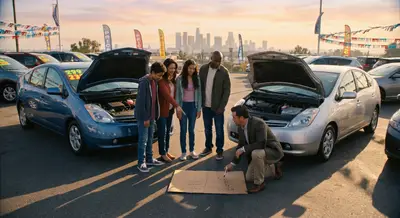

Bored Panda’s headline, “If You Stay Calm Through These 44 Rage-Inducing Pics, You Officially Deserve A Medal,” isn’t about cars specifically, but it perfectly captures a feeling every driver knows: that helpless rage when something on the road, in a parking lot, or at the mechanic feels absurdly unfair.
How Viral “Rage-Inducing” Photos Mirror Real-World Driving Frustrations
From mystery dashboard lights to chaotic parking behavior and unreadable contracts at the dealership, car ownership is filled with small but infuriating moments. In online communities, drivers share photos that could easily sit alongside Bored Panda’s “rage-inducing pics”:
- Double-parked SUVs straddling two spaces
- Electric vehicle chargers blocked by idling gas cars
- Service invoices with incomprehensible fees
- Brand-new used cars that suddenly show hidden issues
These situations might not be as visually shocking as a messy kitchen or a crooked picture frame, but financially and emotionally, they sting more. The good news: many of these frustrations can be avoided before you even buy the vehicle.
This article uses the spirit of that viral headline—staying calm in the face of nonsense—to help you make smarter, calmer car-buying decisions so fewer things push you to the edge later.
Why Car Buying Feels So Rage-Inducing Right Now
The last few years have been rough on car shoppers:
- Supply shortages pushed prices up on both new and used vehicles.
- Dealer markups above MSRP became common on popular models.
- High interest rates made monthly payments jump even for modest cars.
- More complicated tech (ADAS, big screens, over-the-air updates) made reliability harder to judge.
Mix that with aggressive sales tactics and confusing financing, and the buying process itself can feel like one long “rage-inducing” experience.
But a lot of financial pain happens before you sit in the finance office. It starts with not having a plan.
Below are 5 practical tips that help you avoid the most frustrating parts of car ownership, from surprise costs to buyer’s remorse.
1. Start With Total Cost of Ownership, Not Just the Sticker Price
Many drivers focus on: “Can I afford the monthly payment?” That’s exactly how you end up in one of those “rage-inducing” scenarios when bills pile up.
Instead, look at Total Cost of Ownership (TCO) for at least 5 years:
- Depreciation – How fast does the model lose value?
- Fuel or charging costs – Your commute, fuel prices, and EV charging rates matter.
- Insurance – Some cars (especially sporty or luxury models) can double your insurance bill.
- Maintenance and repairs – Are parts cheap and available? Are there known issues?
- Taxes, registration, and fees – Often overlooked, but they hit right away.
How to do this smartly:
- Use tools like Edmunds, KBB, or Consumer Reports for TCO estimates.
- Ask your insurance company for quotes on 2–3 models before you decide.
- Look up common issues on owner forums and reliability ratings.
This wider view filters out options that will quietly drain your budget and your patience.
2. Use Market Data to Avoid Overpaying in a Hot Market
Those “rage-inducing pics” of dealers slapping $5,000+ “market adjustment” stickers on economy cars went viral for a reason. People felt trapped: pay more or walk away.
You can’t fully control the market, but you can control how informed you are:
- Check multiple listing sites (Cars.com, Autotrader, CarGurus, Facebook Marketplace) for your target model within a 100–250 mile radius.
- Note the average asking price, not just one “good deal.”
- Search completed listings on auction-style sites (like Bring a Trailer for enthusiast cars) to see real transaction prices.
Negotiation tactic:
- Bring screenshots of comparable listings when you visit a dealer.
- Be ready to walk away if their price is wildly out of line with the broader market.
- Ask clearly: “Is there a market adjustment or add-on packages I can decline?”
Calm, data-backed negotiation protects you from the worst markup scenarios.
3. Read Every Line in the Finance Office (And Say No… A Lot)
Many of the most anger-inducing surprises show up after you agree on the car’s price—inside the finance and insurance (F&I) office:
- Extended warranties
- Paint protection
- Interior coatings
- Etching, nitrogen in tires, security packages
Individually, they may be fine; bundled, they can quietly add thousands to your loan.
Smart strategy:
- Ask for a breakdown of every fee and product, line by line.
- Don’t be afraid to say: “No, remove that” or “I don’t authorize that product.”
- If you’re interested in an extended warranty, compare with third-party providers and check:
- What’s covered and excluded?
- Where can it be serviced?
- Is it transferable if you sell the car?
Take your time. If they rush you, that’s a red flag. A contract you barely skim can produce years of financial frustration.
4. Don’t Skip a Professional Inspection on Used Cars
Few things feel more “medal-worthy” than staying calm after discovering a hidden problem right after buying a used car.
You can prevent most of that shock by treating pre-purchase inspections (PPIs) as non-negotiable:
- Hire an independent ASE-certified mechanic (not recommended by the seller).
- Expect to pay $100–$250, which is cheap insurance on a multi-thousand-dollar purchase.
- Ask for a written report and photos of any issues.
Combine this with:
- A vehicle history report (Carfax, AutoCheck) to catch accidents, title issues, mileage rollbacks.
- A visual check for overspray, mismatched panel gaps, or non-factory welds indicating past repairs.
If the seller refuses a PPI, assume there’s a reason—and walk away.
5. Match the Vehicle to Your Real Life, Not Your Fantasy Life
A lot of “rage-inducing” regret starts months after the purchase, when the reality of your choice hits:
- The lifted truck that doesn’t fit in parking garages
- The sporty coupe that makes child seats a daily struggle
- The high-performance EV with a charging network that doesn’t work for your area
Be brutally honest about your actual lifestyle:
- How many passengers do you regularly carry?
- How often do you park in tight urban spaces or street park overnight?
- Do you tow, haul, or just commute and grocery shop?
- Is there reliable home or workplace charging (for EVs)?
Shortlist vehicles around:
- Use case first (commuting, family, utility)
- Budget second
- Brand/emotion third
Choosing a car that genuinely fits your day-to-day life removes many small but relentless daily annoyances.
Staying Calm in an Inherently Stressful Market
Bored Panda’s “rage-inducing pics” are entertaining because we all recognize that feeling of irrational frustration. In the automotive world, those emotions are tied to big, long-term financial commitments.
You can’t eliminate every stressful moment—breakdowns happen, markets change, and people still park terribly—but you can reduce how often you find yourself in those situations.
If you:
Look beyond the monthly payment to total ownership cost
Use real market data to benchmark prices
Scrutinize contracts and optional add-ons
Always get independent inspections on used vehicles
Choose a car that fits your actual life, not your Instagram life
…you’ll avoid many of the scenarios that make drivers want to scream.
In a world full of rage-inducing car ownership stories, being prepared is the real medal-worthy move.
Key Takeaway
The most important thing to remember from this article is that this information can change how you think about Autos & Vehicles.