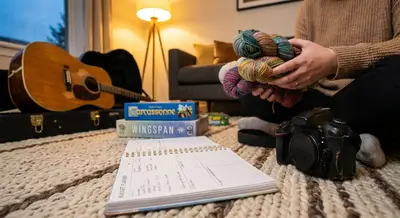

Free time is limited—and so is your budget. Whether you’re getting into photography, tabletop gaming, gardening, or music, the hobby world is full of products promising to “unlock your potential.” But buying the wrong gear can leave you with cluttered closets, drained accounts, and a hobby you quietly abandon.
This guide focuses on building a hobbies & leisure life that actually fits you, not just your social feed. You’ll learn how to test-drive interests, choose gear that grows with you, and avoid marketing traps—plus five practical tips for smarter hobby purchases.
Start With Experiences, Not Equipment
Many hobbies look gear-heavy from the outside: cameras with multiple lenses, complete golf sets, elaborate craft rooms, or shelves of board games. It’s easy to assume you need all the “right” stuff before you can really start.
In reality, most hobbies can be sampled with very little investment. Before you buy, see if you can rent, borrow, or join. Public libraries increasingly lend more than books: you can often check out instruments, tools, sewing machines, telescopes, and even museum passes. Community centers and makerspaces offer day passes to equipment like 3D printers, woodworking shops, or pottery studios. Local clubs and meetups are another low-cost route—you may be able to attend a few game nights, hikes, or photography walks using shared or loaner gear.
This “experience-first” approach helps you answer crucial questions: Do you enjoy the activity itself, or just the idea of it? Are you comfortable with the time and skill required? Once you’ve tested the waters, your purchases will be driven by real use, not guesswork or FOMO.
Match Your Hobby Spending to Your Real Lifestyle
Every hobby asks for two core resources: time and money. It’s tempting to focus only on the price tag of gear, but the bigger question is: does this fit the life you actually lead?
Start with time. If you have irregular free time (shift work, small kids, demanding job), hobbies that require long, uninterrupted blocks—like intensive woodworking or multi-hour strategy games—may be harder to sustain. Low-friction hobbies that can be picked up and put down (sketching, casual gaming, knitting, reading, short hikes) might deliver more joy per minute invested. Buy accordingly: prioritize portable, quick-to-set-up items over complex, space-hungry gear.
Then consider ongoing costs. A “cheap” hobby can become expensive if it involves frequent consumables (film, art supplies, special filaments, expansion packs) or regular fees (club memberships, lesson costs, course subscriptions). When reviewing a potential purchase, ask: what will I have to keep buying to actually use this? Research typical monthly or yearly costs and factor them into your decision. It’s sometimes smarter to choose a slightly more expensive, durable item now if it significantly reduces recurring spend later.
Finally, think about space. Large fitness machines, full drum kits, or massive gaming tables seem appealing until they dominate your living room. If you live in a small space, focus on stackable, modular, or multi-purpose items. Space constraints are not just about convenience—they can be the difference between using your hobby gear regularly or avoiding it because setup feels like a chore.
Five Practical Tips for Smart Hobby Purchases
1. Start at the “Thoughtful Beginner” Level
You don’t need the cheapest gear, and you usually don’t need the pro version either. Look for a “thoughtful beginner” tier: equipment that’s reliable, easy to use, and good enough to grow with you for at least 1–2 years.
For example, in music, an entry-level instrument from a reputable brand is often far better than the absolute bargain set with lots of accessories but poor sound and durability. In photography, a mid-range beginner camera with a good kit lens will usually outperform a flashy body paired with a low-quality lens. Avoid bundles that promise “everything you need” at suspiciously low prices—these often include lots of low-quality extras you’ll replace quickly.
A quick way to spot the thoughtful beginner tier: search for what teachers, coaches, or long-time hobbyists recommend to their own students rather than what is flagged as “#1 bestseller” in big marketplaces.
2. Buy Used Where It Makes Sense (And Skip It Where It Doesn’t)
The secondhand market is a goldmine for many hobbies: you can often get 50–70% off retail for items that have seen light use. Musical instruments, bicycles, board games, cameras, and fitness equipment are especially good candidates, since many people overbuy and resell when their enthusiasm fades.
Look on local marketplaces, hobby-specific forums, and community boards. When buying used, check for: visible structural damage, missing parts, and whether you can test it in person. For digital items (like cameras or game consoles), ask for total usage hours or shutter counts where applicable.
However, some things are better bought new. Safety-related gear—helmets, climbing gear, life jackets—should generally not be purchased used unless you personally know the item’s history and can verify it hasn’t been compromised. Also be cautious with heavily worn consumables (like running shoes) where previous wear patterns can affect fit and support.
3. Use “Skill Milestones” as Purchase Checkpoints
Instead of buying equipment “just in case you’ll need it later,” tie major purchases to specific skill or usage milestones. This keeps your spending aligned with actual progress, not imagined future talent.
Examples of useful milestones:
- You’ve attended at least six classes or meetups for a hobby.
- You’ve used your current gear at least 20–30 times.
- You’re bumping into a clear, repeated limitation (e.g., your beginner bike can’t handle the terrain you now ride weekly; your sewing machine lacks key functions you’ve grown into).
- An instructor, coach, or experienced peer suggests an upgrade based on how you actually use the gear.
Ask yourself before each major purchase: what can I do now that I couldn’t do six months ago, and how will this specific item help me go further? If the answer is vague, it may be worth waiting.
4. Favor Modular and Multi-Purpose Gear
Hobbies evolve. You might shift from casual home workouts to trail running, or from watercolor sketching to mixed media. Choosing modular or multi-purpose gear upfront can make those transitions smoother and cheaper.
Look for:
- Systems that allow add-ons: camera bodies with interchangeable lenses, crafting tools that accept multiple attachments, board games with optional expansions rather than all-in-one mega boxes.
- Items that work across hobbies: a sturdy folding table for crafts, puzzles, and gaming; storage boxes that can be repurposed; a good pair of hiking shoes that work for travel as well.
- Equipment that scales: adjustable dumbbells instead of multiple fixed-weight sets; knitting needles that can accommodate different cable lengths; tripods that work for both phones and cameras.
Modularity helps you avoid the “full restart” cost when your interests deepen or slightly change direction—and reduces clutter when your focus shifts.
5. Budget for Learning, Not Just Stuff
A well-chosen lesson, workshop, or course can unlock more enjoyment from a hobby than any single piece of gear. Yet people often overspend on equipment and underinvest in instruction.
When planning your hobby budget, deliberately allocate a portion to learning: classes, coaching sessions, online tutorials, or books written by experts. This is especially valuable for skills where technique matters deeply—music, sports, art, coding, photography, crafting, or language learning.
Structured learning:
- Shortens the time between “confused beginner” and “this is fun.”
- Reduces frustration that might otherwise make you quit and waste your initial investment.
- Helps you understand which gear features actually matter for your style, so future purchases are more targeted.
When comparing two ways to spend the same amount—say, a gear upgrade vs. a foundational course—ask which one is more likely to make you want to come back to the hobby week after week. Often, instruction wins.
Spotting Hype and Avoiding Regret Buys
Marketing for hobby products is built to trigger emotion: “limited edition,” “pro-level,” “as used by top athletes/artists,” or “perfect starter kit.” To protect your wallet, build a small, repeatable research routine before you buy.
Start with independent reviews from multiple sources, not just testimonials on the seller’s page. Look for consistent comments about durability, ease of use, and customer support. Pay attention to who is reviewing—an experienced user’s balanced take is more useful than a glowing review from someone who just unboxed the item yesterday.
Look at total cost of ownership. For digital leisure products like subscription games, premium apps, or online course platforms, the headline price is rarely the full picture. Are there expansion packs, paid updates, or renewals? For physical gear, check expected maintenance or refill costs.
Finally, give yourself a cooling-off period for bigger purchases. Even 24 hours can be enough time to ask: will I still want this if it’s not on sale? Where will it live in my home? When in my week will I realistically use it? If you can’t answer clearly, it might be more craving than commitment.
Building a Hobby Portfolio That Actually Feels Good
A satisfying leisure life doesn’t come from having the most impressive gear stack; it comes from having a mix of activities you return to regularly because they truly fit you. As your interests change, your buying habits should evolve too.
It’s perfectly normal to “graduate” from some hobbies and move into new ones. When that happens, treat your old gear deliberately: sell, donate, or share it rather than letting it gather dust. This not only recovers some value but also helps someone else start affordably. Over time, you’ll learn your own patterns—what kinds of hobbies stick, what gear you actually use, and what’s just impulse.
By starting with experiences, choosing thoughtful beginner gear, buying used wisely, tying upgrades to real milestones, and investing in learning, you’ll build a hobby life that’s rich in enjoyment, not just stuff. Your free time is precious—spend, and spend on it, like it matters.
Sources
- U.S. Bureau of Labor Statistics – American Time Use Survey - Data on how people in the U.S. actually spend their leisure time, useful context for planning realistic hobbies.
- Consumer Reports – How to Shop Smart - Independent guidance on evaluating products, reading reviews, and avoiding common buying pitfalls.
- MIT Sloan Management Review – The High Price of Materialism - Explores how focusing on possessions over experiences can affect well-being, relevant to hobby-related spending.
- Harvard Health Publishing – Try new hobbies for better brain health - Discusses cognitive and emotional benefits of leisure activities, underlining why hobbies are worth investing in.
- American Library Association – Libraries Transform - Shows how modern libraries provide access to tools, equipment, and experiences beyond books, offering low-cost ways to test hobbies.
Key Takeaway
The most important thing to remember from this article is that this information can change how you think about Hobbies & Leisure.