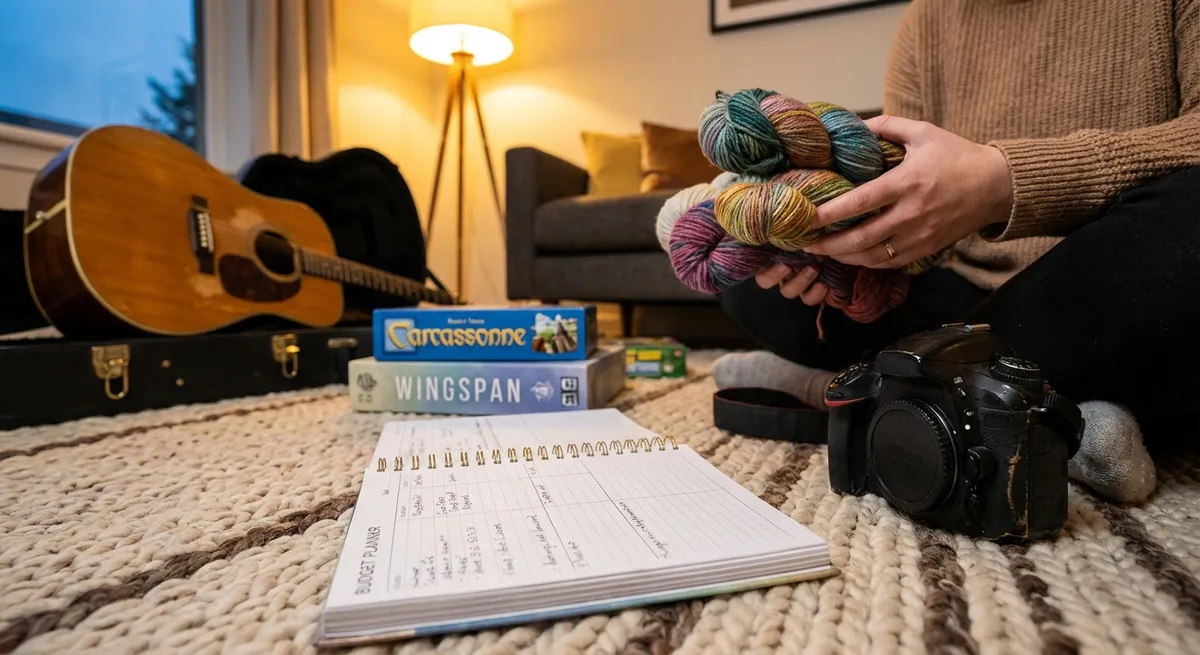
Trying a new hobby is exciting—until you see the price tags. Whether it’s photography, cycling, knitting, board games, or home brewing, the internet is full of “must-have” gear that can drain your budget before you know if you’ll even stick with it.
This guide is for hobby beginners who want to spend wisely, enjoy more, and avoid closets full of abandoned equipment. You’ll learn how to buy smarter, test interests cheaply, and upgrade only when it truly improves your experience.
Start With “Test Mode,” Not “Lifetime Gear”
When you’re new, you don’t yet know what you actually enjoy about the hobby—just what looks cool online. That’s why your first phase should be “test mode”: spend as if you might walk away in three months.
Instead of buying top-tier equipment, look for ways to rent, borrow, or share. Many local libraries now lend items like sewing machines, musical instruments, telescopes, and even board games. Outdoor stores often offer rental programs for camping gear, kayaks, or climbing equipment, and bike shops sometimes provide low-cost demos. Asking friends or local hobby groups to try their gear for a session can save you hundreds and give you a more realistic feel than any product review.
During this stage, pay attention to what bothers you or slows you down. Are you frustrated by setup time? Are you more into the social aspect than the technical gear? These observations will guide future purchases so you avoid buying expensive items that don’t solve your real problems.
Tip 1: Define “Success” For The First 90 Days
Before buying anything significant, write down (or type) what “success” looks like for the first three months of your new hobby. Make it specific and behavior-based, not gear-based.
For example:
- Photography: “Take photos twice a week and successfully edit 20 pictures I’m proud of.”
- Running: “Run three times a week without injury and complete a 5K distance.”
- Painting: “Fill one sketchbook and complete six finished pieces.”
Once you’ve defined that, ask: What’s the minimum gear I actually need to reach this 90-day goal? This simple question prevents you from buying advanced equipment meant for a version of you that doesn’t exist yet.
When you feel tempted by a purchase, measure it against your 90-day definition: does it directly help you practice more, learn faster, or enjoy the process? If not, it can likely wait. This approach also makes it easier to compare options because you’re not just chasing features—you’re buying for a specific outcome.
Tip 2: Prioritize Skills Over Specs In Your Budget
In almost every hobby, improvements in skill bring more satisfaction than upgrades in gear. A beginner photographer with a basic camera and good technique will outperform someone with top-tier gear and no training. The same pattern shows up in music, sports, crafts, and gaming.
When planning your hobby budget, consider allocating a meaningful portion—often 20–40%—to learning instead of equipment. This could mean:
- Local classes or workshops
- Online courses or structured tutorials
- One-off coaching sessions (e.g., a bike fit, music lesson, or form check with a trainer)
- Books or workbooks you’ll actually use
Look for learning resources that include feedback or community, not just passive content. That might be a local club, a moderated online forum, or a class with assignments and critiques. Feedback shortens the trial-and-error phase, which reduces wasted purchases caused by not understanding what you truly need.
When considering a pricey item, ask: Would spending part of this money on instruction give me a bigger improvement than the gear itself? Often, the answer is yes.
Tip 3: Buy “Upgrade Paths,” Not Isolated Products
Some hobby purchases lock you into a dead end; others give you room to grow without replacing everything. For long-term savings, look for systems that support gradual, modular upgrades instead of single-purpose items that become useless as you progress.
Examples of upgrade-friendly choices:
- Cameras: Choose a body from a system with a broad range of compatible lenses and accessories from multiple brands. This lets you upgrade lenses or bodies independently later.
- Cycling or fitness: Start with a bike or equipment that uses common standards (wheels, pedals, handlebars) so parts are easy to replace or upgrade.
- Crafting: Pick tools that work with widely available consumables (thread, yarn weights, paints, paper sizes) instead of proprietary formats.
- Board games or tabletop RPGs: Look for systems with expansions and an active community, so your initial investment can evolve rather than be replaced.
Before buying, do a quick “future check”:
How easy is it to find compatible accessories or parts?
Are there budget, mid-tier, and advanced options in the same ecosystem?
Is there an active user community still using this system?
The goal isn’t to future-proof everything perfectly but to avoid getting trapped in niche gear that forces a full restart if you decide to go deeper.
Tip 4: Use The “Borrow–Used–New” Ladder
For many hobbies, a simple decision ladder can keep your spending logical instead of impulsive: Borrow → Buy Used → Buy New (Only If It Truly Matters).
Start with borrowing whenever safety and hygiene allow. This is ideal for figuring out fit, feel, and basic preferences. If you can’t borrow, move to buying used from reputable online marketplaces, local classifieds, or specialty shops that inspect secondhand gear.
Used isn’t just cheaper; it also lets you “try on” a style of gear with the option to resell later with smaller losses. This is especially useful in hobbies where tastes change fast (like photography, music, or cycling). For major items, consider resale value as part of your decision—gear from trusted brands in popular categories tends to resell more easily.
Only go to buying new when:
- The item has a clear safety or hygiene issue used (e.g., climbing ropes, helmets, certain protective sports equipment, or things that are hard to sanitize).
- The product has a warranty or service plan that you genuinely expect to use.
- The new version offers a specific feature that directly supports your current skill level or 90-day goal—not just because it’s the latest model.
Climbing this “borrow–used–new” ladder makes big purchases feel more deliberate and less like impulse reactions to marketing or social pressure.
Tip 5: Time Big Purchases To Your Habits, Not To Sales
Sales can be great, but buying just because there’s a discount still leads to owning things you barely use. A smarter move is to sync big purchases with proven habits rather than holiday promotions.
Use your behavior as the trigger:
- Once you’ve consistently practiced for 6–8 weeks, reassess your setup.
- If you’re hitting limits that clearly come from gear (not just skill), then start shopping.
- List your top frustrations or bottlenecks and rank them. Buy the item that solves the biggest real problem—not the one with the best discount.
Sales can still work in your favor if you prepare. Keep a short, written “future upgrades” list based on actual frustrations you’ve encountered—things like “tripod keeps slipping,” “running shoes cause blisters on long runs,” or “paint dries too fast for my style.” When a sale appears, buy only from that list, not from the front page of the promotion.
This approach feels slower, but it prevents the common trap of buying advanced gear for a routine you haven’t built yet. Over a year, it usually means you spend less but enjoy your hobby more, because every purchase has a clear purpose.
Conclusion
New hobbies should feel energizing, not financially overwhelming. By starting in “test mode,” defining what success looks like for your first 90 days, investing in skills, choosing gear with upgrade paths, climbing the borrow–used–new ladder, and timing big buys to your actual habits, you protect both your budget and your motivation.
Smart hobby spending isn’t about never buying nice things; it’s about buying the right things at the right time for the way you really live and play. When your purchases follow your curiosity and practice—not the other way around—you’re far more likely to stick with the hobby and actually get the joy you paid for.
Sources
- U.S. Bureau of Labor Statistics – Consumer Expenditures - Data on how households allocate spending to categories like entertainment and hobbies
- MIT Sloan Management Review – How to Make Smarter Consumer Decisions - Research-backed insights into how people can improve purchasing choices
- REI Co-op – Gear Rentals & Used Gear - Example of rental and used-gear programs that support “try before you buy” for outdoor hobbies
- New York Public Library – Library of Things - Illustration of how libraries lend non-traditional items like musical instruments and sewing machines
- Harvard Business Review – The Psychology Behind Smart Shopping Decisions - Explores behavioral factors that influence how and why consumers buy things
Key Takeaway
The most important thing to remember from this article is that following these steps can lead to great results.