
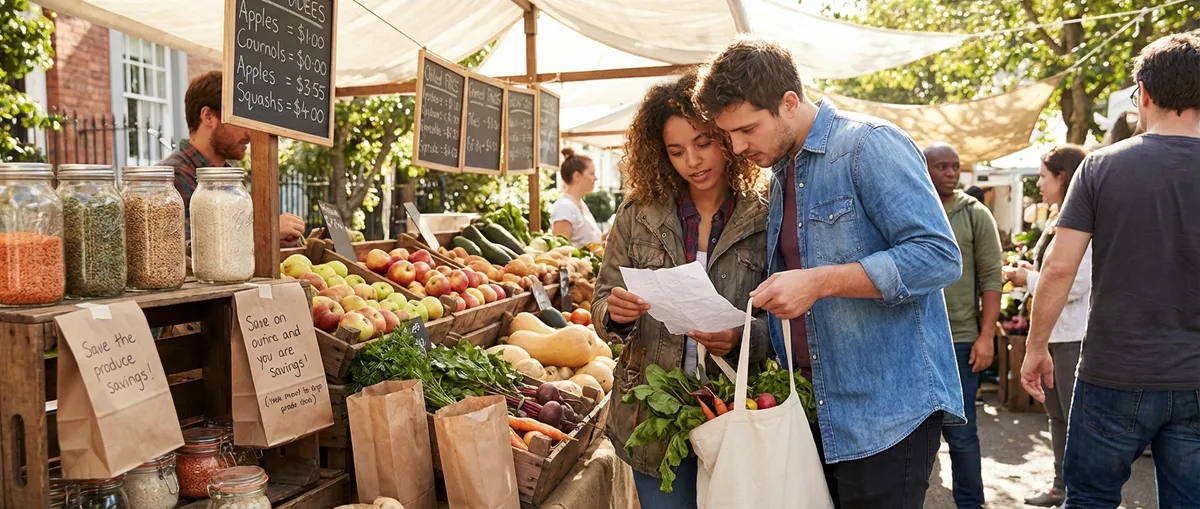
Most grocery carts are filled with good intentions and quiet regrets. You want to eat well, avoid waste, and not feel shocked at the checkout—but marketing tricks, confusing labels, and endless options make that harder than it should be.
This guide breaks down how to buy food and drink that actually fits your budget, lifestyle, and health goals—without turning every shopping trip into a research project. You’ll find five practical, repeatable tips you can use whether you’re shopping for one person or a family of five.
Start with Meals, Not Aisles
Smart food buying doesn’t begin at the store; it starts with what you actually plan to eat.
Instead of writing a list based on what you “might” want, reverse the process:
- Decide on a handful of meals you’ll realistically cook in the next 3–5 days.
- Check what you already have in your pantry, fridge, and freezer.
- Build your shopping list around the missing ingredients only.
This approach cuts impulse purchases and helps you avoid buying duplicates (another jar of pasta sauce, more rice, extra spices) that quietly pile up and expire.
As you plan, focus on “building block” ingredients that work across multiple meals: a bag of rice, a tray of chicken thighs, a big container of oats, a block of cheese, a large tub of yogurt. These versatile items can become several different dishes, giving you more flexibility and less waste.
Over time, you’ll discover a shortlist of go-to meals that are affordable, quick, and satisfying. That’s your personal rotation—and it’s one of the easiest ways to make food shopping more predictable and cost-effective.
Decode Food Labels Without Getting Overwhelmed
Labels are designed to grab your attention, not to make your decisions easier. Words like “natural,” “wholegrain,” “light,” or “immune support” can sound reassuring but often mean very little without context.
When you’re comparing similar products, focus on:
- Ingredients list: Shorter usually means less processed. Ingredients are listed by weight, so if sugar, corn syrup, or refined flour are near the top, you’re looking at a more processed option.
- Serving size: Packages often shrink the serving size to make calories, sugar, or sodium look lower. Compare products using the same realistic portion (what you’d actually eat).
- Added sugars and sodium: Look at the “Added Sugars” and “Sodium” sections. Small differences add up across a week—especially in sauces, drinks, and packaged snacks.
- Protein and fiber: These keep you full longer and help reduce mindless snacking. For cereals, breads, and snacks, higher fiber and some protein usually mean better value per serving.
You don’t need to be perfect—just consistent. If you regularly choose the version with fewer added sugars, less sodium, and more fiber/protein, you’ll get better nutrition for your money without having to buy “premium” or “diet” branded items.
Compare Unit Prices, Not Package Sizes
Bigger packaging doesn’t always mean better value—and “family size” can be misleading. The most reliable way to see if you’re getting a good deal is to compare unit prices (price per ounce, per pound, per liter, etc.).
Most stores print the unit price on the shelf label. When they don’t, a quick calculation on your phone helps you compare:
- Price ÷ Total weight/volume = unit price (e.g., $4 ÷ 16 oz = $0.25/oz)
Use unit pricing to make smarter calls on:
- Bulk vs. regular size: Bulk is worth it when it’s clearly cheaper per unit and you’ll use it before it goes bad.
- Name brand vs. store brand: Store brands often come from the same manufacturers as national brands, with similar or identical ingredients at a lower unit price.
- Snacks and drinks: Single-serve portions are convenient but expensive. Multi-packs or larger containers you portion out at home usually offer far better value.
Be selective, though. Buying a giant bag of salad mix or fresh fruit that spoils before you use it isn’t saving you money. The “smart” purchase is the size you’ll actually finish, even if the unit price is slightly higher.
Prioritize Fresh, Frozen, and Pantry Staples the Right Way
You don’t have to choose between “fresh is best” and “frozen is cheaper.” A smarter strategy is to think of fresh, frozen, and shelf-stable foods as a team.
Use this simple framework:
- Fresh for what you’ll eat in 3–5 days:
- Leafy greens, berries, soft fruits, bakery bread, deli items.
- Buy smaller amounts more often if possible.
- Frozen for flexibility and reduced waste:
- Vegetables (peas, broccoli, spinach), fruits (berries, mango), fish, and some meats freeze well.
- Nutrient content is usually comparable to fresh, and you only use what you need.
- Pantry staples for reliable, low-cost structure:
- Rice, pasta, lentils, beans, oats, canned tomatoes, canned tuna/salmon, spices, oils.
- These become the backbone of budget-friendly meals.
This mix helps you:
- Avoid last-minute takeout because there’s “nothing to cook.”
- Keep a backup plan (frozen veggies + pantry grains + canned protein) for busy nights.
- Stretch fresh ingredients further—adding frozen veg to stir-fries, soups, or pasta to round out meals.
Instead of chasing perfection, aim for a cart that combines all three categories in a way that matches your schedule and cooking habits.
Use “Spend Where It Matters” to Make Peace With Your Budget
Not every food decision is about spending less. Sometimes, spending more in the right place saves you money in the long run (or simply makes your life easier and healthier).
Use a simple rule: Save aggressively on what you don’t care about, spend intentionally on what you do.
Examples:
- Save on:
- Store-brand pantry basics (rice, oats, beans, canned tomatoes, sugar, flour, spices).
- Frozen vegetables and fruits without added sauces or sugar.
- Basic dairy like milk, plain yogurt, or shredded cheese.
- Large-format snacks you portion at home instead of single-serve packs.
- Consider spending more on:
- Items that directly improve how often you cook at home (quality nonstick pan, sharp chef’s knife, basic food containers).
- One or two “luxury” ingredients that make home meals feel special (good olive oil, real Parmesan, your favorite hot sauce or spice blend).
- Foods that support specific health needs or restrictions (gluten-free staples, lactose-free dairy, allergy-safe products), where quality and safety matter more than price alone.
You don’t have to overhaul your entire cart at once. Start by picking one area to “upgrade” consciously and one area to intentionally “downgrade” to simpler, cheaper options. Over time, your purchases will better reflect what you truly value—not just what’s on sale or what’s displayed at eye level.
Conclusion
Smarter food and drink buying isn’t about memorizing every label or cooking from scratch every night. It’s about a few consistent habits: planning around real meals, reading the parts of labels that matter, comparing unit prices, balancing fresh with frozen and pantry staples, and deciding where you truly want to spend or save.
When you approach food shopping this way, your cart starts to match your actual life—your schedule, your tastes, your budget—instead of your impulses. The result: fewer forgotten items in the back of the fridge, less stress at checkout, and meals you’re more likely to enjoy and repeat.
Sources
- U.S. Department of Agriculture: Tips for Grocery Shopping - Practical guidance on planning meals, making lists, and comparing prices for healthier choices
- U.S. Food & Drug Administration: How to Understand and Use the Nutrition Facts Label - Detailed breakdown of label sections, serving sizes, and what to focus on as a consumer
- Harvard T.H. Chan School of Public Health: Healthy Eating Plate & Guide - Evidence-based recommendations for building balanced meals using common foods
- Cleveland Clinic: Fresh vs. Frozen vs. Canned Fruits and Vegetables - Compares nutritional value across forms and explains when each type makes sense
- Consumer Reports: How Unit Pricing Can Help You Save Money at the Grocery Store - Explains unit pricing and how to use it to identify the best deals on food and household items
Key Takeaway
The most important thing to remember from this article is that this information can change how you think about Food & Drink.