
Choosing a car, SUV, or truck is one of the biggest purchases most people make—and one of the easiest to get wrong. Between monthly payments, insurance, fuel, and maintenance, the “sticker price” tells only a fraction of the story. This guide focuses on practical, consumer-first steps that help you line up the right vehicle with your real-life needs and long-term budget, not just what looks good on the lot.
Start With Your Real Use, Not Your Dream Scenario
Before you browse listings, get specific about how you actually drive week to week. A clear picture of your real use will filter out a lot of bad (or overpriced) options.
Think in terms of:
- Daily distance and patterns: Are you commuting 5 miles in city traffic or 60 miles on the highway? Short city trips favor compact, fuel-efficient cars or hybrids; long highway drives reward comfortable seating and good highway MPG.
- Passenger and cargo needs: Track how often you actually fill seats or cargo space. If you haul a full family plus gear twice a year, renting a larger vehicle for those trips might be cheaper than owning a full-size SUV year-round.
- Driving conditions: If you rarely face snow, ice, or unpaved roads, all-wheel drive might be an unnecessary cost and fuel penalty. In rough climates, though, ground clearance and AWD can be safety investments, not luxuries.
- Parking and storage: Tight urban parking, shared garages, or street parking can make smaller vehicles more practical and cheaper to insure.
- Ownership length: Planning to keep the vehicle 8–10 years? Reliability ratings, parts costs, and warranty coverage should weigh heavier than cutting-edge but unproven tech.
Write these factors down and rank them. When you later compare models, you’ll have a checklist grounded in your real life, not the sales brochure.
Look Beyond Price: Total Cost of Ownership
The “cheapest” car on paper can quietly become the most expensive once you factor in operating costs. Focusing on total cost of ownership (TCO) helps you see the full financial picture.
Key cost buckets to consider:
- Depreciation: New cars typically lose value fastest in the first 3–5 years. Certain brands and models retain value better than others, which can lower your long-term cost if you sell or trade in later.
- Fuel or energy: Compare combined MPG (or MPGe for EVs) using standardized tests rather than trusting optimistic marketing claims. For hybrids and EVs, factor in local electricity prices and any public or workplace charging access.
- Insurance: Two similar vehicles can vary wildly in insurance cost due to safety ratings, theft rates, and repair expenses. Get actual quotes on specific models and trims before you commit.
- Maintenance & repairs: Research common issues, typical repair costs, and routine service intervals. Luxury or niche brands often have higher parts and labor costs, even for basic maintenance.
- Taxes, fees, and incentives: Some states and localities add substantial registration or excise taxes; others offer incentives, especially for EVs or high-efficiency vehicles.
Use a TCO mindset to compare a few short-listed models over a 5–10 year span. A vehicle that’s slightly more expensive upfront but cheaper to insure, fuel, and maintain can be the better deal by thousands of dollars.
Tip 1: Set a Hard Budget That Includes the “Hidden” Costs
Instead of asking, “What’s the highest monthly payment I can handle?”, start with a total budget that includes all costs tied to owning the vehicle.
Build your budget around:
- Out-the-door price, not just sticker: This includes the vehicle price, taxes, registration, documentation fees, and any dealer add-ons you actually want.
- Insurance: Get quotes for at least two or three candidate vehicles using your real driving profile. Include comprehensive and collision if you’ll finance the car.
- Routine maintenance: Look at the manufacturer’s recommended service schedule and local labor rates. Oil changes, brake jobs, and tire replacements add up—especially for larger or performance-oriented models.
- Financing costs: Interest rates, loan term lengths, and any lender fees. A lower monthly payment over a longer term can cost more overall.
- Emergency buffer: Plan a small monthly reserve for surprise repairs or tire replacement, especially if buying used or out of warranty.
A simple rule many consumer advocates suggest is that all car-related expenses (loan, insurance, fuel, maintenance) should fit comfortably inside your broader budget, not crowd out savings and essentials. If you have to stretch to make it work, you’re over the line.
Tip 2: Decide New vs. Used Based on Data, Not Assumptions
There isn’t a one-size-fits-all answer to “Is new or used better?”—it depends on your situation, risk tolerance, and how long you keep cars.
When new can make sense:
- Long-term ownership: If you tend to keep vehicles 8–10 years, buying new with a full warranty and then driving it well past payoff can be cost-effective.
- Reliability and warranty coverage: New cars come with full manufacturer warranties and the latest safety features, which can lower risk and sometimes insurance costs.
- Targeted incentives: Manufacturer rebates, low-APR financing, or EV tax credits can narrow the price gap versus used.
When used can be smarter:
- Avoiding steepest depreciation: A 2–5-year-old vehicle often offers substantial savings while still being modern and relatively low-mileage.
- Certified Pre-Owned (CPO): CPO programs add warranty coverage and inspection standards, which can be a useful middle ground between new and standard used.
- Lower insurance and taxes: A lower vehicle value often means lower insurance premiums and registration costs in many regions.
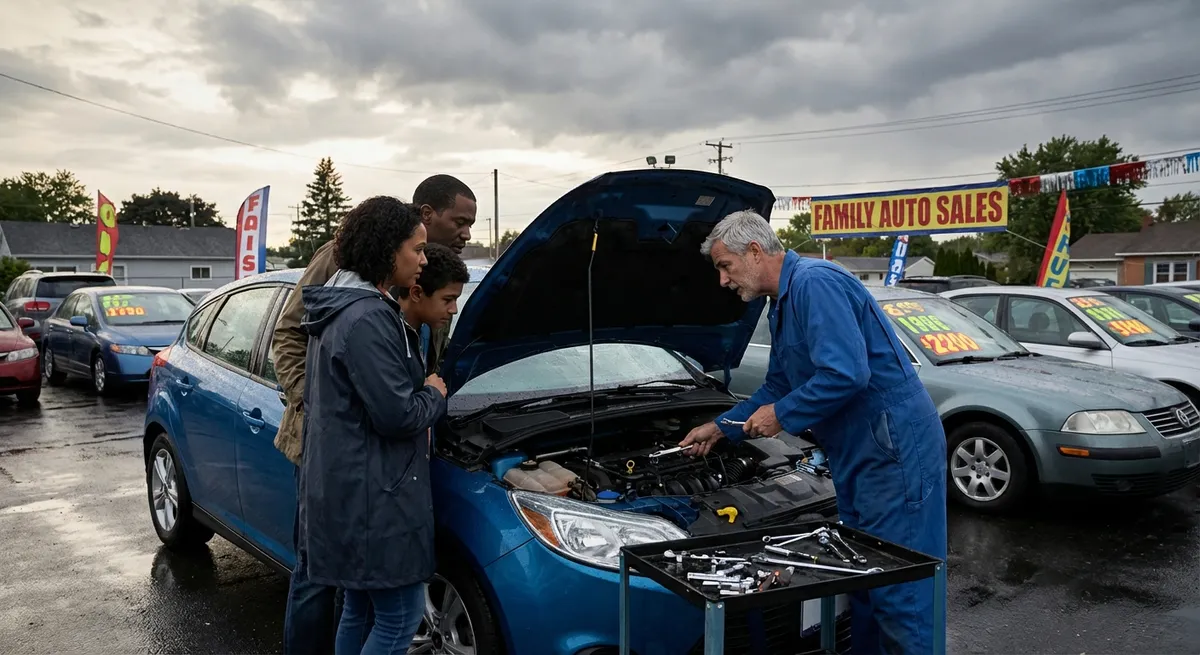
For used vehicles, always prioritize a pre-purchase inspection by an independent mechanic and run a vehicle history report to check for accidents, title issues, or odometer discrepancies. A small upfront cost here can prevent a very costly mistake.
Tip 3: Compare Powertrains With Your Commute in Mind
Gas, hybrid, plug-in hybrid (PHEV), and fully electric (EV) vehicles all have strengths and trade-offs. Match the tech to your daily driving, not just general trends.
Consider:
- Gasoline-only vehicles:
- Better if you have very long or unpredictable drives and limited charging access.
- Often cheaper to purchase initially, but long-term fuel cost can be higher.
- Traditional hybrids:
- Strong for mixed city/highway driving and stop-and-go traffic.
- No plugging in required, and they often deliver significantly better MPG, reducing fuel costs.
- Plug-in hybrids (PHEV):
- Good for drivers with short daily commutes and access to home or workplace charging.
- Can run mainly on electric power for short trips but retain gas range for long drives, reducing range anxiety.
- Battery electric vehicles (EV):
- Best fit if you have reliable charging at home or nearby and most trips fall comfortably within the vehicle’s range.
- Lower “fuel” and maintenance costs, but upfront price and charging infrastructure should be considered carefully.
Map your typical week: how many miles per day, access to charging, and frequency of long trips. Then evaluate powertrain options through that lens, not just initial cost.
Tip 4: Use Safety and Reliability Data, Not Hype
Marketing often emphasizes style and tech features, but safety and reliability affect both your day-to-day experience and long-term costs.
For safety:
- Look up crash test ratings from independent organizations, not just manufacturer claims. Focus on overall ratings as well as specific tests like small overlap crashes and side impacts.
- Check whether advanced driver assistance systems (ADAS)—like automatic emergency braking, blind-spot monitoring, and lane-keeping assistance—are standard or optional. These can reduce crash risk and may lower insurance costs.
- Verify that driver aids are well-reviewed for usability; systems that are too intrusive or confusing often get disabled by owners.
For reliability:
- Review long-term reliability scores and common problem reports for the specific make, model, and year you’re considering.
- Be cautious with brand-new model years or first-year redesigns; early production runs sometimes have more issues.
- Investigate recall history and ensure any recalls were addressed before purchase, especially on used vehicles.
Choosing a model with strong safety ratings and a solid reliability record can reduce medical risk, downtime, repair bills, and insurance costs across years of ownership.
Tip 5: Treat the Test Drive and Paperwork as Your Final Filters
A smart purchase isn’t finished until you’ve validated how the vehicle feels and what’s on the contract.
For the test drive:
- Replicate your real driving conditions as much as possible—city streets, highway speeds, and any hills if you regularly encounter them.
- Evaluate visibility, seat comfort, noise levels, and control layout. These all affect fatigue and satisfaction during daily use.
- Test acceleration, braking feel, steering response, and how intuitive the infotainment and driver aids are in practice.
- If possible, bring any regular passengers (like a partner or kids) and check car-seat fit, rear legroom, and cargo usability.
For the paperwork and deal:
- Request an itemized out-the-door price. Question any add-ons you didn’t ask for (paint protection packages, nitrogen in tires, high-priced VIN etching) and decline anything you don’t genuinely value.
- Compare dealer financing offers with pre-approved quotes from banks or credit unions. You can often negotiate from a stronger position when you already have financing lined up.
- Read the contract carefully before signing. Confirm that the price, interest rate, loan term, and any warranties or extras match what you agreed to.
- For used purchases, ensure all promised repairs or conditions are written down, not just verbal.
If something feels rushed or unclear, pause. Walking away from a bad or confusing deal is always cheaper than trying to fix it afterward.
Conclusion
A smart vehicle purchase starts long before you step onto a lot or click on a listing. When you ground your decision in how you actually drive, focus on total cost of ownership, and lean on independent safety and reliability data, you dramatically reduce the odds of buyer’s remorse. Combine that with a disciplined budget, thoughtful powertrain choice, and a careful test-drive and paperwork review, and you’re far more likely to end up with a vehicle that fits your life, your wallet, and your peace of mind for years to come.
Sources
- U.S. Department of Energy – Fuel Economy Guide - Official fuel economy data for comparing gas, hybrid, PHEV, and EV models
- National Highway Traffic Safety Administration (NHTSA) – 5-Star Safety Ratings - Independent crash test ratings and safety information for vehicles sold in the U.S.
- Insurance Institute for Highway Safety (IIHS) – Vehicle Ratings - Crashworthiness, crash avoidance, and safety feature evaluations across many makes and models
- Consumer Financial Protection Bureau (CFPB) – Auto Loans Guide - Practical advice on budgeting, shopping for financing, and understanding dealer tactics
- Kelley Blue Book – 5-Year Cost to Own - Comparative data on depreciation, fuel, insurance, maintenance, and fees to estimate total cost of ownership
Key Takeaway
The most important thing to remember from this article is that this information can change how you think about Autos & Vehicles.