Buying a car—new or used—can feel like a mix of excitement and financial anxiety. Between glossy ads, complex financing offers, and a dizzying range of models, it’s easy to lose sight of what actually matters: long-term value, safety, and fit for your real life. This guide breaks down the process into clear steps and offers five practical, consumer-focused tips to help you drive away confident you got a good deal, not just a shiny purchase.
Start With Your Real-Life Use, Not the Sticker Price
Before you look at any listings, get brutally honest about how you’ll actually use the vehicle. This is the foundation for a smart buy and helps you avoid overpaying for features or capabilities you won’t use.
Think about your driving patterns: Is this mainly for short urban commutes, long highway trips, hauling gear, or a mix of everything? City drivers may value compact size, fuel efficiency, and easy parking more than horsepower. Highway commuters often care more about comfort, safety tech, and fuel economy at speed. Families might prioritize cargo space, rear-seat room, and top crash-test ratings.
Climate and terrain matter, too. If you live in a snowy region, all-wheel drive and good ground clearance might be essential—but in mild climates, paying extra for those might not deliver real value. Don’t forget practical everyday details: Will child seats fit easily? Is there room for a stroller, sports gear, or tools? Are you comfortable with the visibility and seating position?
By clearly defining your “must-have,” “nice-to-have,” and “don’t-need” features based on how you live—not how you wish you lived—you create a filter that makes it much easier to ignore marketing hype and focus on vehicles that truly fit your needs and budget.
Look Beyond the Purchase Price to Total Cost of Ownership
The sticker price (or monthly payment) is only one piece of what a vehicle really costs. A smart buyer compares cars based on total cost of ownership (TCO), which includes fuel, insurance, taxes, maintenance, repairs, and depreciation over time.
Fuel economy is a major factor, especially if you drive a lot. You can compare official fuel consumption estimates to estimate your yearly fuel costs and see how much a more efficient car might save over five or ten years. Insurance can vary substantially between models, even at the same price level, so it’s worth getting sample quotes for a few top choices before you commit. Some features—like advanced safety systems—can sometimes lower insurance rates.
Maintenance and repair costs differ widely by brand and model. Some manufacturers include scheduled maintenance for a set period; others don’t. Certain vehicles are known for excellent reliability and cheaper parts, while others may be more expensive to maintain out of warranty. Depreciation—the rate at which a vehicle loses value—is easy to overlook but extremely important. A vehicle with a slightly higher purchase price that holds its value well can cost less over time than a cheaper car that depreciates quickly.
Comparing TCO across your shortlist gives you a more realistic picture of what you’re signing up for and helps prevent budget surprises a few years down the road.
Tip 1: Decide on New vs. Used Using Risk and Value, Not Emotion
The “new versus used” decision is one of the biggest levers for saving—or overspending—on a vehicle purchase. Instead of going by gut feeling, evaluate both options based on risk, value retention, and how long you plan to keep the car.
New vehicles come with full warranties, the latest safety features, and no prior wear. They’re less likely to surprise you with early major repairs, and you can often access better financing terms. The downside: faster depreciation, especially in the first 3–5 years. If you plan to keep the car for a decade or more, that early depreciation may matter less, but if you tend to switch vehicles every few years, you’re absorbing that loss repeatedly.
Used vehicles, especially those 2–5 years old, often represent a strong value sweet spot: much of the initial depreciation has already occurred, but many modern safety and efficiency features are still present. Certified pre-owned (CPO) programs from manufacturers can reduce risk by adding extended warranties and inspections, though they may cost more than non-certified used cars.
Consider your risk tolerance and financial buffer. If an unexpected repair would seriously strain your budget, the predictability of a new or CPO vehicle may be worth the premium. If you have savings set aside and are comfortable evaluating vehicle condition (or paying a trusted mechanic to do so), a well-chosen used car can stretch your dollars much further.
Tip 2: Use Vehicle History and Independent Inspections to Protect Yourself
When buying used, the vehicle’s past matters just as much as its present appearance. Even a car that looks clean can hide accident damage, flood exposure, or chronic mechanical issues—problems that can turn a “deal” into a money sink.
Start by running a vehicle history report using the VIN (Vehicle Identification Number). These reports often reveal whether the car has been in reported accidents, had title issues (like salvage or flood branding), or experienced odometer rollbacks. While not perfect, they’re a critical first screen. If the seller refuses to share the VIN or discourages a history check, treat that as a serious red flag.
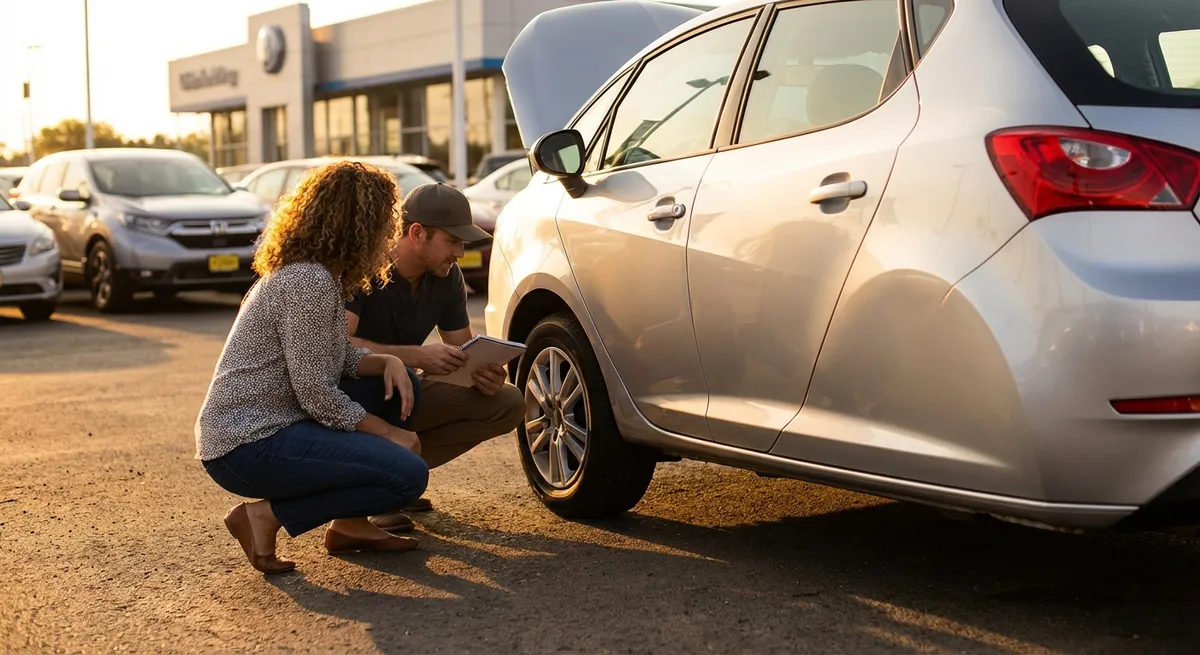
Next, invest in a pre-purchase inspection by an independent, qualified mechanic you choose—not one recommended by the seller. A thorough inspection can uncover hidden rust, poorly done repairs, deferred maintenance, or impending component failures. Even if the car passes with minor notes, that information gives you leverage to negotiate or plan future maintenance costs.
Document everything. Keep copies of the listing, messages, repair records, and inspection results. This not only helps with negotiation but also provides a paper trail that can be useful if issues arise later. Spending a bit on due diligence up front is one of the most cost-effective protections you have as a buyer.
Tip 3: Separate the Car Price from the Financing Conversation
Many buyers focus on the monthly payment, which can give dealers room to obscure the real cost of the vehicle. A smart strategy is to separate the price negotiation from any financing or add-ons.
First, research the average transaction price for the specific make, model, trim, and region using multiple sources. This gives you a realistic target range. When you’re ready to negotiate, focus on the “out-the-door” price, which includes all taxes and mandatory fees. Avoid getting pulled into conversations about “what monthly payment you’re looking for” until you have a clear agreement on the total price.
Before you visit a dealership, check rates for auto loans with your bank, credit union, or reputable online lenders. Pre-approval gives you a benchmark and strengthens your position; you can compare the dealer’s financing offer directly against your existing one. Sometimes dealers can beat your pre-approved rate due to manufacturer incentives—but you’ll only recognize a genuinely better deal if you know your baseline.
Be cautious with extras rolled into the loan, such as extended warranties, paint protection, or gap insurance. Some may be useful depending on your situation, but they also add to interest costs when financed. Evaluate each add-on on its own merits and shop around, rather than accepting them because they’re presented as “just a few more dollars a month.”
Tip 4: Use Safety and Reliability Data as Non-Negotiable Filters
While color, styling, and infotainment features can be fun, safety and reliability should be the non-negotiable filters in any smart vehicle purchase. These aren’t just buzzwords—they have long-term consequences for both your well-being and your wallet.
Start with crash-test ratings from trusted testing organizations. Look for strong performance in frontal, side, and rollover tests, and pay attention to the presence and effectiveness of advanced driver assistance systems (ADAS) like automatic emergency braking, lane-keeping assist, and blind-spot monitoring. These features have been shown in research to reduce certain types of crashes, and some insurers offer discounts for vehicles equipped with them.
Reliability data, drawn from large owner surveys and repair statistics, can help you avoid vehicles known for chronic issues. Patterns like transmission failures, electrical problems, or expensive engine repairs can show up clearly over specific model years. Choosing a model with a track record of dependability can significantly reduce stress and unexpected costs over the years you own it.
When you combine top-tier safety and solid reliability, you’re not just protecting yourself and your passengers—you’re also preserving your vehicle’s resale value. Buyers down the line will also pay more for vehicles with strong safety reputations and fewer known issues, which can work in your favor when you eventually sell or trade in.
Tip 5: Time Your Purchase and Use Multiple Channels to Your Advantage
The way you shop—and when you shop—can influence how much you pay. Being strategic about timing and channels can unlock better pricing without sacrificing quality.
Seasonal and end-of-cycle timing matters. Dealers often have sales targets tied to the end of the month, quarter, and year. Model-year changeovers, when new versions arrive, can bring significant discounts on outgoing models that are still very up to date. If you’re flexible on the exact color or option package, you may get a better deal on in-stock vehicles they’re motivated to move.
Leverage online tools and multiple sellers. Compare prices across nearby dealers, online marketplaces, and, where available, direct-to-consumer brands. Some buyers find success starting negotiations via email or chat, which can give them time to compare offers without the pressure of in-person tactics. When private-party sellers are an option, they can sometimes offer lower prices than dealers, but you trade off formal protections and must lean harder on inspections and documentation.
Be prepared to walk away. If a deal doesn’t match your research, or if you feel pressured, you’re not obligated to proceed. Having alternative vehicles and sellers in mind makes it easier to stand firm. In a market where information is widely available, your willingness to say “no” is one of your most powerful tools.
Conclusion
Smart vehicle purchasing isn’t about memorizing every specification or out-negotiating professionals; it’s about structuring the process around your real needs, long-term costs, and objective data. By clarifying how you’ll use the car, looking at total cost of ownership, choosing between new and used with clear eyes, insisting on history and inspections, separating price from financing, prioritizing safety and reliability, and shopping strategically across time and channels, you put yourself in control of the transaction.
The goal isn’t just to drive away today feeling like you got a bargain. It’s to own a vehicle that continues to feel like a good decision five or ten years from now—reliable, safe, and aligned with your budget and lifestyle.
Sources
- U.S. Department of Energy – Fuel Economy Guide - Official fuel economy data and annual fuel cost estimates to help compare vehicle operating costs
- National Highway Traffic Safety Administration (NHTSA) - Crash-test ratings and safety information for new vehicles
- Insurance Institute for Highway Safety (IIHS) - Independent crash-test results and safety feature evaluations by vehicle model
- Consumer Reports – Car Reliability & Owner Satisfaction - Long-term reliability data and owner experiences across brands and models
- Federal Trade Commission (FTC) – Buying a Used Car - Government guidance on used car shopping, vehicle history reports, and avoiding common pitfalls
Key Takeaway
The most important thing to remember from this article is that this information can change how you think about Autos & Vehicles.