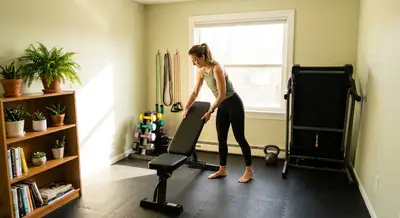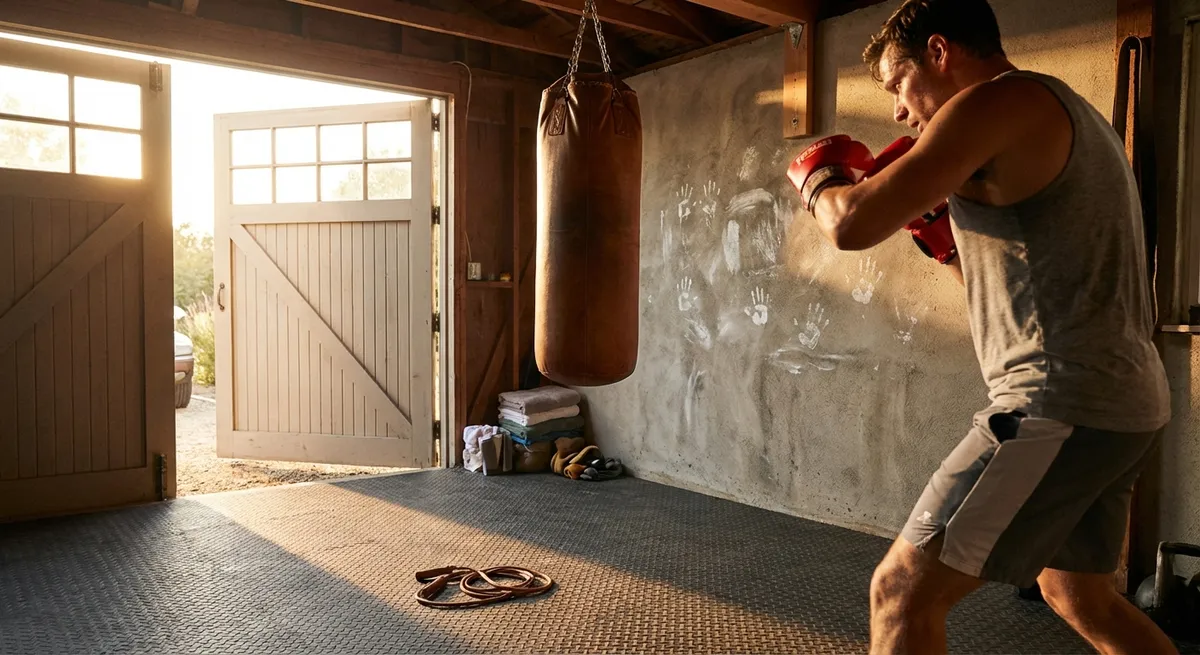
Most people don’t need a full commercial-style gym in their spare room. What you do need is a small, smart setup that actually supports the way you move and play. Whether you’re into running, tennis, basketball, or cycling, building a home “micro-gym” around your primary sport can save money, cut clutter, and genuinely improve your performance and enjoyment.
This guide walks through how to design a focused home setup, avoid common buying traps, and choose gear that earns its space. Along the way, you’ll find five practical tips to keep your purchasing decisions smart and intentional.
Start With Your Sport, Not the Equipment
Most home gym mistakes start with the wrong question: “What gear should I buy?” A better question is: “What does my main sport actually ask of my body?”
Think in terms of movement demands:
- Runners: repetitive impact, hip and ankle stability, core endurance
- Basketball players: jumping, cutting, acceleration and deceleration
- Tennis or pickleball players: rotational power, lateral movement, shoulder durability
- Cyclists: hip and knee dominance, limited upper-body demand, long-duration posture
Once you define those demands, your buying decisions get clearer. A runner might benefit far more from a solid mat, a couple of resistance bands, and a quality foam roller than a fancy multi-station weight machine. A tennis player may get more out of a good elastic shoulder kit and a medicine ball than another pair of running shoes they don’t really need.
Framing your “gym” around specific movements and weaknesses—not generic fitness—helps you avoid impulse purchases and build a lean, sport-specific setup that you’ll actually use.
Map Your Real Training Week Before You Buy
Before you add anything to your cart, map out a realistic training week that includes:
- Practices or games
- Conditioning or strength work
- Recovery sessions (mobility, stretching, light cardio)
- Rest days
Then ask: Which parts of this week could be supported at home instead of elsewhere?
For example:
- A weekend soccer player may only need space and tools for 2–3 short strength and mobility sessions per week.
- A recreational runner might want to move 1–2 easy runs or strength sessions indoors during bad weather.
- A cyclist might prioritize a stable indoor trainer setup and a few strength tools for off-bike work.
This “week-first” approach prevents you from overbuilding. If your schedule only supports three 25-minute home sessions, your micro-gym should match that reality, not a fantasy of daily 90-minute workouts.
Smart buying tip #1: Match purchases to specific slots in your weekly routine.
If you can’t point to exactly where in your real week you’ll use a piece of equipment, it’s likely a want, not a need.
Invest in Surfaces and Space Before Gadgets
The foundation of a useful sport-focused home gym is not a rack of gear—it’s safe, usable space.
Prioritize:
- Flooring or mats: A non-slip surface is essential for jumping, lateral movement, and lifting. It can also reduce injury risk from falls or awkward landings.
- Clear movement zone: Enough room for your sport’s key movements—lunges, side shuffles, planks, jumping, or rotation. Often a 6x6 ft (roughly 2x2 m) area is plenty for focused work.
- Storage plan: Simple hooks, bins, or shelves so equipment is easy to reach and put away. Clutter discourages use and increases trip hazards.
- Lighting and ventilation: Good lighting makes movement and balance work safer, and fresh air or a fan helps you train longer and more comfortably.
Once your space is dialed in, you’ll have a much better sense of what equipment would genuinely improve it—and what would just get in the way.
Smart buying tip #2: Fix the room before you fill the room.
A $50-100 investment in mats and storage often beats a $500 machine in terms of actual use and safety.
Choose Multi-Use Tools That Match Your Sport
With space in place, focus on versatile tools that support the main physical demands of your sport. A few examples by sport type:
For running and field sports (soccer, football, rugby):
- Adjustable dumbbells or kettlebells for lower-body strength and power
- Mini-bands and long resistance bands for hip stability and core work
- Foam roller and massage ball for recovery and tissue care
- Light to moderate dumbbells for shoulders, hips, and core
- A medicine ball for rotational and power drills
- An agility ladder or cone markers for footwork (cheap, packs away easily)
- Indoor trainer (for cyclists) or stable erg setup
- Resistance bands for hip stability and upper-body work
- A bench or step for single-leg strength, bridges, and core work
- A sturdy adjustable bench
- One or two adjustable dumbbells or kettlebells
- A pull-up bar (if safe for your doorway or wall)
For court sports (basketball, tennis, pickleball, volleyball):
For cycling and indoor rowing:
For general strength-focused athletes:
Look for equipment that can cleanly serve three or more uses that matter for your sport: strength, power, stability, or recovery, not just one isolated movement.
Smart buying tip #3: Favor gear that supports multiple important movements.
If a tool only does one niche exercise, think hard before giving it space in a small home setup.
Buy Tech Last—and Make It Earn Its Keep
Sports tech can be motivating and useful—but it’s also where a lot of budgets quietly disappear. Heart-rate monitors, GPS watches, smart bikes, connected treadmills, recovery boots, and “smart” everything can pile up quickly.
A more disciplined approach:
- Master the basics first.
If you aren’t consistently training 2–3 times per week, a $500 watch or $200 recovery device will not fix that. Technique, consistency, and proper load progression matter far more.
- Start with data you’ll actually use.
Common high-value metrics:
- Heart rate for endurance and interval training
- Pace or speed tracking for runners, cyclists, and rowers
- Sleep duration and timing (if it realistically changes your habits)
- Avoid overlapping features.
If your phone already tracks GPS runs well enough and you train with moderate intensity, a basic chest strap or simple watch might be enough. No need to triple-pay for the same data.
- Buy for longevity, not hype.
Choose brands with a track record of software support, replaceable straps, and standard charging options. Read not just the latest reviews but feedback from people who’ve used the device for a year or more.
Smart buying tip #4: Only buy tech that will change a specific behavior.
If you can’t clearly say, “This device will help me do X differently,” it’s probably more toy than tool.
Build a Simple Buying Checklist (So You Don’t Overspend)
When a piece of sports gear or home gym equipment catches your eye, run it through a short checklist:
Does it solve a specific problem I actually have?
(Example: “My knees hurt after runs,” “I can’t do strength work after the kids are asleep,” “I skip mobility because I don’t have a good space.”)
Can I name three exercises or uses that fit my sport?
If you can’t get to three relevant uses quickly, it’s probably not essential.
Will it replace something, not just add more clutter?
If you buy adjustable dumbbells, can you donate or sell the mismatched set collecting dust?
Does it fit my space and storage plan?
If it’ll live in the middle of your living room indefinitely, you’re less likely to maintain the setup—or use it often.
Is there a lower-cost test version?
Before buying a high-end squat rack, for instance, you might test with a basic set of adjustable dumbbells and bodyweight progressions. For a pricey indoor bike setup, consider starting with a basic trainer or guided bodyweight cardio.
Smart buying tip #5: Add a mandatory “24-hour cool-off” rule for any purchase over a set amount.
Decide your threshold—maybe $150–$300—and wait a day. If you still want it for the same reasons (and not because of a fleeting sale or ad), it’s more likely to be a solid choice.
Conclusion
A high-impact home gym doesn’t have to look like a fitness showroom. When you start with your sport, define your real weekly routine, and invest first in space and multi-use tools, you build a compact setup that actually serves your life.
By making each piece of gear “earn” its place—with clear uses, a role in your training week, and a plan for where it lives—you avoid wasted money, unused machines, and buyer’s remorse. Over time, that focused, sport-centered approach turns your home into a reliable training partner, not a storage unit for abandoned fitness experiments.
Sources
- American College of Sports Medicine – Selecting and Effectively Using Home Exercise Equipment - Guidance from ACSM on evaluating and safely using home fitness gear
- Mayo Clinic – Exercise: 7 Benefits of Regular Physical Activity - Overview of how consistent exercise supports health, relevant when planning sustainable home training
- Hospital for Special Surgery – Essential Strength Training for Runners - Practical examples of sport-specific strength work that can be done with minimal home equipment
- Cleveland Clinic – How to Start a Home Workout Routine - Tips for designing realistic home workouts and choosing appropriate equipment
- U.S. Consumer Product Safety Commission – Home Gym Equipment Safety Alert - Safety considerations and common hazards for home exercise setups
Key Takeaway
The most important thing to remember from this article is that this information can change how you think about Sports.