Whether you’re getting back into sports after a long break or trying a new activity for the first time, the buying decisions you make in the first few weeks can quietly determine whether you actually stick with it. The right gear doesn’t have to be the most expensive—it has to be safe, suited to your level, and realistic for your budget and schedule. This guide walks through how to buy sports gear like a thoughtful investor, not an impulsive fan, so your money supports your goals instead of crowding your closet.
Start With Your Real Use-Case, Not the Idealized Version
Before you buy anything, define how you’re actually going to use it—not how you wish you would.
Think about your week: How many days can you realistically play or train? Indoors or outdoors? Solo or with a team or coach? People often overbuy by shopping for their dream routine instead of their real constraints. If you’re starting tennis but can only play once a week, you don’t need a professional-grade racket; you need something forgiving, durable, and comfortable.
Map out your environment as well. Will your soccer cleats mostly see turf or natural grass? Will your running shoes mostly hit asphalt, treadmills, or trails? Different surfaces affect traction, cushioning, and durability, which all influence what’s worth paying for.
Finally, consider your commitment level. For a “test drive” month in a new sport, think rental gear, used equipment, or entry-level models from reputable brands. If you’re already playing 2–3 times per week and planning to continue, that’s when strategic upgrades start to make sense.
Practical Tip #1 – Write a 30-Day Use Plan Before You Shop
Before you add anything to your cart, write down:
- How many days per week you’ll actually play or train
- Where you’ll play (surface, location, climate)
- Whether you’re playing casually, training seriously, or competing
Bring this note with you (or keep it open on your phone) while shopping. If a product doesn’t fit that 30-day plan, it’s probably not a priority purchase yet.
Prioritize Safety and Fit Ahead of Features and Style
In most sports, the gear that truly matters is the gear that protects you, supports your body, and helps you move correctly. Looks and secondary features should come later.
For impact sports like football, hockey, cycling, or skiing, helmets and protective gear should be your first major investment. Look for safety certifications relevant to your sport (such as CPSC for bike helmets in the U.S.) and make sure you understand how to size and adjust them properly; a certified helmet used incorrectly won’t protect you well.
Fit is equally vital in less “dangerous” sports. Poorly fitted running shoes can lead to blisters, shin splints, or knee pain. An ill-fitting tennis racket or golf club can put strain on your elbows, wrists, and shoulders. Comfort isn’t about luxury—it’s about letting you play long enough and often enough to actually improve without injury.
Pay attention to return policies, too, especially for items where fit is critical. Being able to exchange shoes or protective gear after a few trial sessions can save you from expensive mistakes.
Practical Tip #2 – Make a “Non-Negotiables” List for Safety and Fit
Before comparing models:
- Identify 2–3 safety features you won’t compromise on (e.g., helmet certification, ankle support, mouthguard)
- Decide what “good fit” means (e.g., thumb’s width at shoe toe, snug but not tight helmet, racket grip size)
- Use these as hard filters when shopping, and only compare products that meet them
This shifts your decision-making from “what looks cool” to “what protects and supports me,” which usually pays off in fewer injuries and longer playing time.
Buy for Your Level Today, With a Clear Upgrade Path
Many new or returning players overspend by buying “forever” gear too soon. High-end equipment is often designed for advanced players who already have solid technique—and can sometimes make learning harder, not easier.
Beginner and intermediate-level gear from reputable brands is usually more forgiving, easier to control, and better suited to developing skills. A beginner tennis racket with a larger head size helps you make more consistent contact; an entry-level road bike with simpler gearing is easier to maintain and ride; a mid-range running shoe is usually tuned for durability and comfort, not elite racing.
Your goal is to buy something that helps you start and stick—not something that matches what professionals use on TV. As your skills and commitment grow, you can then upgrade selectively where it truly matters.
Practical Tip #3 – Plan a Two-Stage Gear Strategy
Stage 1: “Starter Setup” (first 3–6 months)
- Choose reliable, mid-priced gear designed for beginners or recreational players
- Avoid specialized, ultra-light, or pro-spec equipment unless advised by a coach
- Focus on durability, comfort, and ease of use
- Upgrade 1–2 items that are clearly limiting your performance or comfort (e.g., racket stiffness, running shoe responsiveness, higher-quality ball or stick)
- Take notes from your own experience: what feels too heavy, too stiff, too unstable, or too basic?
Stage 2: “Targeted Upgrades” (after consistent play)
This staged approach keeps you from sinking big money into gear that doesn’t match your skill level yet.
Use the “Total Cost of Play” Lens, Not Just the Sticker Price
The cheapest option isn’t always the most economical—and the most expensive option isn’t always a better investment. Think in terms of “total cost of play”: everything it costs you over the life of the gear, not just what you pay at checkout.
For example, a slightly more expensive pair of quality running shoes that lasts 500 miles might be cheaper per mile than a discount pair that breaks down at 200 miles. Similarly, a mid-range bike that needs less frequent service and uses common parts can be cheaper to own than a bargain bike that constantly needs repairs.
Factor in maintenance, replacement cycles, and add-ons: strings and grips for rackets, blades for skates, pads and guards for contact sports, balls that lose pressure, and so on. Also consider whether a sport requires membership fees, court time, lift tickets, or coaching—these recurring costs can outweigh the gear itself.
Practical Tip #4 – Calculate a Simple “Cost Per Session”
Before buying:
- Estimate how many times you’ll realistically use the item over 6–12 months (based on your 30-day plan).
- Divide the total cost (including any necessary accessories) by that number.
- Compare options using this “cost per session” instead of just the upfront price.
A $150 item you’ll use 75 times (~$2 per session) may be a far better buy than a $60 item you’ll only use 10 times (~$6 per session because it fails, hurts to use, or doesn’t really fit your sport).
Borrow, Rent, and Buy Secondhand Strategically
Not everything has to be bought new—especially when you’re exploring a sport or trying to figure out what suits your style. Many local clubs, gyms, and community centers offer rental gear for sports like tennis, squash, skiing, hockey, and climbing. This lets you test different sizes and types before committing.
Secondhand markets can be excellent for certain categories: kids’ sports gear (they outgrow it quickly), entry-level bikes, basic rackets, or lightly used protective equipment that hasn’t expired or been damaged. However, there are items you should approach with caution when used, such as helmets (they may have unseen damage), heavily worn shoes (midsoles and support can be degraded), or structurally compromised items like cracked sticks or bent frames.
Always inspect secondhand equipment in good light, checking for cracks, uneven wear, missing parts, and any signs of previous impact or structural damage. When in doubt about safety-related gear, err on the side of buying new from a trusted retailer.
Practical Tip #5 – Test Before You Invest Where Possible
Before purchasing new high-ticket gear:
- Rent or borrow similar items for at least 1–3 sessions
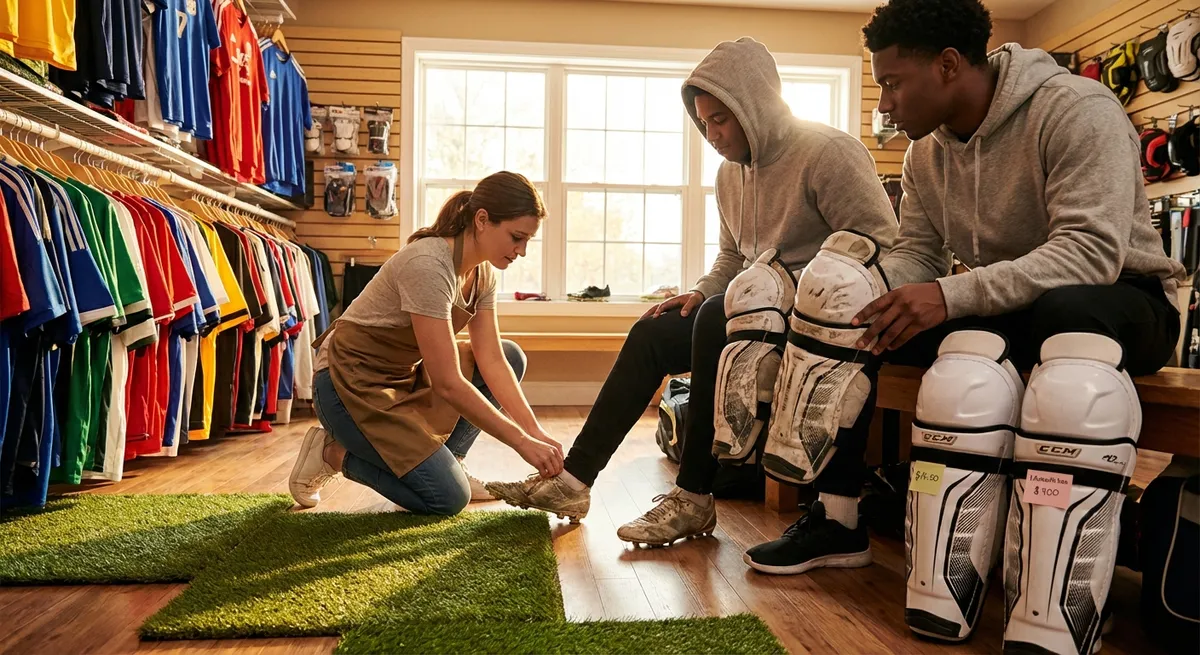
- Visit a local pro shop or specialty store to get properly fitted and try demo models
- Ask local clubs or teammates what they use and whether you can briefly test their setup (where safe and appropriate)
Use those experiences to refine your preferences—weight, stiffness, size, cushioning—so your purchase is guided by real feel, not just product descriptions.
Conclusion
Smart sports buying isn’t about chasing the most advanced gear; it’s about matching what you buy to how you really play. When you start with your actual schedule and environment, protect yourself with well-fitted essentials, buy for your current level, think in terms of total cost of play, and use rentals or secondhand options strategically, your gear becomes a support system instead of a financial burden. The result is simple: more time enjoying your sport, fewer regrets in your closet, and a healthier relationship between your wallet and your goals.
Sources
- Consumer Product Safety Commission – Bicycle Helmets - Explains helmet safety standards and proper helmet use, helpful for evaluating protective gear quality
- American Academy of Orthopaedic Surgeons – Preventing Sports Injuries - Covers how proper equipment, fit, and preparation reduce injury risk
- Road Runners Club of America – Shoe Selection and Replacement - Guidance on choosing running shoes and understanding when to replace them
- REI Co-op Expert Advice – How to Choose the Right Bike - Demonstrates how to think about fit, use-case, and upgrade paths when buying bikes
- USA Hockey – Equipment Fit and Safety Guidelines - Detailed look at fitting and selecting protective gear, useful as a model for other impact sports equipment decisions
Key Takeaway
The most important thing to remember from this article is that this information can change how you think about Sports.