
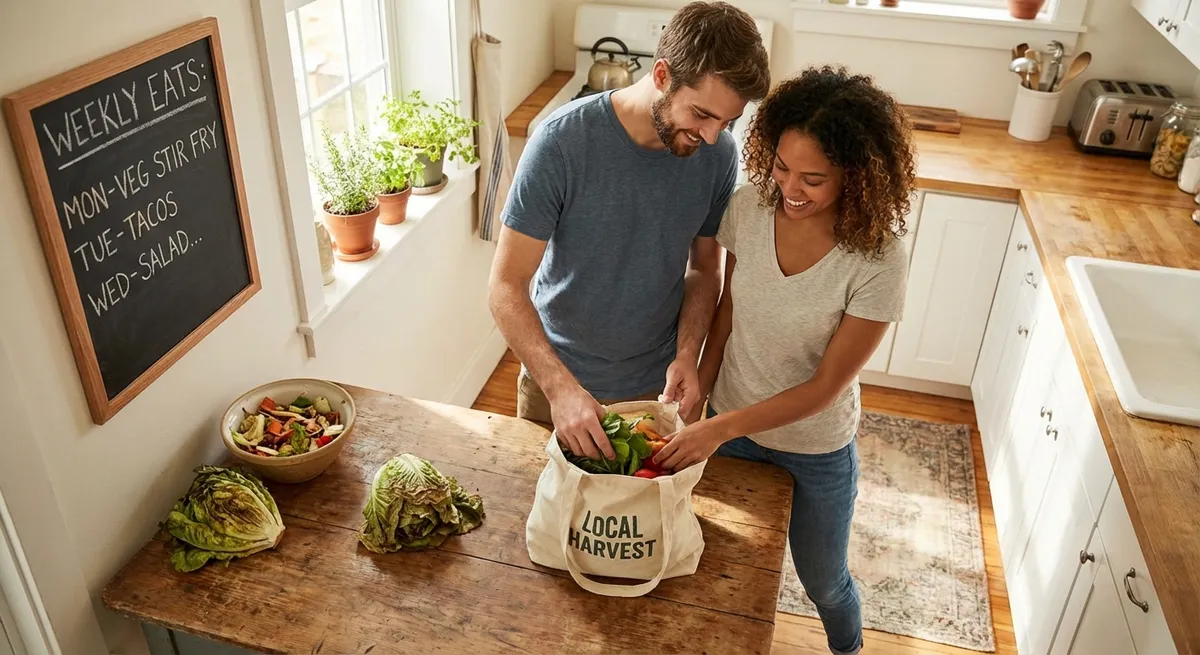
Many grocery carts are full of good intentions that quietly expire at the back of the fridge. Between marketing buzzwords, confusing labels, and rising prices, it’s easy to overspend and still feel like your kitchen “has nothing to eat.” This guide walks you through practical, buyer-focused strategies so your food and drink purchases support your health, your budget, and your real life—not just your wishful one.
Below you’ll find five practical tips that help you spend smarter, waste less, and enjoy what you buy.
Start With Meals, Not With a Shopping List
Most people build a grocery list by mentally scanning what they’re out of—but that’s how you end up with plenty of ingredients and no actual meals. Instead, flip the process: start with 3–5 specific meals you know you’ll cook in the coming week, then buy exactly what those meals require.
Think in “anchor meals”: simple, repeatable dishes like sheet-pan chicken and vegetables, bean chili, stir-fries, or pasta with a protein and vegetables. Choose meals that share ingredients (for example, the same bag of spinach can be used in salads, omelets, and pasta). This reduces waste and helps you buy in more economical sizes without things going bad.
Be realistic about your schedule. If three nights are busy, don’t plan three scratch-cooked dinners—choose ready-to-eat or low-effort options for those days, like rotisserie chicken paired with prewashed salad greens and microwavable grains. Treat lunch planning the same way you would dinner: if you don’t plan for it, you’ll end up buying it—usually at a higher price.
Digital planning tools can help, but a simple notepad works too. Write the meals on one side of the page and all the ingredients on the other. Only after the meals are set should you open your pantry and fridge to cross off what you already have. This keeps you focused on what you’ll actually eat instead of what looks appealing on the shelf.
Decode Food Labels So You’re Paying for Quality, Not Just Claims
Food packaging is designed to sell you a story. Words like “natural,” “multigrain,” or “light” can make products feel healthier or higher quality than they really are. To shop smart, treat the nutrition facts and ingredient list as your primary sources of truth, and everything on the front of the package as marketing.
Start with the ingredient list: ingredients are listed in order by weight. If sugar (or its aliases like corn syrup, dextrose, or cane juice) shows up near the top in foods that aren’t desserts, you’re probably paying more for added sweetness than real nutrition. Shorter ingredient lists with recognizable foods—like “oats, peanuts, salt”—often indicate less processing, though there are exceptions (fortified foods, yogurts with added cultures, etc.).
Next, scan the nutrition panel for a few key numbers:
- Added sugars: The Dietary Guidelines for Americans recommend limiting added sugars to less than 10% of daily calories. For many adults, that’s about 50g per day or less. Sugary drinks and flavored yogurts are frequent hidden sources.
- Sodium: Packaged soups, sauces, and frozen meals can be especially high. If you’re watching blood pressure or just trying to reduce salt, the American Heart Association suggests aiming for no more than 1,500–2,300 mg per day.
- Fiber and protein: These help you stay full and get more value from your calories. For grain products, look for at least 3g of fiber per serving; for meals, prioritize options with meaningful protein (not just from added sugars and refined flours).
Watch for “health halo” terms. “Gluten-free” is medically important for some people, but for others it doesn’t automatically mean healthier or worth the often-higher price. “Multigrain” may simply mean multiple refined grains unless it clearly states “100% whole grain.” If a product’s front-of-pack feel-good claims don’t match an impressive nutrition panel, you’re likely overpaying for branding instead of benefits.
Use Shelf Life to Your Advantage, Not Against You
Smart food buying isn’t just about what you bring home—it’s about giving yourself enough time to use it. Understanding how different foods behave in the fridge, freezer, and pantry can save you from throwing away both food and money.
For fresh produce, plan a “use first” order. Eat delicate items like berries, herbs, salad greens, and cut fruit early in the week. More robust produce like carrots, cabbage, citrus, apples, onions, and potatoes can anchor meals later in the week. If you know you have a habit of letting produce wilt, buy a mix of fresh and frozen; frozen fruits and vegetables are picked and frozen at peak ripeness and can be just as nutritious.
For animal products, pay close attention to “use by” and “sell by” labels. “Sell by” is mainly for stores, not necessarily a safety cutoff. As a rule of thumb, raw poultry and ground meats are best within 1–2 days of purchase, while larger cuts of beef or pork may last 3–5 days in the fridge. If your week gets busier than expected, freezing meat, poultry, and many baked goods before they spoil is a powerful backup plan—label packages with the date so they don’t disappear into the freezer void.
For shelf-stable foods, you often have more wiggle room than you think. Canned goods, dried beans, pasta, and rice can last far beyond their “best by” dates if stored properly, though quality may decline over time. Stocking up when these go on sale makes sense if they’re staples you consistently use.
Design your fridge and pantry so the foods that need to be used soon are visible and easy to reach. That might mean keeping leftover containers at eye level and designating a “use soon” bin for fragile produce or open packages. The goal is to align your storage with your habits, not your aspirations.
Compare Unit Prices and Formats, Not Just Sticker Prices
Packaging tricks can make it hard to tell which option is actually cheaper. A small bottle might look inexpensive, but cost far more per unit than the larger size. To avoid overpaying, focus on unit price—the cost per ounce, liter, pound, or similar measure.
Many supermarkets list unit price on the shelf tag (e.g., “$0.19/oz”). If they don’t, a quick calculation on your phone (price ÷ number of ounces/grams) reveals the truth. Often, but not always, larger containers have a lower unit price. Balance that saving against your ability to use the product before it spoils. A huge tub of hummus is a deal only if you actually eat it.
Think about format alongside size. Whole blocks of cheese are usually cheaper per ounce than pre-shredded cheese; the same goes for whole vegetables versus pre-cut produce. When your time and energy are limited, paying a bit more for prewashed greens or cut vegetables can still be smart if it helps you cook at home instead of defaulting to takeout. The key is to reserve convenience spending for items that genuinely change your behavior, not just feel fancy.
Private-label or store brands are typically less expensive than national brands, and in many categories—like basic dairy, canned tomatoes, dry pasta, and frozen vegetables—the quality is comparable. In fact, some store brands are made by the same manufacturers as name brands. It’s worth doing a low-risk taste test on shelf-stable items to see where you can comfortably trade down.
Finally, consider beverage spending, which quietly inflates grocery bills. Bottled single-serve drinks usually cost far more per ounce than larger bottles or concentrates. For items like coffee, tea, and sparkling water, buying in formats that you can prepare at home often drops the per-serving price dramatically compared with ready-to-drink versions.
Build a Flexible “Base Pantry” So You Can Pivot When Plans Change
Even the best meal plans run into real life. Meetings run late, kids get sick, or you just don’t feel like cooking what you planned. A smart food buyer prepares for that by stocking a basic pantry that can be turned into fast, decent meals with minimal effort.
A base pantry focuses on versatile, long-lasting items that combine well across cuisines. Think canned beans, canned tomatoes, dry pasta, rice or another grain, frozen vegetables, broth or bouillon, eggs (if you eat them), and a few key sauces or seasonings like soy sauce, vinegar, garlic, onions, and dried herbs. With those on hand, you can quickly assemble soups, stir-fries, pasta dishes, or grain bowls even if your fresh items are limited.
This setup protects your budget on nights you might otherwise default to delivery. For example, a can of beans, some frozen vegetables, and spices can become a quick stew or chili for a fraction of takeout prices. Likewise, pasta plus canned tomatoes, garlic, and olive oil can become a simple, satisfying meal without extra shopping.
When buying for your pantry, repeat your “unit price plus usage” test. It’s tempting to overbuy because dry and canned goods last, but storage space still has a cost, and clutter makes it harder to see and use what you have. Choose a realistic amount of each staple based on how often you use it in an average month.
Over time, track your personal “emergency meals”—those simple combinations you actually rely on. Make sure the key ingredients for those meals are always on your shopping list when they run low. That way, your future self has a safety net when plans inevitably change.
Conclusion
Smarter food and drink buying isn’t about chasing every sale or switching to the latest diet trend. It’s about aligning what you bring home with what you’ll realistically cook, eat, and enjoy. By planning around meals, reading labels with a critical eye, using shelf life strategically, comparing unit prices, and maintaining a flexible base pantry, you turn your kitchen into a place where you save money, waste less, and still eat well.
The goal isn’t perfection—it’s steady improvement. Each time you refine your list or adjust how much you buy of a certain item, you’re building a food-buying system that works for your real life, not just your ideal one.
Sources
- U.S. Department of Agriculture – Food Product Dating - Explains “sell by,” “use by,” and “best if used by” labels and how they relate to safety and quality
- Dietary Guidelines for Americans 2020–2025 - Official recommendations on nutrients like added sugars, sodium, and overall dietary patterns
- American Heart Association – Sodium and Salt - Details health impacts of excess sodium and practical intake targets
- Harvard T.H. Chan School of Public Health – The Nutrition Source - Provides evidence-based guidance on building healthy meals and choosing ingredients
- Cleveland Clinic – How to Read Food Nutrition Labels - Breaks down key parts of nutrition facts and ingredient lists to make better purchasing decisions
Key Takeaway
The most important thing to remember from this article is that this information can change how you think about Food & Drink.